Main article
Knapweeds in the Garden: Valuable Food Sources for Insects
Learn how to strengthen the biodiversity in your garden with native knapweeds (Centaurea). Tips for site selection, care, and ecological value.
Key Takeaways
- Knapweeds (Centaurea) act as ecological hubs, supporting various insect groups simultaneously thanks to their composite flower heads.
- Their late flowering period, lasting until autumn, fills critical gaps in the garden's food supply.
- When planting, be sure to select site-appropriate native species to increase ecological resilience.
- Ecological enhancement always requires combining food sources with nesting structures.
Matching videos on the topic
Diese Wildblume ist der größte Hotspot im Sommer - Gartenexpedition #naturgarten #shorts
Schmetterlingsbeet anlegen: Warum Blüten allein nicht reichen (3-Schritte-Guide)
Faktencheck COP 30: Warum Bäume pflanzen nicht immer das Klima rettet
Why Knapweeds are Essential for a Wildlife Garden
In July, when many spring-flowering plants have finished setting seed, many knapweed species (Centaurea) reach their peak vitality. Ecologically, they are highly efficient: what we perceive as a single flower is a flower head composed of numerous tubular florets. This structure allows for a high density of pollinators in a very small space.
Different species, such as the Brown Knapweed (Centaurea jacea) or the Greater Knapweed (Centaurea scabiosa), are not decorative plants in the traditional sense, but highly specialised food biotopes. Their evolutionary adaptation to native insects makes them reliable partners for directly promoting garden biodiversity, as they provide pollen and nectar for generalists like bumblebees (Bombus) and specialists alike.
Analysis of Site Requirements
Not every knapweed thrives in every location. To maximise the ecological benefit, you must accurately match the plant to its specific ecological niche. A site with nutrient-poor soil often encourages a more stable flowering phase than over-fertilised, nutrient-rich ground.
| Species | Preferred Site | Soil Condition |
|---|---|---|
| Brown Knapweed (Centaurea jacea) | Sun to partial shade | Fresh to moderately dry |
| Greater Knapweed (Centaurea scabiosa) | Full sun | Dry, calcareous |
| Mountain Cornflower (Centaurea montana) | Partial shade to sun | Fresh, nutrient-rich |
| Spotted Knapweed (Centaurea stoebe) | Full sun | Dry, lean (sand/gravel) |
Matching products
Available at Gartenexpedition.de
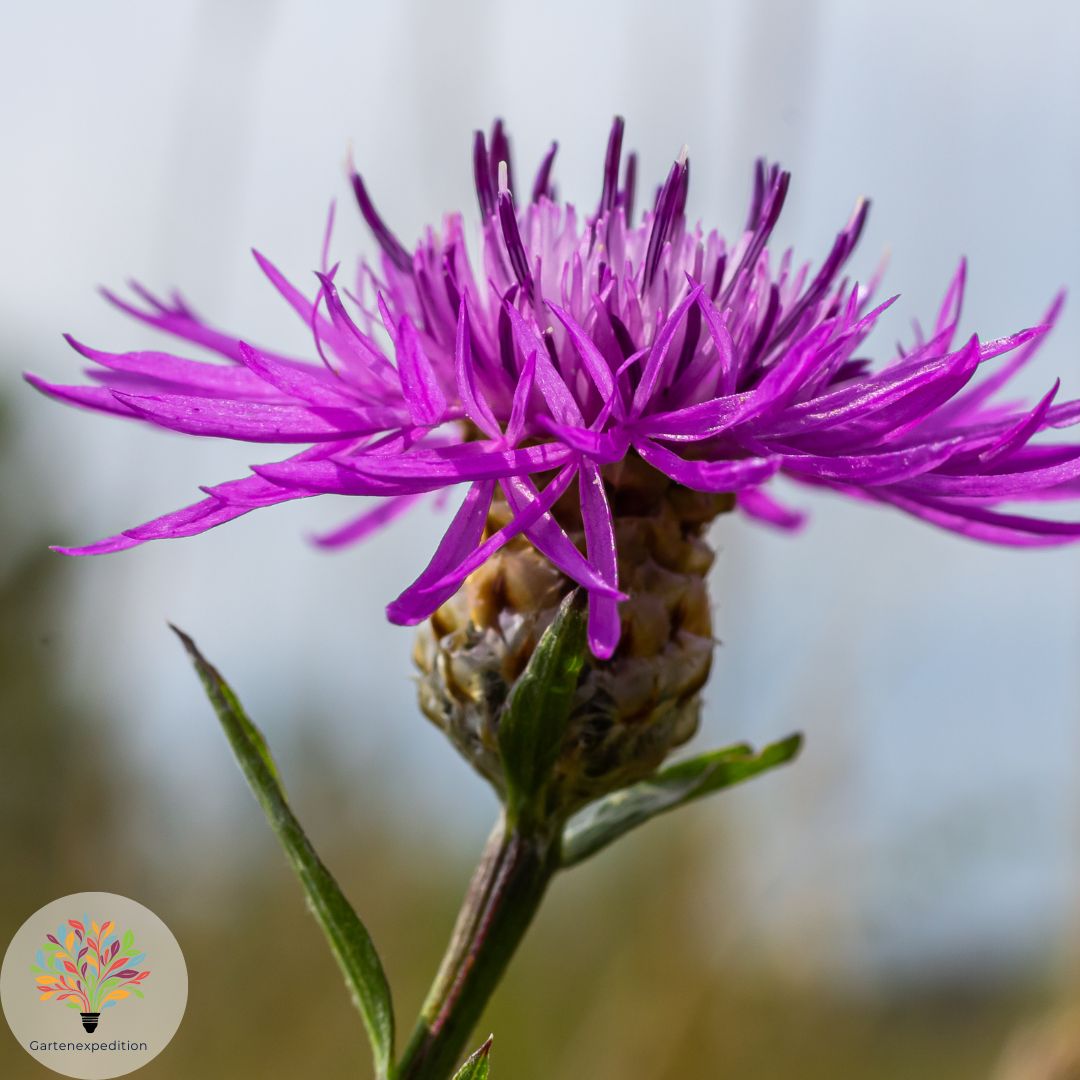
Wiesen-Flockenblume (Centaurea jacea)
3,27 €
incl. VAT, plus shipping costs
To shop →
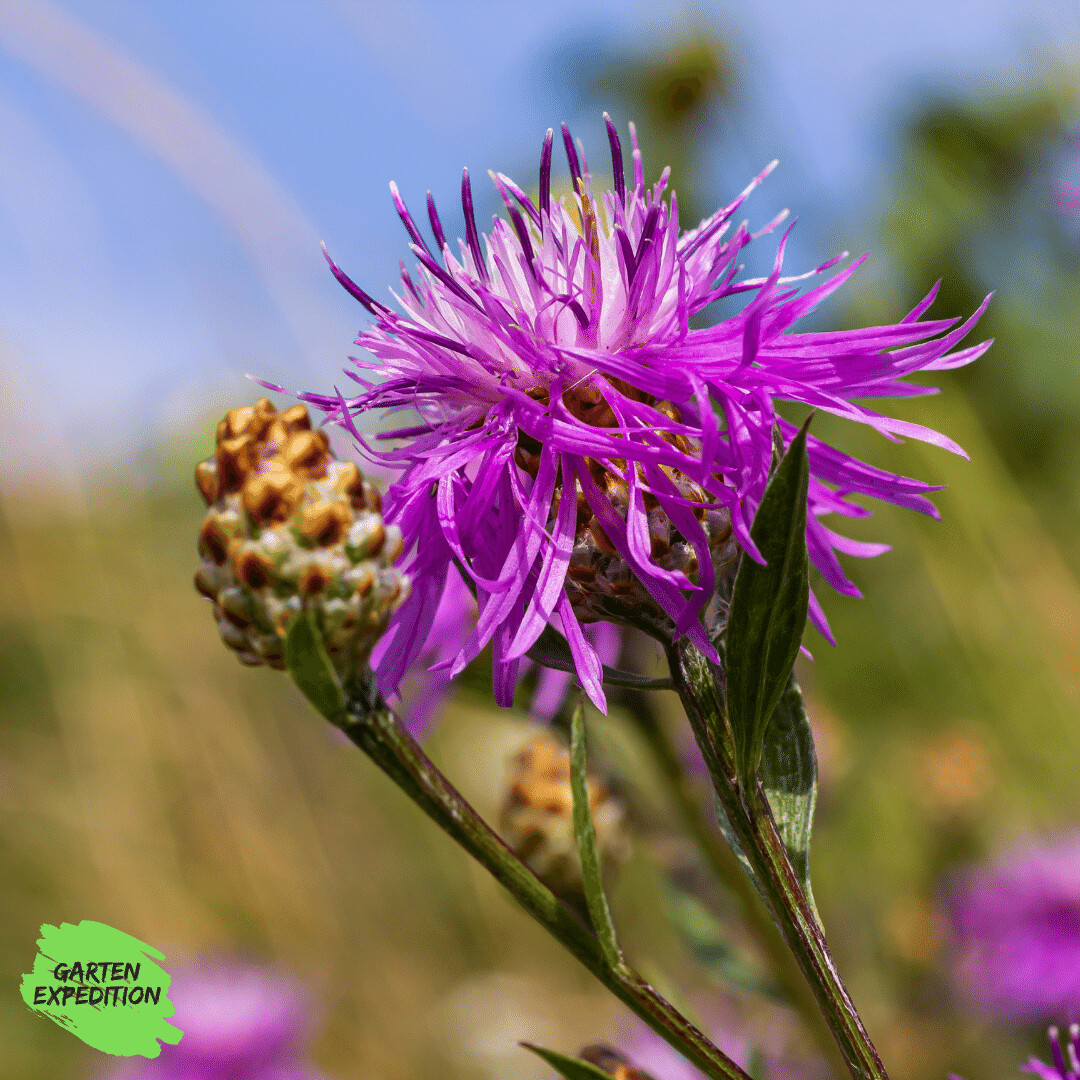
Wiesen-Flockenblume (Centaurea jacea)
2,00 €
incl. VAT, plus shipping costs
To shop →
Partner note: The linked products are from Gartenexpedition.de. By purchasing, you support our work.
Instructions for Establishment
- Check site suitability: Determine the light levels and soil moisture. For dry, warm locations, prefer the Spotted Knapweed (Centaurea stoebe), as it is optimally adapted to these conditions.
- Create planting groups: Plant at least three to five individuals of one species in a cluster. This creates a visual signal for insects and increases pollination efficiency.
- Ensure native origin: Avoid double-flowered cultivars, as the stamens in these are often converted into petal-like structures, blocking access to pollen and nectar for wild bees.
- Adjust maintenance: Refrain from using synthetic fertilisers or pesticides entirely. Excessive nitrogen input weakens the plant's natural, site-appropriate vitality.
- Partial pruning: Do not cut back the entire stock at once. Leave the seed heads standing until winter, as they provide food for birds, and the stems serve as overwintering quarters for insects.
- Create connectivity: A single knapweed is only one piece of the puzzle. Supplement the surrounding area with patches of bare soil (for ground-nesting wild bees) and native caterpillar food plants to complete the habitat.
Frequently Asked Questions
Why should double-flowered varieties not be planted?
Double-flowered cultivars have converted stamens that block access to nectar and pollen, rendering them ecologically useless for insects.
When is the best time for pruning?
Do not cut back knapweeds completely in late summer. The seed heads serve as winter food and the stems act as shelters for insects.
All species data comes from scientific sources (CC BY 4.0 / CC0). Attribution according to licence terms. Complete source overview →