Main article
Are your wildflowers wilting? Why watering in summer is often unnecessary
Are your wildflowers wilting in the heat despite the soil being moist? Find out why this is transpiration and why you shouldn't grab the watering can immediately.
Key points at a glance
- Wilting leaves during the midday heat are often a protective mechanism, not a lack of water.
- Through transpiration (evaporation via the leaves), plants temporarily lose more water in hot weather than the roots can replenish.
- The finger test is the deciding factor: if the soil is moist a few centimetres down, the plant does not need additional watering.
- Excessive watering damages soil structure and reduces the oxygen vital to roots.
Matching videos on the topic
Diese Wildblume ist der größte Hotspot im Sommer - Gartenexpedition #naturgarten #shorts
Wildblumen schlapp trotz feuchtem Boden? Das ist oft kein Wassermangel Gartenexpedition #shorts
Schmetterlingsbeet anlegen: Warum Blüten allein nicht reichen (3-Schritte-Guide)
Why wilting is a physiological process
In July, temperatures in the DACH region frequently reach peak levels. When looking at wildflowers in your garden, such as the brown knapweed (Centaurea jacea) or wild carrot (Daucus carota), you might notice drooping leaves at midday. For many gardeners, this sight triggers the instinct to reach for the watering can. But take care: this state is often not the result of drought stress, but a physiological process called transpiration.
Transpiration describes the release of water from the plant into the environment. During periods of intense sunlight and wind, the rate of evaporation through the stomata (pores) of the leaves increases massively. If the roots cannot immediately compensate for this water loss, the plant tissue briefly loses its so-called turgor—the internal cell pressure that provides stability. The plant lets its head droop to reduce its surface area and minimise evaporation.
Analysis: Transpiration versus drought stress
Not every plant reacts in the same way. Newly planted perennials, in particular, are vulnerable because their roots have not yet penetrated deep into the established soil to access reliable reserves. Nevertheless, daily watering is counterproductive in most cases. Consistently moist substrate leads to a lack of oxygen in the soil. This inhibits root growth and, in the worst case, encourages rotting processes.
Comparison: Drought stress vs. transpiration protection
| Feature | Actual drought | Transpiration protection (wilting) |
|---|---|---|
| Soil condition | Bone dry | Clearly moist |
| Timing | All day | Usually midday/afternoon |
| Recovery | None without water | Overnight or by morning |
| Leaf edge | Brown, brittle edges | Green, but limp |
Matching products
Available at Gartenexpedition.de
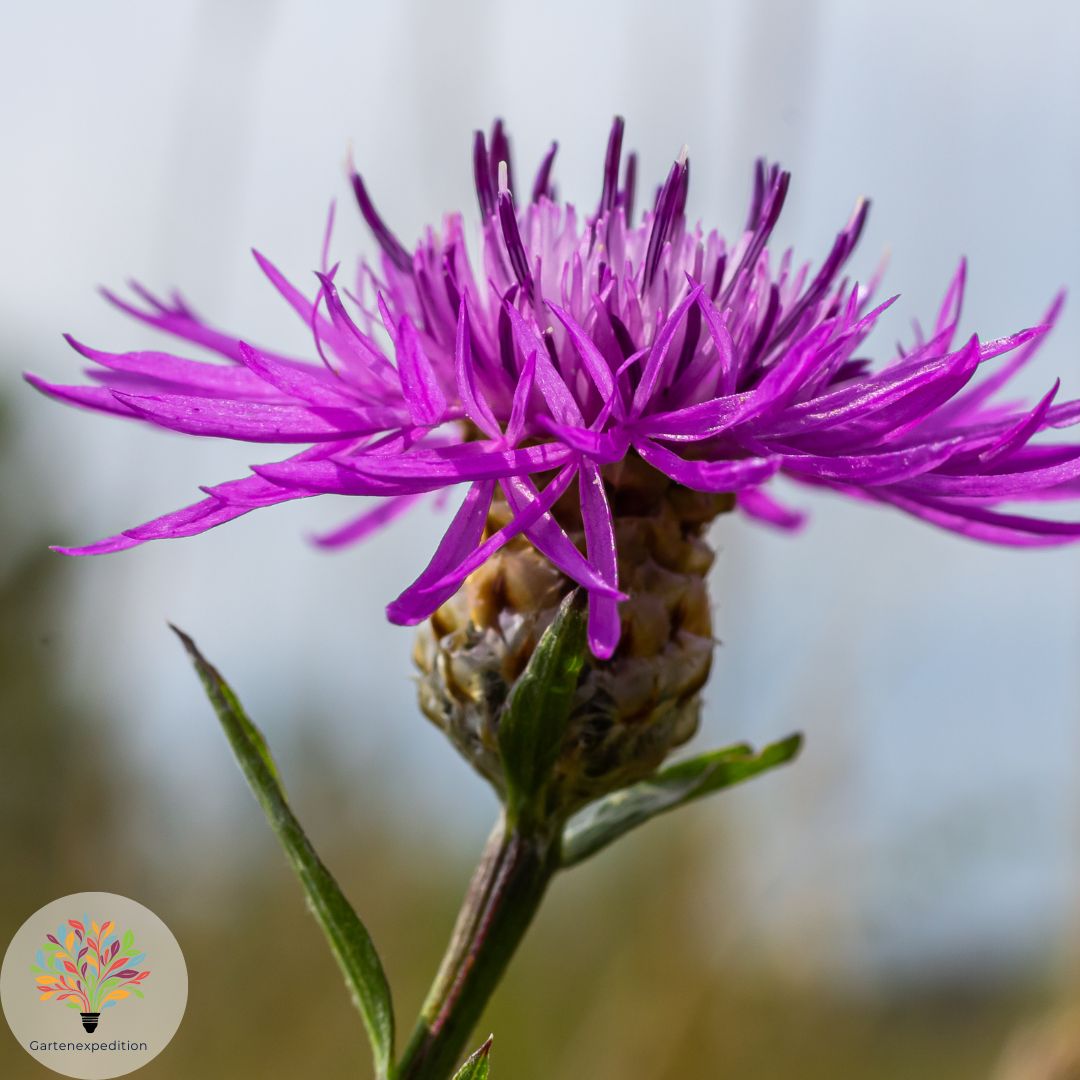
Wiesen-Flockenblume (Centaurea jacea)
3,27 €
incl. VAT, plus shipping costs
To shop →
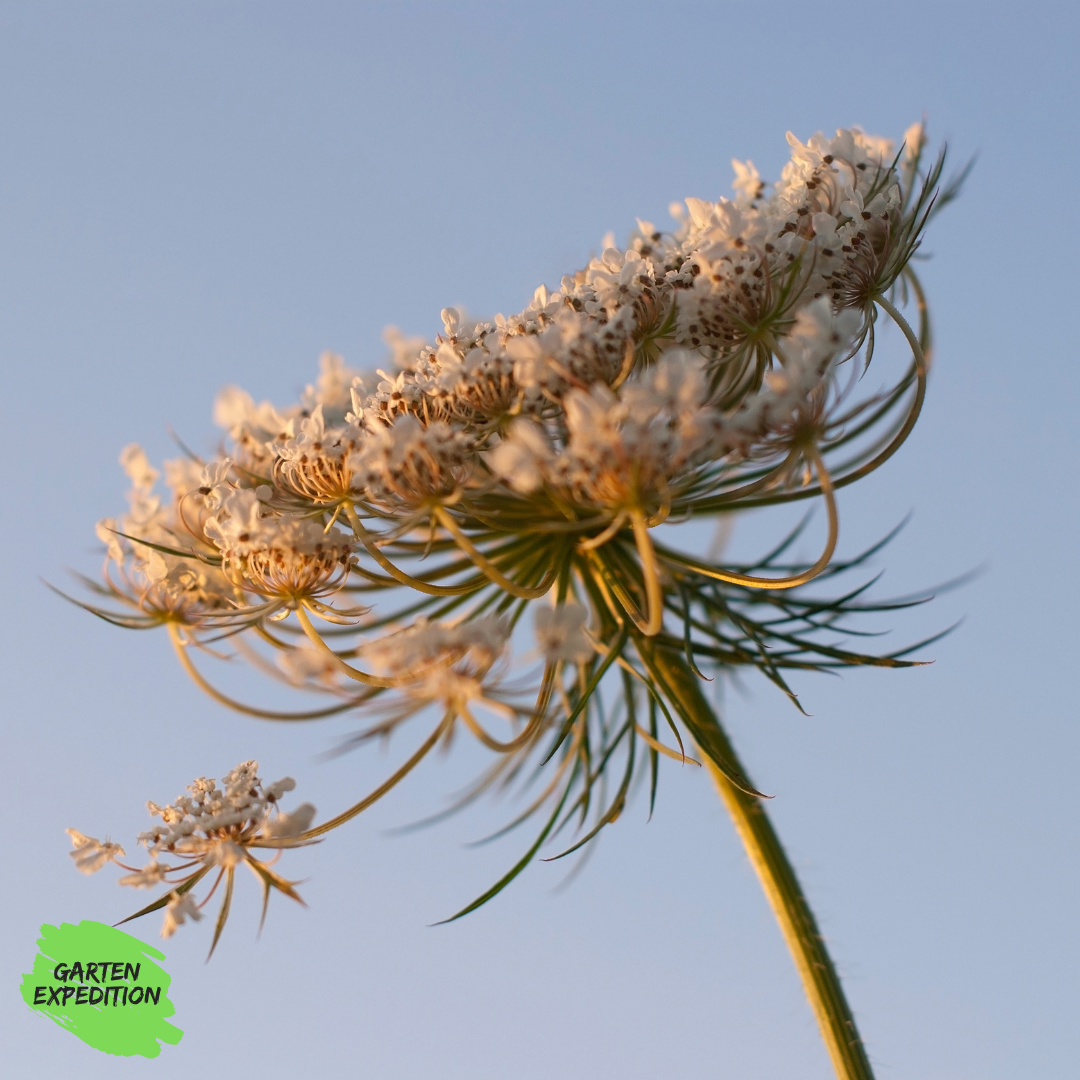
Wilde Möhre (Daucus carota)
2,50 €
incl. VAT, plus shipping costs
To shop →
Partner note: The linked products are from Gartenexpedition.de. By purchasing, you support our work.
Guidelines for the summer
Adopt a strategic approach to watering so as not to disrupt the soil ecology:
- Perform the finger test: Push your index finger about five centimetres deep into the soil. If you feel moisture there, do not water, even if the plant looks limp.
- Morning observation: Check whether the plants have straightened up on their own during the cool morning hours. This is a clear sign of the plant's successful self-adjustment.
- Targeted watering: If the soil is still dry in the morning, water thoroughly and specifically at the base of the root, rather than frequently distributing small amounts over the leaf surface.
- Consider the establishment phase: Observe newly planted wildflowers more closely during their first two years, as their root system is still small. Established wild plants, however, are often adapted to local dry periods.
- Avoid mulching: Avoid using bark mulch on lean wildflower meadows. This alters the nutrient balance and hinders the natural germination of native species.
Frequently asked questions
Should I water my wildflowers during the midday heat if they are wilting?
Usually no. Wilting is often a temporary form of protection against transpiration. First, perform a finger test 5 cm deep. If the soil is moist, the plant does not need anything.
Why is too much watering harmful in a nature garden?
Consistently wet soil displaces oxygen. This weakens root development and can lead to root rot in native wildflowers.
All species data comes from scientific sources (CC BY 4.0 / CC0). Attribution according to licence terms. Complete source overview →