Main article
Wild Carrot in the garden: An ecosystem on a single plant
Discover why the Wild Carrot (Daucus carota) hosts an entire ecosystem and how you can specifically promote it as a keystone species in your wildlife-friendly garden.
Key facts at a glance
- The Wild Carrot (Daucus carota), as an umbellifer, is an essential food source for a wide variety of insects.
- The specific flower structure allows even small species access to pollen and nectar.
- It acts as a keystone species: it serves as a larval food plant for the Swallowtail butterfly (Papilio machaon) and as a hunting ground for predators such as spiders.
- By leaving the seed heads standing throughout winter, you create overwintering habitats and food sources for birds.
Matching videos on the topic
Diese eine Pflanze hält gerade ein ganzes Nahrungsnetz am Leben - Gartenexpedition #shorts
Faktencheck COP 30: Warum Bäume pflanzen nicht immer das Klima rettet
Why the Wild Carrot (Daucus carota) is indispensable for your garden
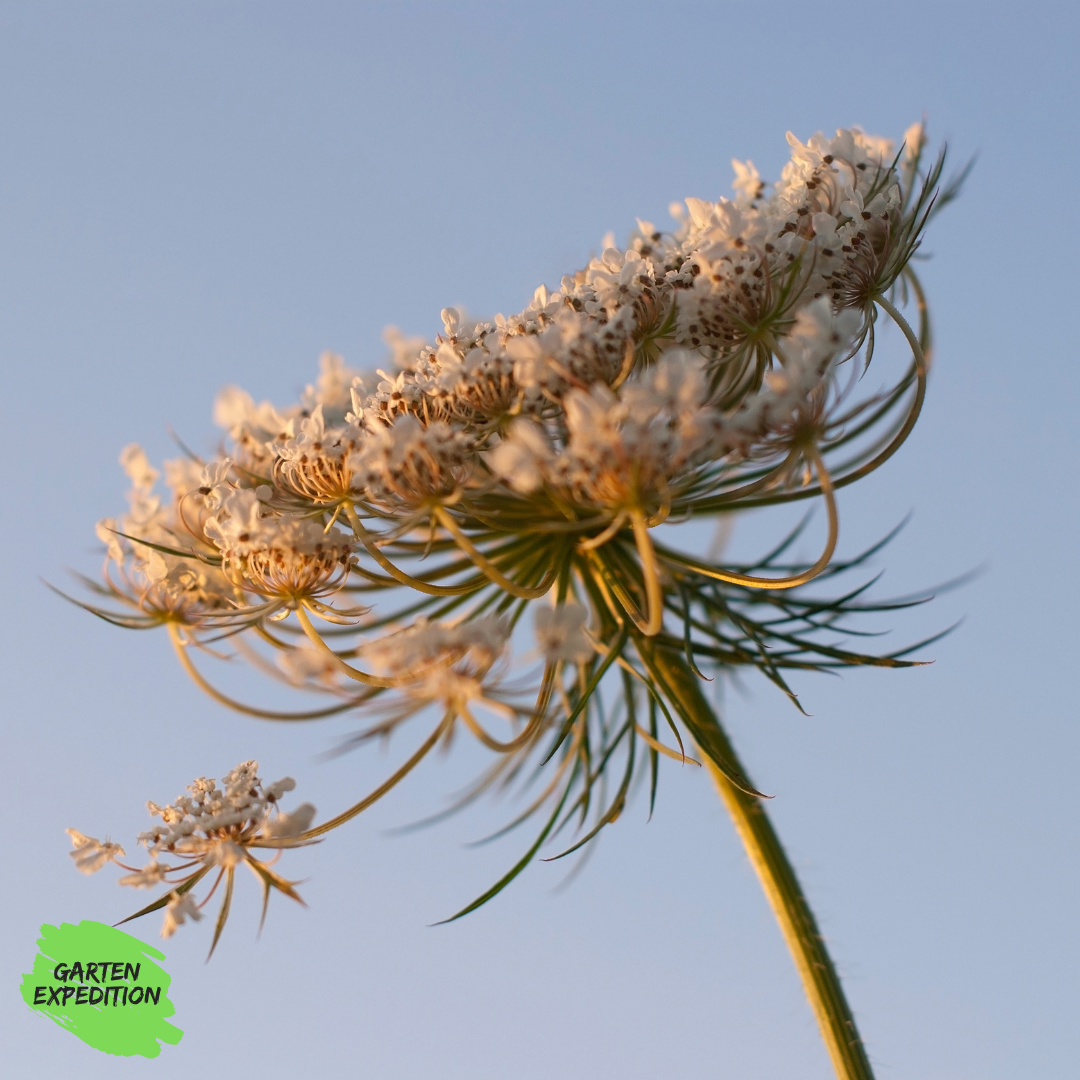
In July, when many spring-flowering plants have finished, the Wild Carrot (Daucus carota) unfolds its full ecological potential. As a native wildflower, it is much more than just a visual highlight. It acts as a functional unit that brings herbivores, pollinators, and predators together in a very small space. In a wildlife-friendly garden, it significantly helps to increase the density of specialised insect species.
Its architecture is the key to this success. The plant forms complex umbels – these are inflorescences where many small individual flowers are arranged on a single level. This arrangement ensures that the plant offers high energy efficiency for insects, as they can consume significant amounts of nectar with very little flight effort.
The ecological dynamics on the flower
The Wild Carrot supports a complex food web. The high density of visitors attracts specialised hunters in turn. These predator-prey relationships are a sign of a stable ecosystem in your garden. The following overview illustrates the various roles that insects occupy on this plant.
| Function | Example species | Ecological relevance |
|---|---|---|
| Pollinators | Honey bee (Apis mellifera), wild bees | Transfer of pollen for seed production |
| Predators | Crab spiders (Thomisidae), assassin bugs | Regulation of insect populations |
| Food source | Swallowtail (Papilio machaon) | Caterpillars eat the leaves |
| Decomposers | Various beetle species | Breakdown of organic matter |
Matching products
Available at Gartenexpedition.de
Partner note: The linked products are from Gartenexpedition.de. By purchasing, you support our work.
How to promote biodiversity with the Wild Carrot
If you are establishing Wild Carrot in your garden or leaving naturally occurring specimens, keep the following points in mind for maximum ecological benefit:
- Site selection: The plant prefers sunny, nutrient-poor areas. Avoid applying fertilisers, as it will be outcompeted by more vigorous species on nitrogen-rich soils.
- Companion flora: Combine the Wild Carrot with other native species to extend the flowering period. A species-rich wildflower meadow provides the best foundation.
- Avoid chemicals: As the plant attracts pollinators and their predators, the use of chemical pesticides must be strictly avoided. Mechanical methods should always be preferred for weed control.
- Overwintering: Do not cut back the plant in autumn. The seed heads provide food for birds and serve as a shelter for many insects during the cold season.
- Observe the caterpillars: If you discover caterpillars of the Swallowtail (Papilio machaon) in late summer, this is direct evidence of the success of your efforts. Let the caterpillars feed undisturbed to complete the cycle.
Frequently asked questions
Why are umbellifers so important for insects?
Their flower structure, consisting of hundreds of individual flowers, allows even small insects easy access to nectar and pollen.
Is the Wild Carrot a weed?
No, it is an ecologically valuable native wildflower that serves as a food plant for caterpillars and a hunting ground for many beneficial insects.
All species data comes from scientific sources (CC BY 4.0 / CC0). Attribution according to licence terms. Complete source overview →