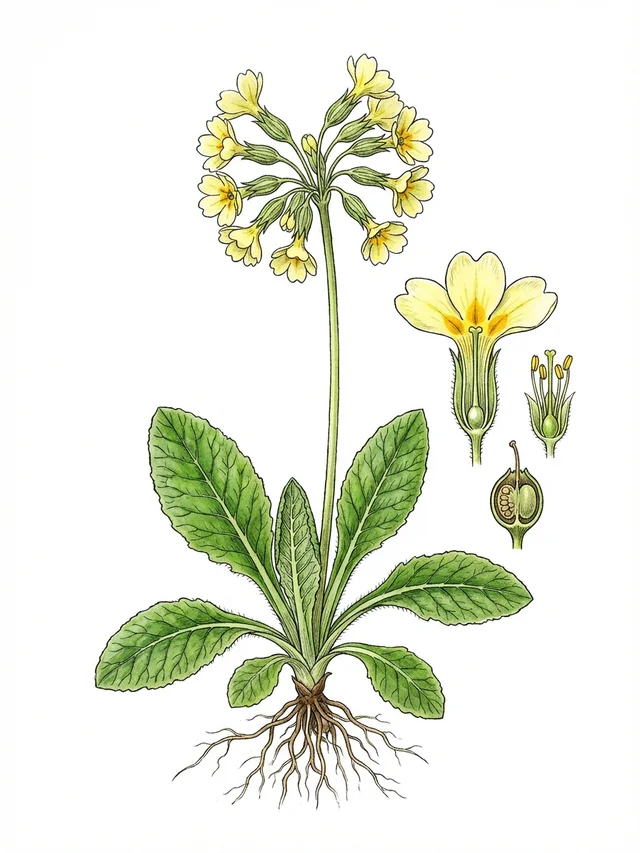
 Image to followAI-generated illustration
Trifolium alexandrinum
Trifolium alexandrinum
FamilyGenus: Kleenative in Germany
🌿
7
Species
interact
🔗
12
Interactions
documented
🐛
1
Host relationships
Species
About this species
An introduced and established leguminous plant in Great Britain, Trifolium alexandrinum is a herbaceous plant with broad leaves. It thrives in full sun on dry, nutrient-poor, neutral to slightly acidic soils, and flowers from June to September.
Ecological network
Click to highlight connections · Click again to open the species page
Loading network...
PollinationLarval host
Ecological significance
Introduced and established in Great Britain, Trifolium alexandrinum is not recorded as causing ecological harm. It occupies dry, nutrient-poor sites, where its competitive ability appears limited.
Annual cycle
A spring-germinating annual. Flowering takes place from June to September. Seeds ripen in late summer and autumn, after which the above-ground parts senesce.
Standort & Merkmale
Light
Sonne
Moisture
Trocken
Soil
—
Flowering period
Jun – Sep
Bioregion
Continental
Growth form
Krautige Pflanze
Woodiness
Nicht verholzt
Leaf type
Breitblättrig
Plant height
0.474 m
Morphological traits: TRY ID3 (CC BY 3.0) & TRY ID81 (CC BY)
Pflege & Anbau
•
Light: Full sun.
•
Soil: Well-drained, dry, nutrient-poor soil; neutral to slightly acidic pH.
•
Watering: Drought-tolerant; avoid waterlogged conditions.
•
Feeding: Does not require nutrient-rich soil; mycorrhizal associations aid nutrient uptake.
•
Sowing: Sow in spring on the desired site; flowers appear in early summer.
•
General: An annual plant; allow seed to shed if self-seeding is wanted, or cut before seed set to prevent spread.
Scientific profile
Trifolium alexandrinum is an introduced species that has become established in Great Britain, where it occurs as a herbaceous legume. Growing to about 0.5 m in height, it bears broad leaves and forms arbuscular mycorrhizal associations. It favours full sun and dry, nutrient-poor soils with a neutral to slightly acidic reaction, and thrives under moderately warm conditions. Based on its ecological indicator values, the plant is associated with full sun, dry, acidic, nutrient-poor settings typical of siliceous grasslands and dry meadows. The species flowers from June to September.
Pollinators & visitors
6 Arten interagieren mit dieser Pflanze
Host relationships
1 species use this plant as a host
Agrotis ipsilon
Sources & data origin
•Interaktionsdaten via GloBI (CC-BY 4.0)
•Middleton-Welling_2020
•pollinator_interactions
•EIVE 1.0 — Dengler et al. (2023), DOI: 10.3897/VCS.98324 (CC BY 4.0)
•GBIF Backbone Taxonomy — GBIF Secretariat (2024), DOI: 10.15468/39omei (CC BY 4.0)
•TRY Categorical Traits (ID3) — Kattge et al. (2012), DOI: 10.17871/TRY.3 (CC BY 3.0)
•TRY Global Spectrum (ID81) — Díaz et al. (2016/2021), DOI: 10.17871/TRY.81 (CC BY)
•Checklist Alien Plants Belgium — Verloove F (2023), Botanic Garden Meise (CC BY 4.0)
•Govaerts R et al. (2025) — World Checklist of Vascular Plants (WCVP) v14. Royal Botanic Gardens, Kew. DOI: 10.34885/xs7h-ze42 (CC BY 4.0)
All data is licensed under CC BY 4.0, CC0, or compatible terms. Attribution according to license conditions. Full source overview →