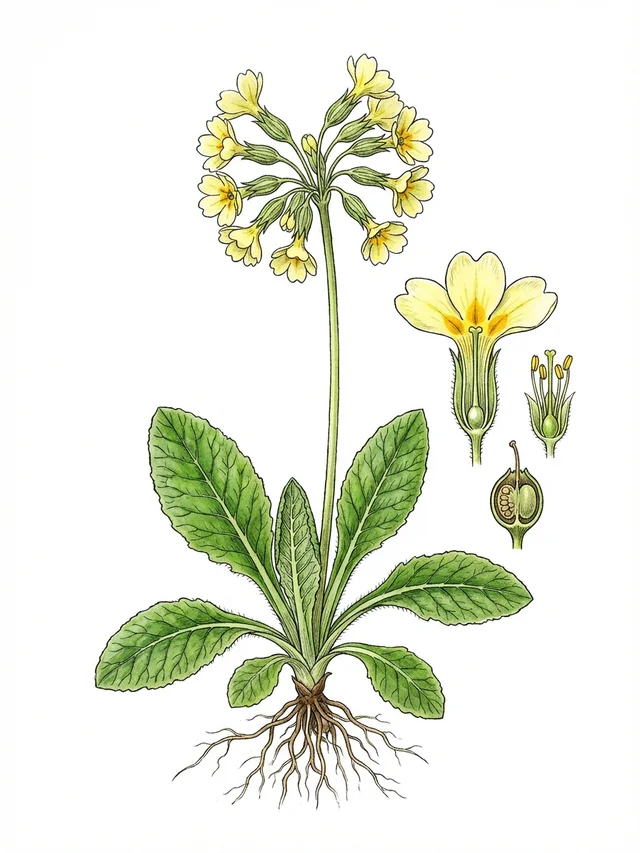
 Image to followAI-generated illustration
Ambrosia trifida
Ambrosia trifida
FamilyGenus: Traubenkräuternative in Germany
🌿
11
Species
interact
🔗
17
Interactions
documented
🐛
2
Host relationships
Species
About this species
An introduced, established herbaceous plant that blooms from August to October and prefers dry, nutrient-rich, calcareous soils in full sun.
Ecological network
Click to highlight connections · Click again to open the species page
Loading network...
PollinationLarval hostFlower visit
Ecological significance
Ecological impact information for Great Britain is not available.
Annual cycle
Flowering occurs from August to October.
Safety note
No safety data has been recorded for this species.
Standort & Merkmale
Light
Sonne
Moisture
Trocken
Soil
—
Flowering period
Aug – Okt
Bioregion
Continental
Growth form
Krautige Pflanze
Woodiness
Nicht verholzt
Leaf type
Breitblättrig
Plant height
1.068 m
Morphological traits: TRY ID3 (CC BY 3.0) & TRY ID81 (CC BY)
Scientific profile
Ambrosia trifida is an introduced species that has become established in Great Britain. It is a non‑woody, broad‑leaved terrestrial herb. Typically it reaches about 1 m in height. Ecological indicator values derived from European datasets suggest a strong affinity for full sun, dry moisture conditions, nutrient‑rich substrates, and calcareous to basic soil reactions. The plant is associated with low‑disturbance ruderal habitats and moderately warm temperatures. It forms arbuscular mycorrhizas.
Pollinators & visitors
7 Arten interagieren mit dieser Pflanze
Vespula germanicaVanessa atalantaVanessa virginiensisEuphydryas desfontainiiMelitaea aetherieMelitaea phoebeMelitaea varia
Sources & data origin
•Interaktionsdaten via GloBI (CC-BY 4.0)
•Middleton-Welling_2020
•FloraWeb / BfN
•EIVE 1.0 — Dengler et al. (2023), DOI: 10.3897/VCS.98324 (CC BY 4.0)
•GBIF Backbone Taxonomy — GBIF Secretariat (2024), DOI: 10.15468/39omei (CC BY 4.0)
•TRY Categorical Traits (ID3) — Kattge et al. (2012), DOI: 10.17871/TRY.3 (CC BY 3.0)
•TRY Global Spectrum (ID81) — Díaz et al. (2016/2021), DOI: 10.17871/TRY.81 (CC BY)
•Checklist Alien Plants Belgium — Verloove F (2023), Botanic Garden Meise (CC BY 4.0)
•Govaerts R et al. (2025) — World Checklist of Vascular Plants (WCVP) v14. Royal Botanic Gardens, Kew. DOI: 10.34885/xs7h-ze42 (CC BY 4.0)
All data is licensed under CC BY 4.0, CC0, or compatible terms. Attribution according to license conditions. Full source overview →