Antennaria dioica
Antennaria dioica
FamilyGenus: Antennarianative in Germany
🌿
16
Species
interact
🔗
28
Interactions
documented
About this species
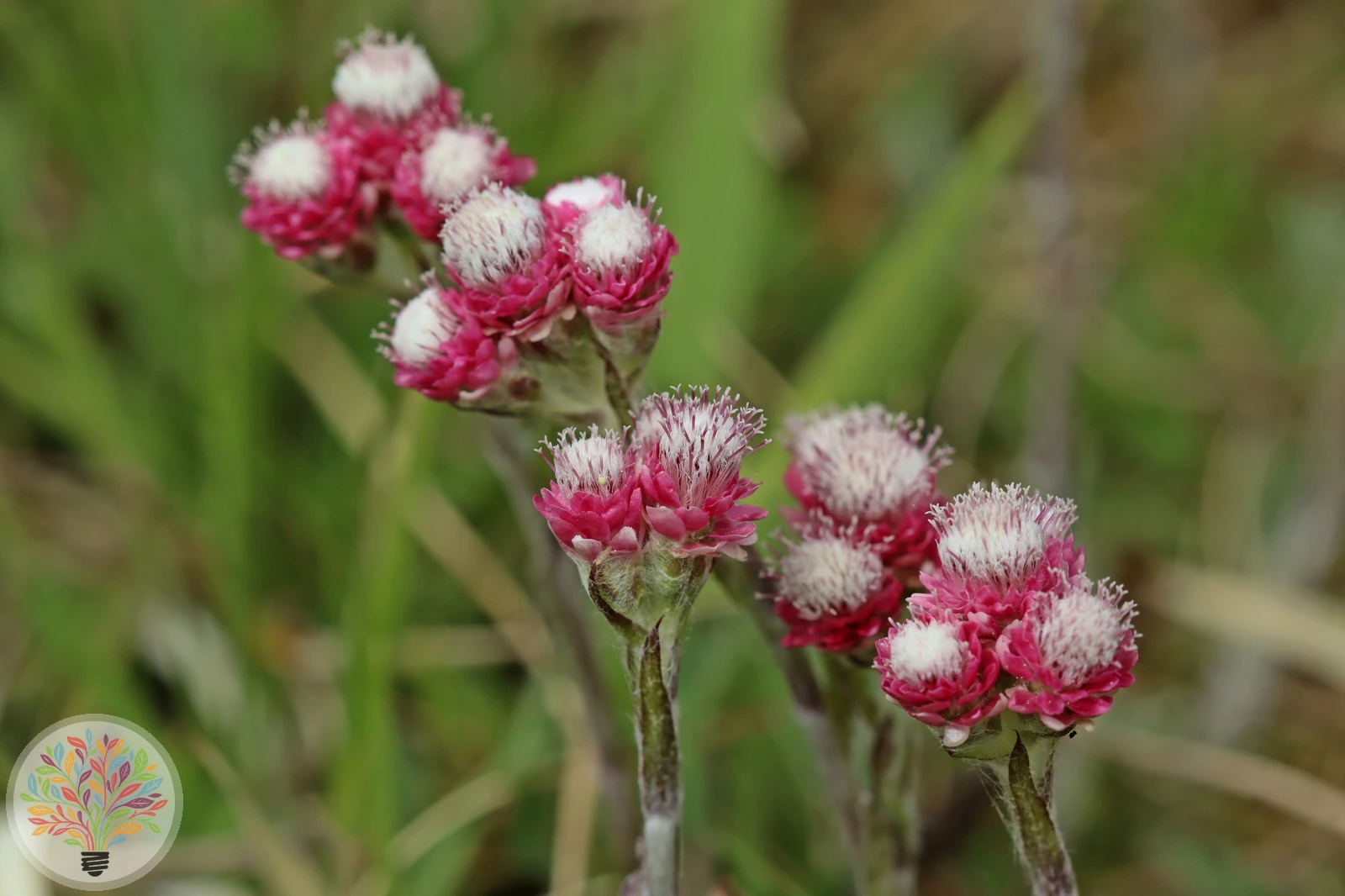
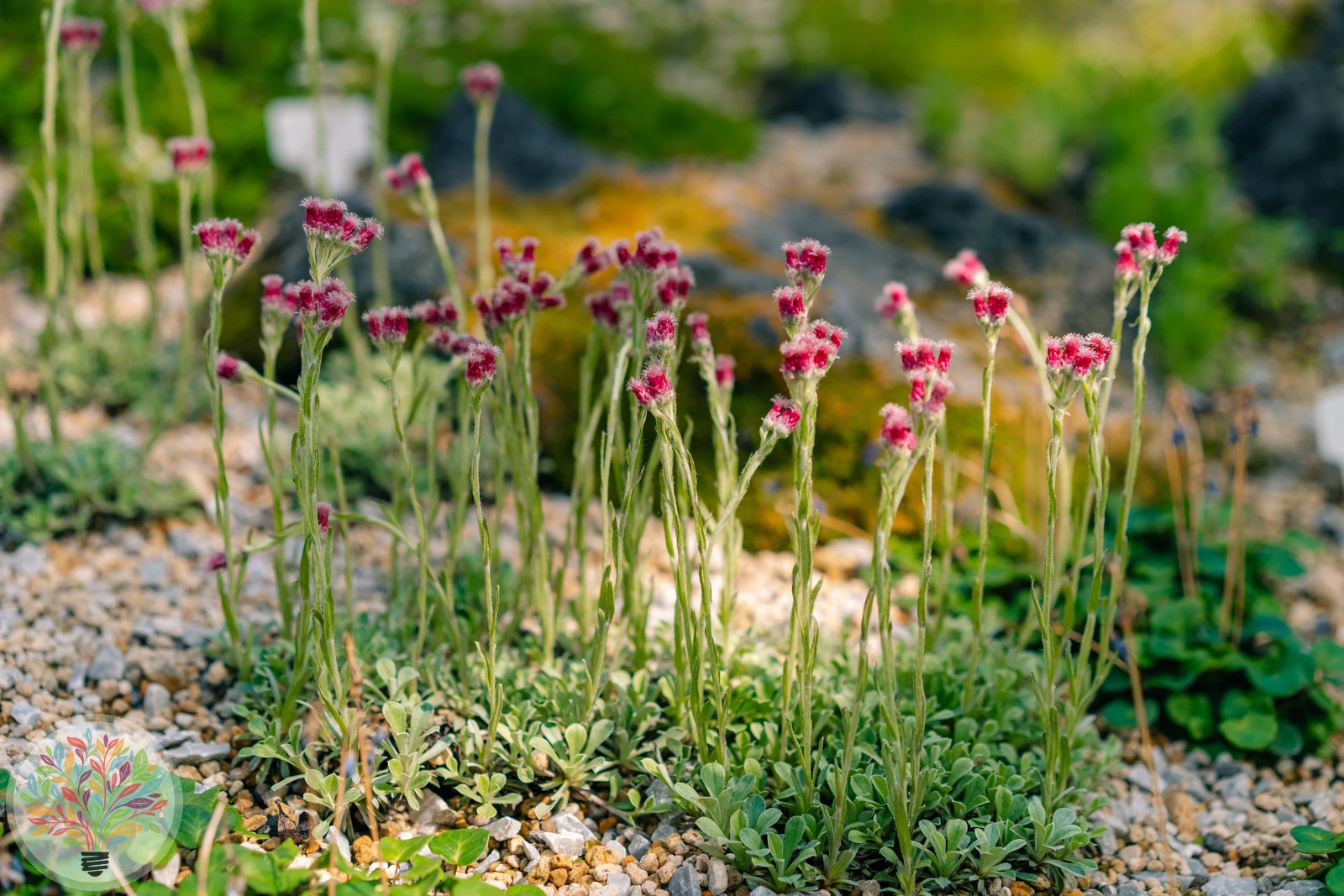
A low, mat-forming, evergreen perennial native to Great Britain. Antennaria dioica produces tiny flower heads from May to September, thriving in full sun on acidic, nutrient-poor soils with moderate moisture. Its neat, ground-hugging foliage and long bloom period make it a charming component of rock gardens and dry grassland plantings.
Ecological network
Click to highlight connections · Click again to open the species page
Loading network...
PollinationFlower visit
Ecological significance
A native species, Antennaria dioica is found in species-rich, open grasslands and heaths across Great Britain, where it contributes to the botanical diversity of these nutrient-poor habitats. It shows no invasive tendencies.
Annual cycle
Evergreen basal leaf rosettes persist year-round. New leaves push from the centre in early spring. From May to September, slender flowering stalks rise above the foliage, bearing clusters of tiny flower heads. After pollination, minute, plumed seeds develop and are shed in late summer and autumn, dispersing on the wind. The plants remain green through winter, with active growth resuming as temperatures rise in spring.
Standort & Merkmale
Light
Sonne
Moisture
Frisch (Mäßig feucht)
Soil
—
Flowering period
Mai – Sep
Bioregion
Continental
Growth form
Krautige Pflanze
Woodiness
Nicht verholzt
Leaf type
Breitblättrig
Leaf phenology
Immergrün
Plant height
0.115 m
Morphological traits: TRY ID3 (CC BY 3.0) & TRY ID81 (CC BY)
Pflege & Anbau
Grow Antennaria dioica in full sun in a sharply drained, acidic, low-fertility soil – a gritty, sandy, or gravelly mix is ideal. Keep the root zone consistently moderately moist during the growing season, but avoid waterlogging, especially in winter. This plant is a light feeder; do not apply fertiliser, as rich soil reduces flowering and vigour. It is well-suited to rock gardens, alpine troughs, and front-of-border positions. Once established, it requires little attention beyond weeding and the removal of spent flower stems if desired. In heavy clay gardens, amend the soil with plenty of grit or grow in a raised bed. No pruning is necessary, though the evergreen mats can be tidied in spring.
Scientific profile
Antennaria dioica is a herbaceous, non-woody perennial in the daisy family (Asteraceae). It forms compact, ground-hugging mats of broad, evergreen leaves that persist through winter. The foliage canopy reaches about 10–12 cm in height. The specific epithet 'dioica' indicates that male and female flowers occur on separate plants, and the tiny flower heads are carried on slender stalks from May to September. The seeds are extremely light (diaspore mass around 0.05 mg) and wind-dispersed. Ecologically, the species is a strong indicator of bright, acidic, and markedly nutrient-poor conditions. Its Ellenberg-type values confirm a preference for full sun, fresh soil moisture, an acid reaction, very low fertility, and moderately warm temperatures, while tolerating only slight disturbance.
Pollinators & visitors
7 Arten interagieren mit dieser Pflanze
Ancistrocerus trifasciatusLasioglossum calceatumCallophrys rubiCidnopus pilosusDysstroma citrataBombus pascuorumCoenonympha pamphilus
Other flower visitors
9 other species visit the flowers
Formica cuniculariaLasius nigerMononychus punctumalbumDilophus femoratusDrymeia hamataEmpis lividaMeligethes viridescensSericus brunneusThricops cunctans
Sources & data origin
•Interaktionsdaten via GloBI (CC-BY 4.0)
•pollinator_interactions
•FloraWeb / BfN
•EIVE 1.0 — Dengler et al. (2023), DOI: 10.3897/VCS.98324 (CC BY 4.0)
•GBIF Backbone Taxonomy — GBIF Secretariat (2024), DOI: 10.15468/39omei (CC BY 4.0)
•TRY Categorical Traits (ID3) — Kattge et al. (2012), DOI: 10.17871/TRY.3 (CC BY 3.0)
•TRY Global Spectrum (ID81) — Díaz et al. (2016/2021), DOI: 10.17871/TRY.81 (CC BY)
•Govaerts R et al. (2025) — World Checklist of Vascular Plants (WCVP) v14. Royal Botanic Gardens, Kew. DOI: 10.34885/xs7h-ze42 (CC BY 4.0)
•Foto: © Adobe Stock / AdobeStock_503344032
All data is licensed under CC BY 4.0, CC0, or compatible terms. Attribution according to license conditions. Full source overview →