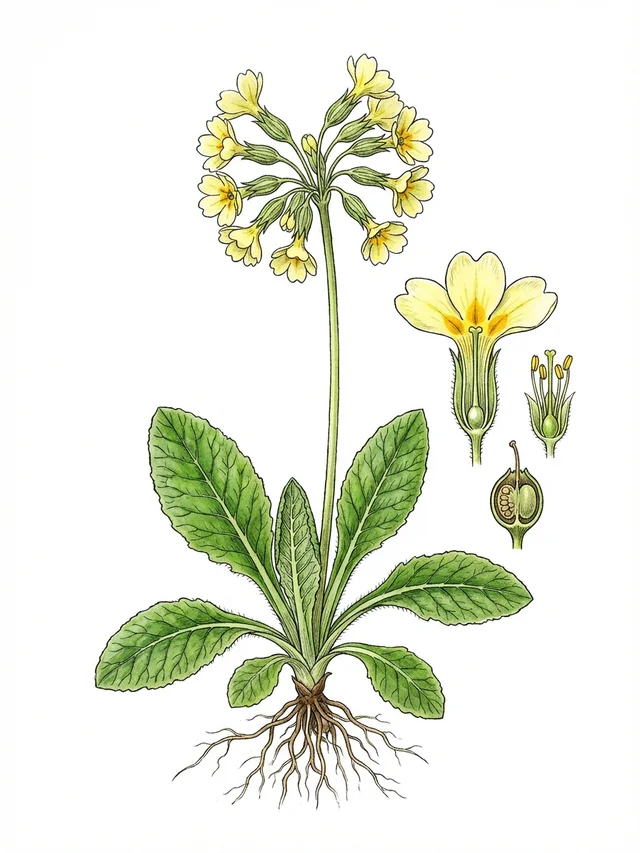
 Image to followAI-generated illustration
Arctostaphylos uva-ursi
Arctostaphylos uva-ursi
FamilyGenus: Arctostaphylosnative in Germany
🌿
13
Species
interact
🔗
14
Interactions
documented
🐛
4
Host relationships
Species
About this species
A low, evergreen shrub native to Great Britain, Arctostaphylos uva-ursi forms dense mats on dry, sunny, nutrient-poor soils. It blooms from March to July, offering a modest supply of nectar and pollen.
Ecological network
Click to highlight connections · Click again to open the species page
Loading network...
PollinationLarval hostFlower visit
Ecological significance
As a native evergreen shrub, it provides year-round ground cover and a minor early-season resource for pollinating insects.
Annual cycle
Evergreen foliage persists through the year. Flowering occurs from March to July.
Standort & Merkmale
Light
Sonne
Moisture
Trocken
Soil
—
Flowering period
Mär – Jul
Bioregion
Continental
Nectar value
1
Pollen value
1
Growth form
Strauch
Woodiness
Verholzt
Leaf type
Breitblättrig
Leaf phenology
Immergrün
Plant height
0.269 m
Morphological traits: TRY ID3 (CC BY 3.0) & TRY ID81 (CC BY)
Corolla tube
8 mm
Pflege & Anbau
Grow in full sun in well-drained, dry, nutrient-poor soil. Once established, it requires little water and thrives on neglect.
Scientific profile
Belonging to the heather family (Ericaceae), Arctostaphylos uva-ursi is a low, woody, evergreen shrub with broad leaves, typically reaching 0.27 m in height. It forms prostrate mats in its native habitats across Great Britain, where it is considered a wild native. The plant flowers between March and July, providing a low level of nectar and pollen. Its ecological preferences indicate a strong affinity for sunny, dry, and nutrient-poor conditions, with a low tolerance for disturbance. It forms ericoid mycorrhizal associations, typical of the Ericaceae family.
Pollinators & visitors
4 Arten interagieren mit dieser Pflanze
Apis melliferaBombus sylvestrisMegachile circumcinctaBombus terrestris
Host relationships
4 species use this plant as a host
Acronicta menyanthidisHyppa rectilineaPapestra birenEupithecia satyrata
Other flower visitors
5 other species visit the flowers
Ursus arctosMartes foinaVulpes vulpesSus scrofaAgrilus cyanescens
Sources & data origin
•Interaktionsdaten via GloBI (CC-BY 4.0)
•Cook et al. (2025) UK Butterfly & Moth Traits (DOI: 10.5285/dbc7cc17-cbbd-49dd-bab4-8e8855768d66)
•pollinator_interactions
•Baden-Böhm F, App M, Thiele J (2022) — The FloRes Database: A floral resources trait database for pollinator habitat-assessment generated by a multistep workflow. Johann Heinrich von Thünen-Institut, Dryad, DOI: 10.5061/dryad.djh9w0w29 (CC0)
•FloraWeb / BfN
•EIVE 1.0 — Dengler et al. (2023), DOI: 10.3897/VCS.98324 (CC BY 4.0)
•EuPPollNet — Kuppler et al. (2025), DOI: 10.1111/geb.70000 (CC BY 4.0)
•Database of Pollinator Interactions (DoPI) — Pocock et al. (2022), DOI: 10.1002/ecy.3801 (CC BY)
•GBIF Backbone Taxonomy — GBIF Secretariat (2024), DOI: 10.15468/39omei (CC BY 4.0)
•TRY Categorical Traits (ID3) — Kattge et al. (2012), DOI: 10.17871/TRY.3 (CC BY 3.0)
•TRY Global Spectrum (ID81) — Díaz et al. (2016/2021), DOI: 10.17871/TRY.81 (CC BY)
•Govaerts R et al. (2025) — World Checklist of Vascular Plants (WCVP) v14. Royal Botanic Gardens, Kew. DOI: 10.34885/xs7h-ze42 (CC BY 4.0)
All data is licensed under CC BY 4.0, CC0, or compatible terms. Attribution according to license conditions. Full source overview →