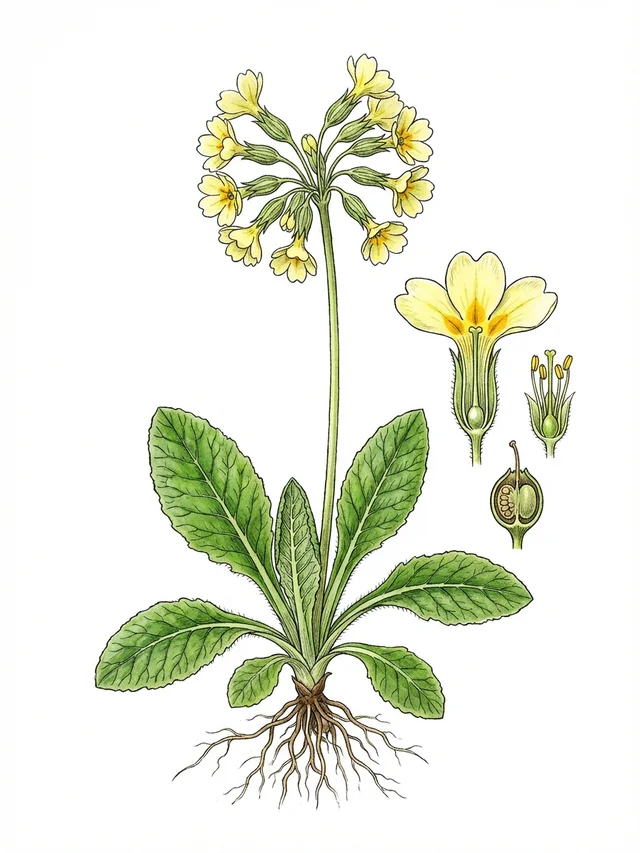
 Image to followAI-generated illustration
Arrhenatherum elatius
Arrhenatherum elatius
FamilyGenus: Arrhenatherumnative in Germany
🌿
26
Species
interact
🔗
29
Interactions
documented
🐛
3
Host relationships
Species
About this species
A tall native grass of fertile, sunny meadows and waysides, false oat-grass produces loose, golden panicles from May into early autumn. Its broad, flat leaves form dense tussocks, and the plant is a familiar sight across the British countryside.
Ecological network
Click to highlight connections · Click again to open the species page
Loading network...
PollinationLarval hostFlower visit
Ecological significance
As a native grass, Arrhenatherum elatius is a natural part of many semi-natural grassland communities. It provides cover and food for a range of wildlife, and its presence typically indicates a stable, low-disturbance habitat. No adverse ecological impacts are attributed to it within its native range.
Annual cycle
New shoots emerge from the perennial rootstock in early spring, forming a dense clump of broad leaves. Flowering stems elongate during late spring and early summer, with the first panicles opening in May. The peak flowering period runs through the summer and into September, after which seeds mature and are shed. In late autumn the foliage yellows and dies back, leaving the plant dormant over winter.
Safety note
No toxic, allergenic or physical hazards are recorded for this grass.
Standort & Merkmale
Light
Sonne
Moisture
Frisch (Mäßig feucht)
Soil
Starkzehrer (Nährstoffreicher/Fetter Boden)
Flowering period
Mai – Sep
Soil reaction
Basisch / Kalkhold
Bioregion
Continental
Growth form
Gras
Woodiness
Nicht verholzt
Leaf type
Breitblättrig
Plant height
0.798 m
Morphological traits: TRY ID3 (CC BY 3.0) & TRY ID81 (CC BY)
Pflege & Anbau
False oat-grass needs a position in full sun and a fertile, lime-rich soil that remains moderately moist. It is a naturally vigorous grass that can outcompete smaller neighbours, so it is best used in wilder parts of the garden or in meadow plantings where its height and late flowering are assets.
Scientific profile
Arrhenatherum elatius is a tufted, perennial grass with erect, unbranched stems that typically reach about 0.8 metres in height. The leaves are broad, flat and non-woody, each with a mean area of 857 mm², giving the plant a lush, green appearance. From May until September the inflorescence appears as an open, nodding panicle of small, compressed spikelets. The plant is adapted to full sun and moderately moist, nutrient-rich soils, showing a strong preference for calcareous or basic conditions. It tolerates only low levels of disturbance and is not salt-tolerant. The diaspores (seeds) are light, averaging 2.74 mg, and the species is both indigenous and archaeophytic in Great Britain. With a widespread distribution and no current conservation concerns, it is a common component of unimproved grasslands, road verges and hedgerow banks.
Host relationships
3 species use this plant as a host
Other flower visitors
22 other species visit the flowers
Myocastor coypusMuntiacus reevesiCalameuta filiformisTrechus quadristriatusHarpalus distinguendusCantharis fuscaOulema gallaecianaOulema duftschmidiOphonus ardosiacusHarpalus latusAmara aeneaAmara plebejaHemicrepidius hirtusTytthaspis sedecimpunctataHarpalus affinisHarpalus rubripesAnisodactylus binotatusAmara lunicollisHarpalus griseusDiachromus germanusAmara convexiorBos taurus
Sources & data origin
•Cook et al. (2025) UK Butterfly & Moth Traits (DOI: 10.5285/dbc7cc17-cbbd-49dd-bab4-8e8855768d66)
•Interaktionsdaten via GloBI (CC-BY 4.0)
•FloraWeb / BfN
•EIVE 1.0 — Dengler et al. (2023), DOI: 10.3897/VCS.98324 (CC BY 4.0)
•GBIF Backbone Taxonomy — GBIF Secretariat (2024), DOI: 10.15468/39omei (CC BY 4.0)
•TRY Categorical Traits (ID3) — Kattge et al. (2012), DOI: 10.17871/TRY.3 (CC BY 3.0)
•TRY Global Spectrum (ID81) — Díaz et al. (2016/2021), DOI: 10.17871/TRY.81 (CC BY)
•Govaerts R et al. (2025) — World Checklist of Vascular Plants (WCVP) v14. Royal Botanic Gardens, Kew. DOI: 10.34885/xs7h-ze42 (CC BY 4.0)
All data is licensed under CC BY 4.0, CC0, or compatible terms. Attribution according to license conditions. Full source overview →