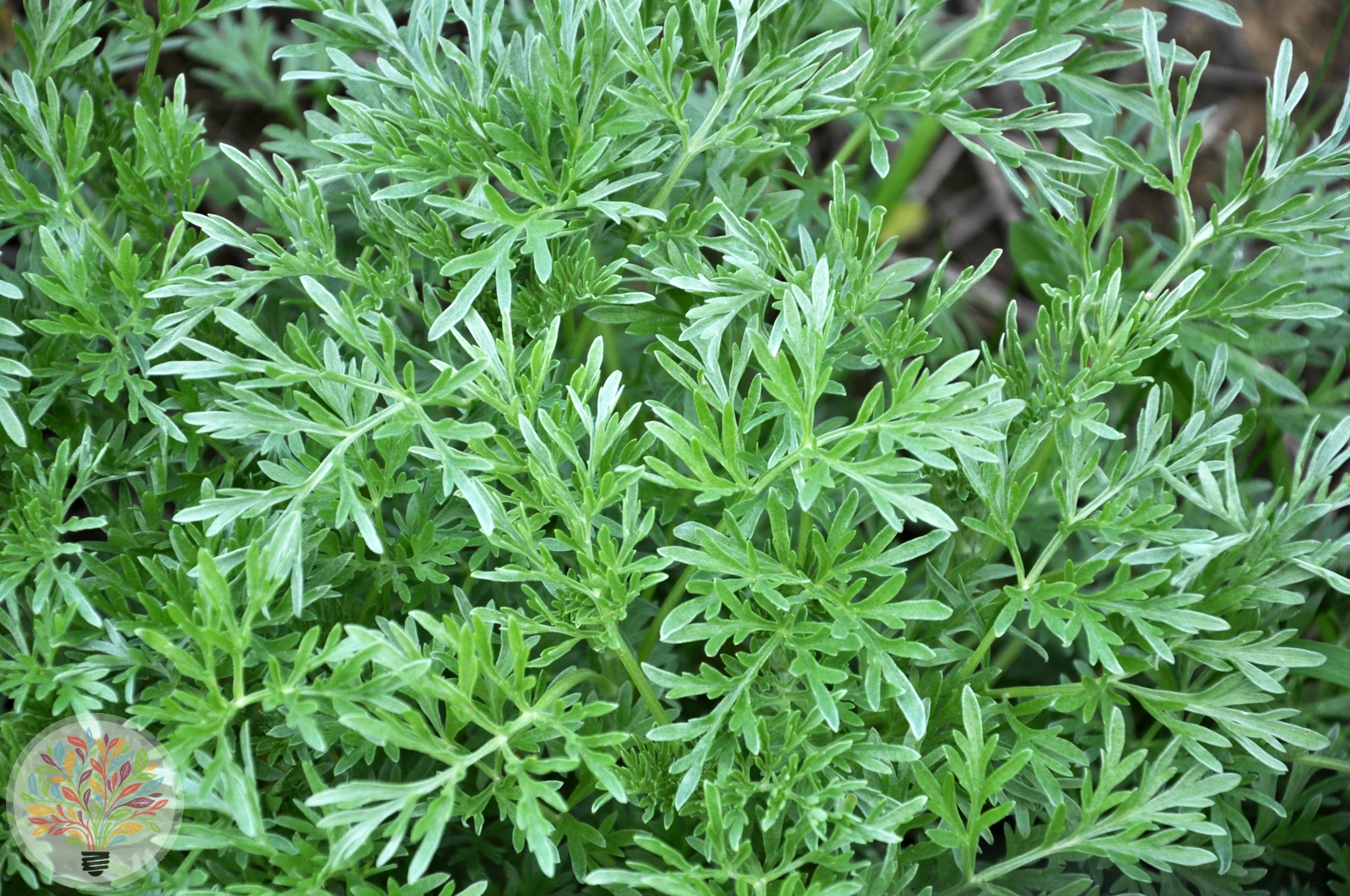
Artemisia absinthium
Artemisia absinthium
FamilyGenus: Artemisianative in Germany
🌿
11
Species
interact
🔗
14
Interactions
documented
🐛
8
Host relationships
Species
About this species
An archaeophyte herbaceous perennial with broad leaves, reaching about 0.74 m in height. Flower heads appear from July to September. It favours full sun, dry conditions and fertile, lime-rich soils.
Ecological network
Click to highlight connections · Click again to open the species page
Loading network...
Larval hostFlower visit
Ecological significance
No notable ecological impacts are documented for this archaeophyte in Britain.
Annual cycle
Foliage emerges in spring; flowering occurs from July to September; seeds ripen in late summer; the plant dies back to ground level in autumn and remains dormant over winter.
Standort & Merkmale
Light
Sonne
Moisture
Trocken
Soil
Starkzehrer (Nährstoffreicher/Fetter Boden)
Flowering period
Jul – Sep
Soil reaction
Basisch / Kalkhold
Bioregion
Continental
Growth form
Krautige Pflanze
Woodiness
Nicht verholzt
Leaf type
Breitblättrig
Leaf phenology
Laubabwerfend
Plant height
0.743 m
Morphological traits: TRY ID3 (CC BY 3.0) & TRY ID81 (CC BY)
Pflege & Anbau
Plant in a sunny position with dry, well-drained, fertile soil. A limey, nutrient-rich substrate suits it best. Once established, it withstands dry periods. Cut back dead stems in autumn or early spring before new growth resumes.
Scientific profile
Artemisia absinthium is a herbaceous perennial in the family Asteraceae. It is an archaeophyte in Great Britain, established before 1500. The plant typically grows to 0.74 m, with broad, deciduous leaves and a non-woody, terrestrial habit. Flowering takes place from July to September. The species thrives in full sun and dry, nutrient-rich, limey soils; it is not tolerant of salinity. Indicator values suggest a preference for moderately warm temperatures and low levels of disturbance. The seeds are tiny, weighing about 0.1 mg each. The species is naturally widespread across much of Europe, and it is not considered threatened in Britain.
Host relationships
8 species use this plant as a host
Eupithecia icterataCucullia absinthiiPolia bombycinaLacanobia oleraceaMniotype adustaBiston betulariaEuthrix potatoriaVanessa atalanta
Other flower visitors
3 other species visit the flowers
Sources & data origin
•Cook et al. (2025) UK Butterfly & Moth Traits (DOI: 10.5285/dbc7cc17-cbbd-49dd-bab4-8e8855768d66)
•Interaktionsdaten via GloBI (CC-BY 4.0)
•FloraWeb / BfN
•EIVE 1.0 — Dengler et al. (2023), DOI: 10.3897/VCS.98324 (CC BY 4.0)
•GBIF Backbone Taxonomy — GBIF Secretariat (2024), DOI: 10.15468/39omei (CC BY 4.0)
•TRY Categorical Traits (ID3) — Kattge et al. (2012), DOI: 10.17871/TRY.3 (CC BY 3.0)
•TRY Global Spectrum (ID81) — Díaz et al. (2016/2021), DOI: 10.17871/TRY.81 (CC BY)
•Govaerts R et al. (2025) — World Checklist of Vascular Plants (WCVP) v14. Royal Botanic Gardens, Kew. DOI: 10.34885/xs7h-ze42 (CC BY 4.0)
•Foto: © Orest Lyzhechka / Adobe Stock / AdobeStock_324633809
All data is licensed under CC BY 4.0, CC0, or compatible terms. Attribution according to license conditions. Full source overview →