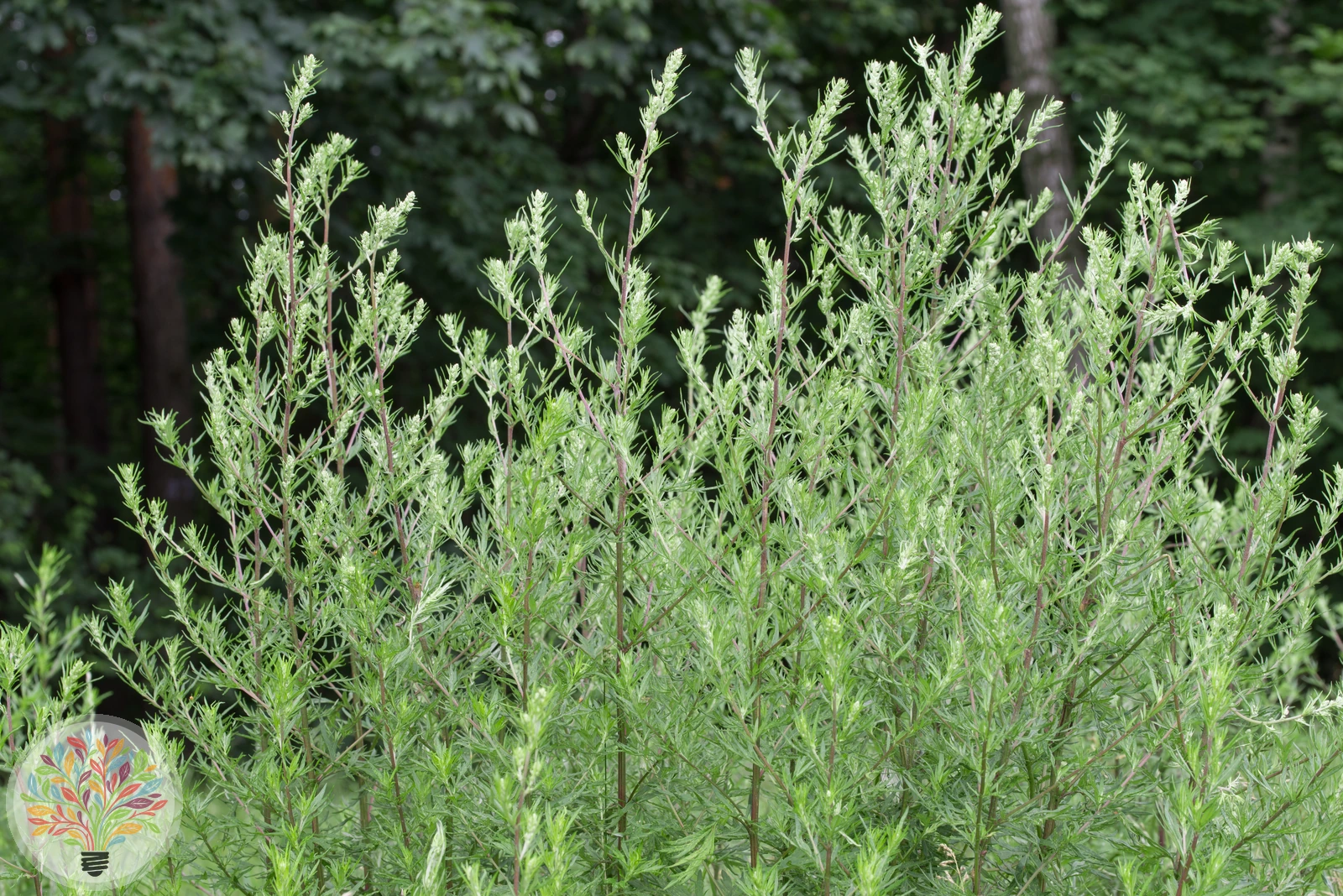
Artemisia vulgaris
Artemisia vulgaris
FamilyGenus: Artemisianative in Germany
🌿
16
Species
interact
🔗
16
Interactions
documented
🐛
14
Host relationships
Species
About this species
Artemisia vulgaris is a tall, herbaceous perennial that has been established in Great Britain since ancient times as an archaeophyte. It bears broad leaves and produces small, wind-pollinated flower heads from July to November. The plant thrives in sunny, nutrient-rich, moderately moist soils and is not tolerant of salt.
Ecological network
Click to highlight connections · Click again to open the species page
Loading network...
PollinationLarval host
Ecological significance
As an established archaeophyte, Artemisia vulgaris is a common component of rough ground, waysides and open, fertile habitats. Its wind-dispersed seeds allow it to colonise nutrient-rich sites with moderate moisture. It is not considered invasive.
Annual cycle
This perennial herb dies back to ground level in winter. New shoots appear in spring, followed by broad leaves through summer. Flower heads develop from July and persist into November. Tiny seeds are released during late summer and autumn, dispersed by wind. Top growth withers after the first hard frosts.
Safety note
No safety concerns are recorded in the source data.
Standort & Merkmale
Light
Sonne
Moisture
Frisch (Mäßig feucht)
Soil
Starkzehrer (Nährstoffreicher/Fetter Boden)
Flowering period
Jul – Nov
Soil reaction
Mäßig sauer bis neutral
Bioregion
Continental
Growth form
Krautige Pflanze
Woodiness
Nicht verholzt
Leaf type
Breitblättrig
Plant height
1.377 m
Morphological traits: TRY ID3 (CC BY 3.0) & TRY ID81 (CC BY)
Pflege & Anbau
If grown, provide full sun and a fertile, moisture-retentive but well-drained soil. Artemisia vulgaris tolerates neutral to slightly acid conditions and will not thrive in saline or heavily disturbed sites. Flowers are borne from July to November.
Scientific profile
Artemisia vulgaris is a non-woody, broad-leaved perennial that reaches up to 1.38 metres in height. Its small, wind-pollinated flower heads appear from July to November. The plant prefers sunny sites with nutrient-rich, moderately moist soils that are neutral to slightly acid, and it is regarded as an indicator of low-disturbance conditions. It produces numerous tiny seeds (diaspore mass around 0.14 mg) which aid wind dispersal. In Great Britain, it is an established archaeophyte, having been present since prehistoric times.
Pollinators & visitors
2 Arten interagieren mit dieser Pflanze
Syrphus vitripennisEpisyrphus balteatus
Host relationships
14 species use this plant as a host
Scopula marginepunctataXanthorhoe designataEupithecia succenturiataEupithecia icterataCucullia absinthiiGortyna flavagoHemithea aestivariaEupithecia subfuscataChloroclystis v-ataEupithecia absinthiataBiston betulariaOrthosia opimaAmphipyra tragopoginisEupithecia centaureata
Sources & data origin
•Cook et al. (2025) UK Butterfly & Moth Traits (DOI: 10.5285/dbc7cc17-cbbd-49dd-bab4-8e8855768d66)
•pollinator_interactions
•FloraWeb / BfN
•EIVE 1.0 — Dengler et al. (2023), DOI: 10.3897/VCS.98324 (CC BY 4.0)
•GBIF Backbone Taxonomy — GBIF Secretariat (2024), DOI: 10.15468/39omei (CC BY 4.0)
•TRY Categorical Traits (ID3) — Kattge et al. (2012), DOI: 10.17871/TRY.3 (CC BY 3.0)
•TRY Global Spectrum (ID81) — Díaz et al. (2016/2021), DOI: 10.17871/TRY.81 (CC BY)
•Govaerts R et al. (2025) — World Checklist of Vascular Plants (WCVP) v14. Royal Botanic Gardens, Kew. DOI: 10.34885/xs7h-ze42 (CC BY 4.0)
•Foto: © Adobe Stock / AdobeStock_365008505
All data is licensed under CC BY 4.0, CC0, or compatible terms. Attribution according to license conditions. Full source overview →