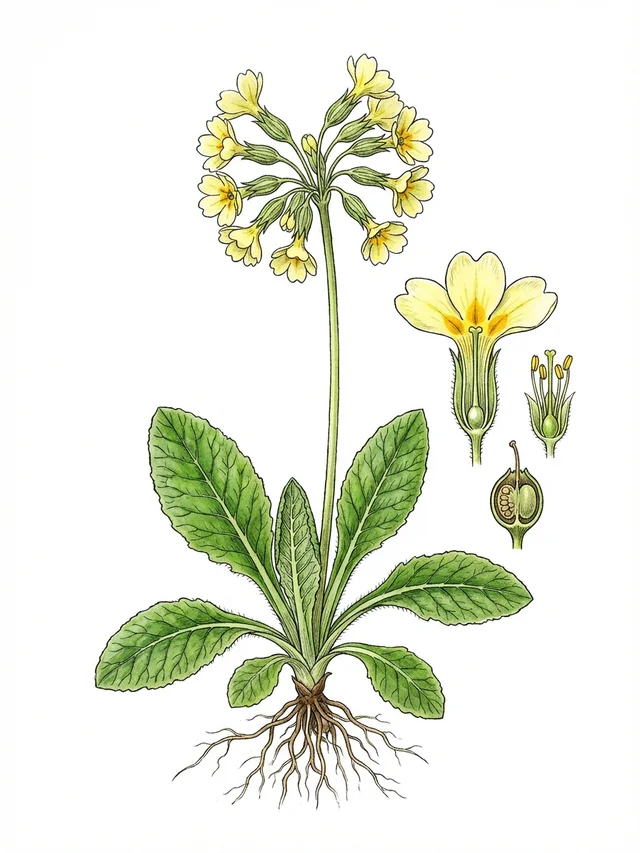
 Image to followAI-generated illustration
Astragalus danicus
Astragalus danicus
FamilyGenus: Astragalusnative in Germany
🌿
6
Species
interact
🔗
10
Interactions
documented
About this species
A native herbaceous plant of dry, calcareous grasslands, Astragalus danicus produces violet flowers in June and July and reaches about 13 cm in height. It grows in full sun on nutrient-poor, alkaline soils.
Ecological network
Click to highlight connections · Click again to open the species page
Loading network...
Pollination
Ecological significance
This plant is a natural component of dry calcareous grasslands, occurring in habitats with low soil nutrients and modest disturbance. It contributes to the structure of these native plant communities.
Annual cycle
Flowering takes place from June to July.
Standort & Merkmale
Light
Sonne
Moisture
Trocken
Soil
Schwachzehrer (Magerer Boden)
Flowering period
Jun – Jul
Soil reaction
Basisch / Kalkhold
Bioregion
Continental
Growth form
Krautige Pflanze
Woodiness
Nicht verholzt
Leaf type
Breitblättrig
Plant height
0.131 m
Morphological traits: TRY ID3 (CC BY 3.0) & TRY ID81 (CC BY)
Pflege & Anbau
Grow in full sun in a very well-drained, nutrient-poor soil which is alkaline to neutral. This plant is adapted to dry conditions and requires no supplementary watering once established. It flowers in early summer, from June to July.
Scientific profile
Astragalus danicus is a small, herbaceous perennial in the pea family (Fabaceae) native in Great Britain. It is a non-woody, broad-leaved plant typically reaching a height of about 13 cm. The violet flowers appear in early summer, from June to July, and develop into small pods. The species occurs in full sun on dry, nutrient-poor, calcareous to basic soils (Ellenberg L8, M3, R8, N2). Disturbance tolerance is low. Leaves are relatively small, with a recorded leaf area of approximately 13.6 mm², and the seeds average around 1.35 mg. In red-list assessments it is recorded as category 3.
Pollinators & visitors
6 Arten interagieren mit dieser Pflanze
Sources & data origin
•Interaktionsdaten via GloBI (CC-BY 4.0)
•pollinator_interactions
•FloraWeb / BfN
•EIVE 1.0 — Dengler et al. (2023), DOI: 10.3897/VCS.98324 (CC BY 4.0)
•GBIF Backbone Taxonomy — GBIF Secretariat (2024), DOI: 10.15468/39omei (CC BY 4.0)
•TRY Categorical Traits (ID3) — Kattge et al. (2012), DOI: 10.17871/TRY.3 (CC BY 3.0)
•TRY Global Spectrum (ID81) — Díaz et al. (2016/2021), DOI: 10.17871/TRY.81 (CC BY)
•Govaerts R et al. (2025) — World Checklist of Vascular Plants (WCVP) v14. Royal Botanic Gardens, Kew. DOI: 10.34885/xs7h-ze42 (CC BY 4.0)
All data is licensed under CC BY 4.0, CC0, or compatible terms. Attribution according to license conditions. Full source overview →