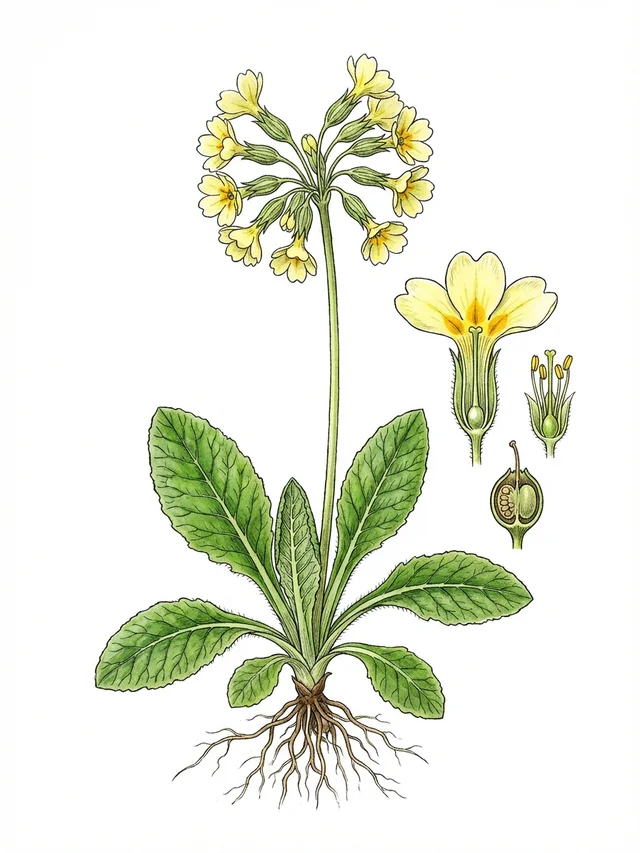
 Image to followAI-generated illustration
Paulownia tomentosa
Paulownia tomentosa
FamilyGenus: Paulowniennative in Germany
🌿
2
Species
interact
🔗
2
Interactions
documented
🐛
1
Host relationships
Species
About this species
Paulownia tomentosa is a deciduous broad-leaved tree, introduced and established in Great Britain. It typically reaches around 16 m in height and bears showy flower panicles in April and May. The tree prefers half-shade and moderately moist, low-nutrient soils that are neutral to slightly acid.
Ecological network
Click to highlight connections · Click again to open the species page
Loading network...
PollinationLarval host
Ecological significance
Paulownia tomentosa is introduced and established in Great Britain. No specific ecological impacts or invasive status are recorded for Great Britain in the provided source data.
Annual cycle
The tree is deciduous, losing its leaves in autumn and producing new foliage in spring. Flowering occurs from April to May. Information on fruiting or other seasonal events is not provided.
Safety note
No safety information is available from the source data.
Standort & Merkmale
Light
Halbschatten
Moisture
Frisch (Mäßig feucht)
Soil
—
Flowering period
Apr – Mai
Bioregion
Continental
Growth form
Baum
Woodiness
Verholzt
Leaf type
Breitblättrig
Leaf phenology
Laubabwerfend
Plant height
16.413 m
Morphological traits: TRY ID3 (CC BY 3.0) & TRY ID81 (CC BY)
Pflege & Anbau
•
Light: Position in half-shade.
•
Soil: Provide a fresh, moderately moist, well-drained soil of low to moderate fertility. The soil should be neutral to slightly acid.
•
Mycorrhiza: The tree naturally forms arbuscular mycorrhizal associations; avoid high‑phosphate fertilisers to support this symbiosis.
Scientific profile
Paulownia tomentosa is a woody, terrestrial, deciduous tree in the family Paulowniaceae. It can grow to approximately 16.4 m in height, with broad leaves, and it flowers from April to May. Its natural range includes temperate and tropical Asia (China and Eastern Asia, among others), and it has been introduced and become established in Great Britain. The tree prefers half-shade, fresh or moderately moist soils, and thrives on low-nutrient substrates with a neutral to weakly acid reaction. It forms arbuscular mycorrhizal associations, and its diaspore mass is about 0.21 mg.
Pollinators & visitors
1 Arten interagieren mit dieser Pflanze
Apis mellifera
Sources & data origin
•Interaktionsdaten via GloBI (CC-BY 4.0)
•EIVE 1.0 — Dengler et al. (2023), DOI: 10.3897/VCS.98324 (CC BY 4.0)
•GBIF Backbone Taxonomy — GBIF Secretariat (2024), DOI: 10.15468/39omei (CC BY 4.0)
•TRY Categorical Traits (ID3) — Kattge et al. (2012), DOI: 10.17871/TRY.3 (CC BY 3.0)
•TRY Global Spectrum (ID81) — Díaz et al. (2016/2021), DOI: 10.17871/TRY.81 (CC BY)
•Checklist Alien Plants Belgium — Verloove F (2023), Botanic Garden Meise (CC BY 4.0)
•Govaerts R et al. (2025) — World Checklist of Vascular Plants (WCVP) v14. Royal Botanic Gardens, Kew. DOI: 10.34885/xs7h-ze42 (CC BY 4.0)
All data is licensed under CC BY 4.0, CC0, or compatible terms. Attribution according to license conditions. Full source overview →