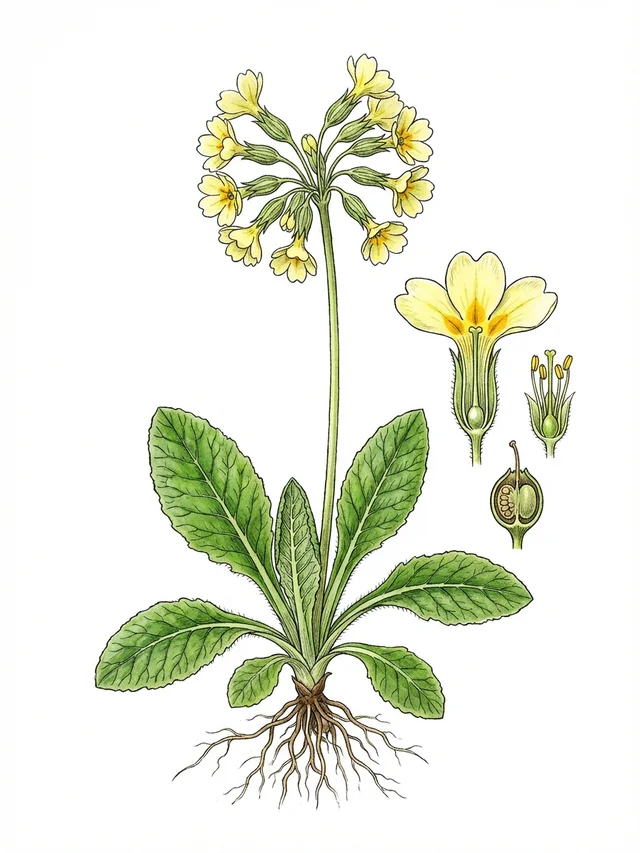
 Image to followAI-generated illustration
Brassica oleracea
Brassica oleracea
FamilyGenus: Brassicanative in Germany
🌿
36
Species
interact
🔗
38
Interactions
documented
🐛
12
Host relationships
Species
About this species
Brassica oleracea is a herbaceous, broad‑leaved plant in the cabbage family (Brassicaceae). Mature plants attain a height of about 0.64 metres. It prefers sunny, moderately moist, nutrient‑rich soils that are calcareous. Flowering occurs from May to September. In Great Britain, the species is cultivated and not established in the wild.
Ecological network
Click to highlight connections · Click again to open the species page
Loading network...
PollinationLarval hostFlower visit
Ecological significance
In Great Britain, Brassica oleracea is not reported as established in the wild, and there are no records of invasive behaviour. Belgian data list it as a casual alien linked to agricultural pathways, but its population status there is not established.
Annual cycle
Flowering from May to September. The plant is herbaceous.
Safety note
No specific safety data is recorded for this species.
Standort & Merkmale
Light
Sonne
Moisture
Frisch (Mäßig feucht)
Soil
Starkzehrer (Nährstoffreicher/Fetter Boden)
Flowering period
Mai – Sep
Soil reaction
Mäßig sauer bis neutral
Bioregion
Continental
Growth form
Krautige Pflanze
Woodiness
Nicht verholzt
Leaf type
Breitblättrig
Plant height
0.641 m
Morphological traits: TRY ID3 (CC BY 3.0) & TRY ID81 (CC BY)
Pflege & Anbau
•
Light: Full sun.
•
Moisture: Keep soil evenly moist but well‑drained; fresh, moderately moist conditions are ideal.
•
Soil: Rich, fertile, calcareous (high pH); incorporate plenty of organic matter for heavy feeding.
•
Flowering: Blooms from May to September; plan accordingly for a long display.
•
Growth habit: Herbaceous, reaches about 0.64 m tall; broad leaved.
Scientific profile
Brassica oleracea is a non‑woody terrestrial herb with broad leaves. Mature plants attain a height of approximately 0.64 m. The species requires full sun and performs best on fresh, moderately moist soils. It is a heavy feeder, requiring nutrient‑rich substrates with a preference for calcareous or basic conditions. It shows moderate tolerance to salinity. Leaves have an area of about 1658 mm² and the tiny seeds (diaspore mass 3.8 mg) are typical of a ruderal strategy. Flowering occurs from May to September.
Pollinators & visitors
22 Arten interagieren mit dieser Pflanze
Osmia bicornisBombus lucorumBombus terrestrisBombus lapidariusBombus pascuorumMythimna pallensCabera exanthemataHoplodrina octogenariaLigdia adustataEristalis tenaxPlatycheirus clypeatusPlatycheirus tarsalisMelanostoma mellinumEristalis arbustorumMelanostoma scalarePlatycheirus melanopsisSyritta pipiensPlatycheirus podagratusPlatycheirus peltatusEristalis horticolaSyrphus ribesiiApis mellifera
Host relationships
12 species use this plant as a host
Pieris brassicaePieris rapaePieris napiXanthorhoe fluctuataCamptogramma bilineataAutographa jotaPeridroma sauciaMamestra brassicaeAutographa gammaNoctua comes HübnerDeilephila elpenorNoctua pronuba
Other flower visitors
2 other species visit the flowers
Lasiocampa quercusEudasyphora cyanicolor
Sources & data origin
•Cook et al. (2025) UK Butterfly & Moth Traits (DOI: 10.5285/dbc7cc17-cbbd-49dd-bab4-8e8855768d66)
•pollinator_interactions
•Baden-Böhm F, App M, Thiele J (2022) — The FloRes Database: A floral resources trait database for pollinator habitat-assessment generated by a multistep workflow. Johann Heinrich von Thünen-Institut, Dryad, DOI: 10.5061/dryad.djh9w0w29 (CC0)
•FloraWeb / BfN
•EIVE 1.0 — Dengler et al. (2023), DOI: 10.3897/VCS.98324 (CC BY 4.0)
•GBIF Backbone Taxonomy — GBIF Secretariat (2024), DOI: 10.15468/39omei (CC BY 4.0)
•TRY Categorical Traits (ID3) — Kattge et al. (2012), DOI: 10.17871/TRY.3 (CC BY 3.0)
•TRY Global Spectrum (ID81) — Díaz et al. (2016/2021), DOI: 10.17871/TRY.81 (CC BY)
•Checklist Alien Plants Belgium — Verloove F (2023), Botanic Garden Meise (CC BY 4.0)
•Govaerts R et al. (2025) — World Checklist of Vascular Plants (WCVP) v14. Royal Botanic Gardens, Kew. DOI: 10.34885/xs7h-ze42 (CC BY 4.0)
All data is licensed under CC BY 4.0, CC0, or compatible terms. Attribution according to license conditions. Full source overview →