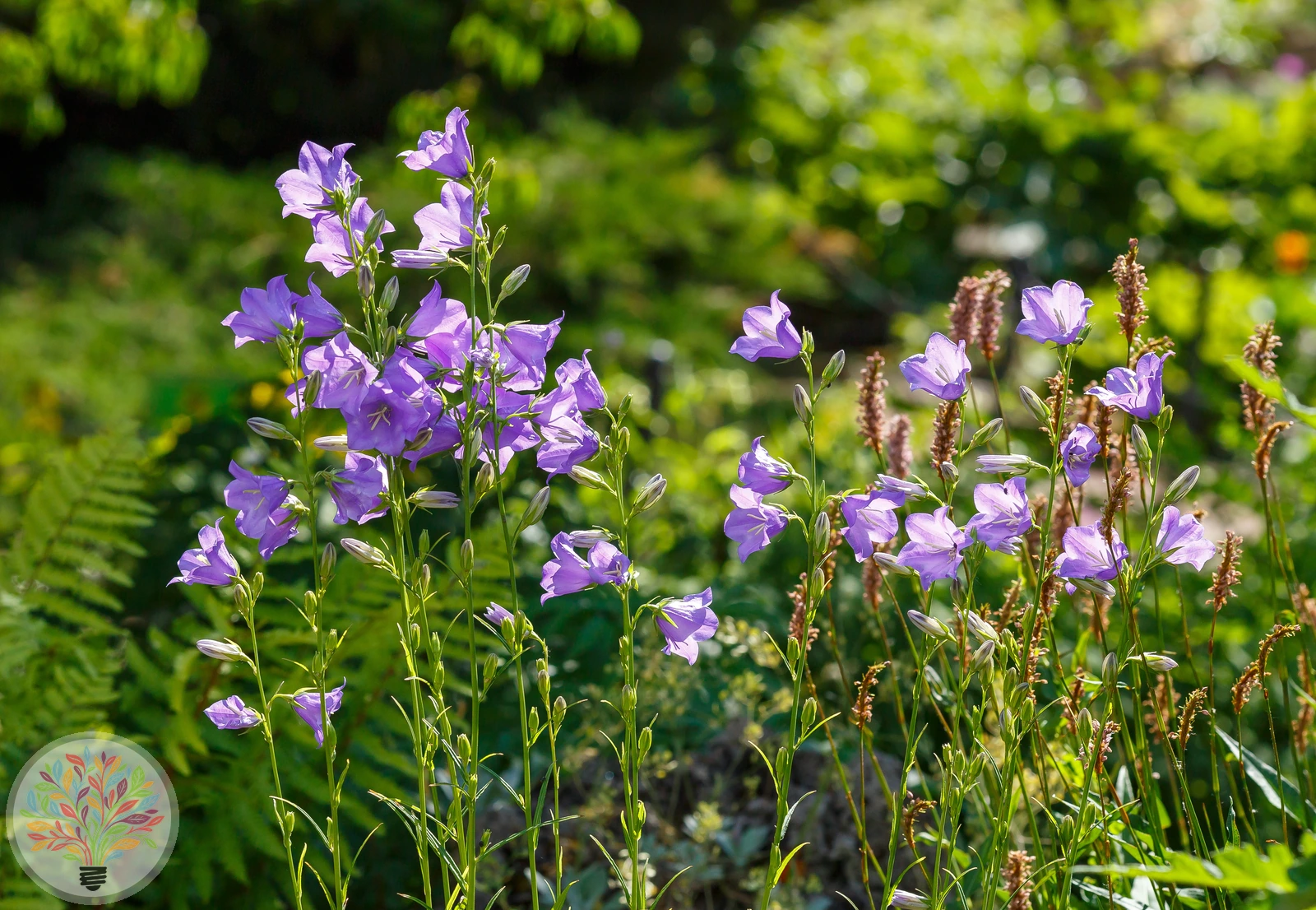
Campanula persicifolia
Campanula persicifolia
FamilyGenus: Campanulanative in Germany
🌿
44
Species
interact
🔗
267
Interactions
documented
About this species
Campanula persicifolia is an introduced herbaceous plant that has become established in Great Britain. It grows to about 60 cm, with broad leaves and a flowering season from June to August. Its flowers are a good source of nectar and pollen for insects, making it a useful addition to wildlife-friendly plantings.
Ecological network
Click to highlight connections · Click again to open the species page
Loading network...
PollinationFlower visit
Ecological significance
The flowers provide a valuable nectar and pollen resource for bees and other pollinating insects.
Annual cycle
Flowering takes place from June through to August.
Standort & Merkmale
Light
Halbschatten
Moisture
Frisch (Mäßig feucht)
Soil
Mittelzehrer (Normaler Boden)
Flowering period
Jun – Aug
Soil reaction
Basisch / Kalkhold
Bioregion
Continental
Nectar value
5
Pollen value
5
Growth form
Krautige Pflanze
Woodiness
Nicht verholzt
Leaf type
Breitblättrig
Plant height
0.615 m
Morphological traits: TRY ID3 (CC BY 3.0) & TRY ID81 (CC BY)
Pflege & Anbau
Campanula persicifolia thrives in semi-shade and prefers a moderately moist, well-drained soil. It is well suited to alkaline or neutral ground and does not demand high nutrient levels. Once established, it needs little attention beyond occasional watering during dry spells.
Scientific profile
This introduced species has become established in parts of Great Britain. It is a herbaceous, broad-leaved plant, typically reaching a height of around 0.6 m. Flowering occurs from June to August, producing blooms that offer both nectar and pollen to visiting insects. It favours semi-shaded situations and moderately moist, alkaline to neutral soils of average fertility.
Pollinators & visitors
36 Arten interagieren mit dieser Pflanze
Pieris rapaeEpisyrphus balteatusBombus pascuorumBombus hortorumBombus soroeensisBombus lucorumBombus lapidariusBombus veteranusSphaerophoria scriptaHelophilus pendulusAndrena mucidaPipiza lugubrisChelostoma campanularumBombus pratorumBombus hypnorumBombus distinguendusBombus schrenckiBombus ruderariusHoplitis mitisOsmia rufohirtaAndrena curvungulaApis melliferaBombus terrestrisLasioglossum calceatumThymelicus lineolaMelitta haemorrhoidalisMegachile.willughbiellaLasioglossum.morioOsmia rapunculiBombus terrestisCoenonympha glycerionChelostoma rapunculiHylaeus communisHylaeus confususMegachile willughbiellaLasioglossum morio
Other flower visitors
8 other species visit the flowers
Thecophora atraAncylolomia tentaculellaBraconidaeMuscidaeCoenonympha iphisBoloria seleneOedemera nobilisMicrogasterinae
Sources & data origin
•pollinator_interactions
•FloraWeb / BfN
•EIVE 1.0 — Dengler et al. (2023), DOI: 10.3897/VCS.98324 (CC BY 4.0)
•EuPPollNet — Kuppler et al. (2025), DOI: 10.1111/geb.70000 (CC BY 4.0)
•Database of Pollinator Interactions (DoPI) — Pocock et al. (2022), DOI: 10.1002/ecy.3801 (CC BY)
•GBIF Backbone Taxonomy — GBIF Secretariat (2024), DOI: 10.15468/39omei (CC BY 4.0)
•TRY Categorical Traits (ID3) — Kattge et al. (2012), DOI: 10.17871/TRY.3 (CC BY 3.0)
•TRY Global Spectrum (ID81) — Díaz et al. (2016/2021), DOI: 10.17871/TRY.81 (CC BY)
•Govaerts R et al. (2025) — World Checklist of Vascular Plants (WCVP) v14. Royal Botanic Gardens, Kew. DOI: 10.34885/xs7h-ze42 (CC BY 4.0)
•Foto: © Adobe Stock / AdobeStock_618239923
All data is licensed under CC BY 4.0, CC0, or compatible terms. Attribution according to license conditions. Full source overview →