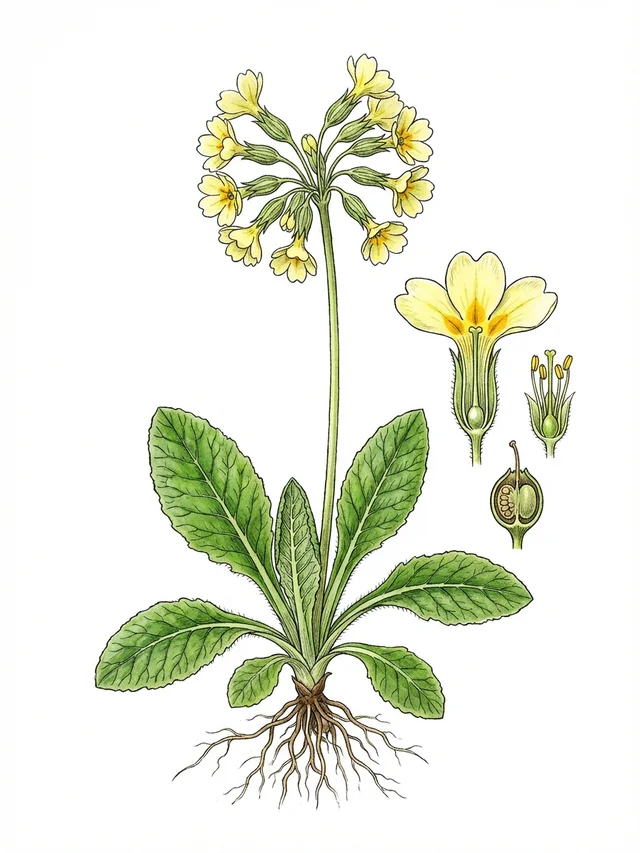
 Image to followAI-generated illustration
Cardamine amara
Cardamine amara
FamilyGenus: Cardaminenative in Germany
🌿
19
Species
interact
🔗
36
Interactions
documented
🐛
2
Host relationships
Species
About this species
A moisture-loving native herbaceous plant of damp, partially shaded places, bearing clusters of small flowers from April to June.
Ecological network
Click to highlight connections · Click again to open the species page
Loading network...
PollinationLarval hostFlower visit
Ecological significance
It is a component of damp, partially shaded plant communities in its native range.
Annual cycle
Flowering occurs from April to June. As a herbaceous plant, it completes its main growth and reproduction in spring and early summer.
Standort & Merkmale
Light
Halbschatten
Moisture
Feucht
Soil
Mittelzehrer (Normaler Boden)
Flowering period
Apr – Jun
Soil reaction
Mäßig sauer bis neutral
Bioregion
Continental
Growth form
Krautige Pflanze
Woodiness
Nicht verholzt
Leaf type
Breitblättrig
Plant height
0.26 m
Morphological traits: TRY ID3 (CC BY 3.0) & TRY ID81 (CC BY)
Pflege & Anbau
Position in partial shade on a moisture-retentive, moderately fertile soil. Ensure the ground remains consistently damp throughout the growing season. Avoid sites that dry out completely. No additional feeding is required on average garden soil.
Scientific profile
Cardamine amara is a broad-leaved, non-woody herbaceous plant reaching a typical height of around 26 cm. It grows in moist, moderately nutrient-rich soils and prefers partial shade, often found in damp woodlands, streamsides and wet meadows. The leaves are broad, with an average individual leaf area of approximately 2,140 mm². The flowers appear from April to June. The plant indicates low disturbance habitats and tolerates moderately warm temperatures. Its diaspores are small, averaging 0.26 mg. Classified as native in Great Britain, it is not currently threatened.
Pollinators & visitors
12 Arten interagieren mit dieser Pflanze
Bombus pascuorumBombus lucorumBombus vestalisBombus terrestrisBombus lapidariusVolucella bombylansOligia fasciunculaRhingia rostrataEristalis pertinaxEpisyrphus balteatusApis melliferaBombus hortorum
Other flower visitors
5 other species visit the flowers
Sources & data origin
•Cook et al. (2025) UK Butterfly & Moth Traits (DOI: 10.5285/dbc7cc17-cbbd-49dd-bab4-8e8855768d66)
•pollinator_interactions
•FloraWeb / BfN
•EIVE 1.0 — Dengler et al. (2023), DOI: 10.3897/VCS.98324 (CC BY 4.0)
•GBIF Backbone Taxonomy — GBIF Secretariat (2024), DOI: 10.15468/39omei (CC BY 4.0)
•TRY Categorical Traits (ID3) — Kattge et al. (2012), DOI: 10.17871/TRY.3 (CC BY 3.0)
•TRY Global Spectrum (ID81) — Díaz et al. (2016/2021), DOI: 10.17871/TRY.81 (CC BY)
•Govaerts R et al. (2025) — World Checklist of Vascular Plants (WCVP) v14. Royal Botanic Gardens, Kew. DOI: 10.34885/xs7h-ze42 (CC BY 4.0)
All data is licensed under CC BY 4.0, CC0, or compatible terms. Attribution according to license conditions. Full source overview →