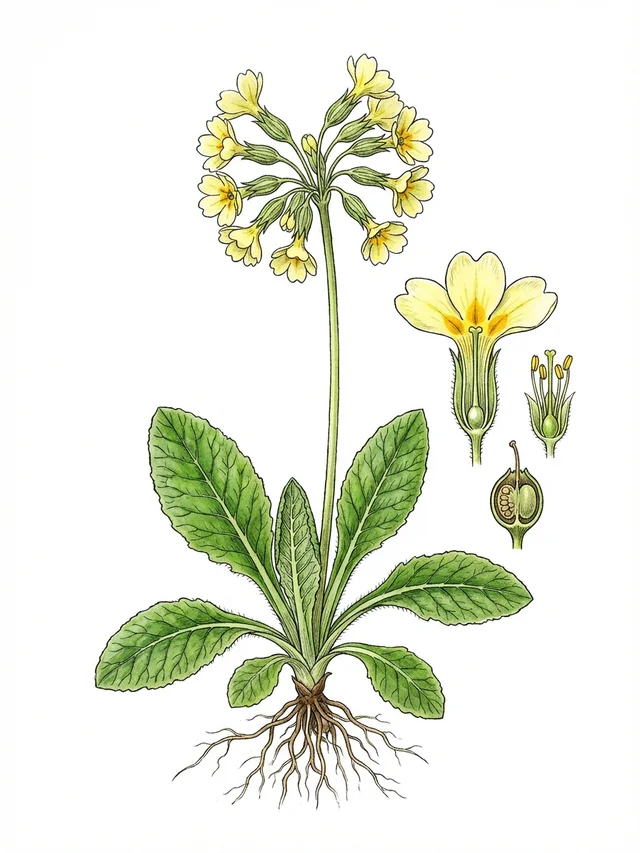
 Image to followAI-generated illustration
Carex pendula
Carex pendula
FamilyGenus: Carexnative in Germany
🌿
1
Species
interact
🔗
1
Interactions
documented
🐛
1
Host relationships
Species
About this species
A native sedge of damp, partially shaded places, Carex pendula is a tall, broad-leaved perennial grass-like plant reaching around 0.73 m in height. It produces drooping flower spikes in June and thrives in moist, neutral to slightly acidic soils.
Ecological network
Click to highlight connections · Click again to open the species page
Loading network...
Larval host
Ecological significance
Carex pendula is typical of damp, shady habitats where it contributes to the structural diversity of the ground layer. It forms mycorrhizal associations and is intolerant of severe disturbance.
Annual cycle
A perennial, emerging in spring with fresh foliage overtopped by flowering stems in June. Seed develops through summer and is shed by late summer. The foliage remains green through summer and often into autumn.
Standort & Merkmale
Light
Halbschatten
Moisture
Frisch (Mäßig feucht)
Soil
Mittelzehrer (Normaler Boden)
Flowering period
Jun – Jun
Soil reaction
Mäßig sauer bis neutral
Bioregion
Continental
Growth form
Gras
Woodiness
Nicht verholzt
Leaf type
Breitblättrig
Plant height
0.725 m
Morphological traits: TRY ID3 (CC BY 3.0) & TRY ID81 (CC BY)
Pflege & Anbau
Plant in partial shade in a moisture-retentive, humus-rich soil. Tolerates damp sites but performs best in soil that remains evenly moist. Cut back old foliage in early spring to make way for new growth.
Scientific profile
Carex pendula is a perennial sedge, forming clumps of broad, arching leaves. Mature plants reach approximately 0.73 m in height. The flowering stems bear long, drooping catkin-like spikes in June. Indicator values point to a preference for damp, moderately fertile ground with a neutral to slightly acid reaction. The species is sensitive to disturbance and is typically found in stable, shaded or semi-shaded sites. Its mycorrhizal associations are variable. Carex pendula is native in Great Britain.
Sources & data origin
•Cook et al. (2025) UK Butterfly & Moth Traits (DOI: 10.5285/dbc7cc17-cbbd-49dd-bab4-8e8855768d66)
•FloraWeb / BfN
•EIVE 1.0 — Dengler et al. (2023), DOI: 10.3897/VCS.98324 (CC BY 4.0)
•GBIF Backbone Taxonomy — GBIF Secretariat (2024), DOI: 10.15468/39omei (CC BY 4.0)
•TRY Categorical Traits (ID3) — Kattge et al. (2012), DOI: 10.17871/TRY.3 (CC BY 3.0)
•TRY Global Spectrum (ID81) — Díaz et al. (2016/2021), DOI: 10.17871/TRY.81 (CC BY)
•Govaerts R et al. (2025) — World Checklist of Vascular Plants (WCVP) v14. Royal Botanic Gardens, Kew. DOI: 10.34885/xs7h-ze42 (CC BY 4.0)
All data is licensed under CC BY 4.0, CC0, or compatible terms. Attribution according to license conditions. Full source overview →