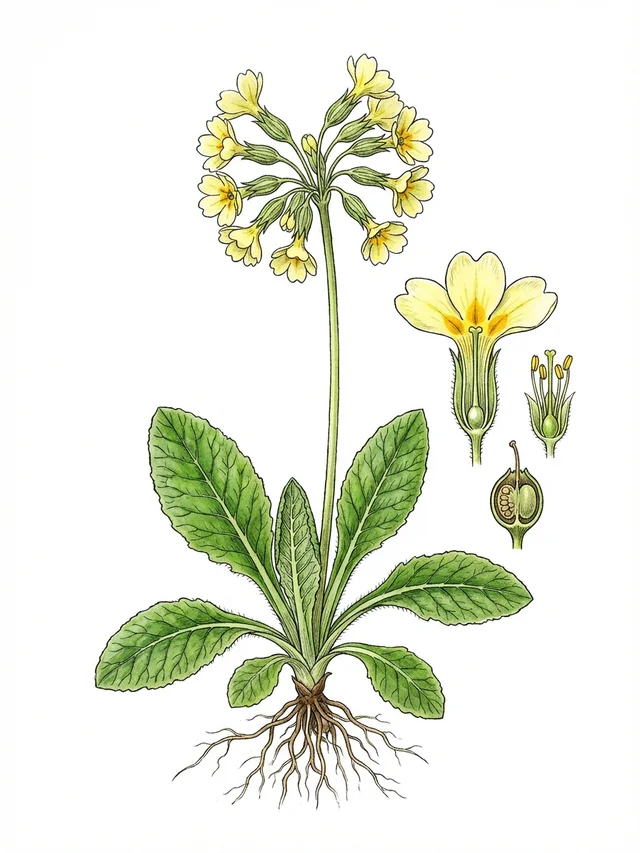
 Image to followAI-generated illustration
Corynephorus canescens
Corynephorus canescens
FamilyGenus: Corynephorusnative in Germany
🌿
1
Species
interact
🔗
2
Interactions
documented
About this species
A native grass of dry, acidic, nutrient-poor grasslands in Great Britain, with broad leaves and a low stature, flowering in early summer.
Ecological network
Click to highlight connections · Click again to open the species page
Loading network...
Pollination
Ecological significance
Corynephorus canescens is a characteristic component of acidic dry grasslands and heathlands on sandy soils, where it helps form open, low-nutrient plant communities.
Annual cycle
Flowering takes place in June and July.
Standort & Merkmale
Light
Sonne
Moisture
Trocken
Soil
Schwachzehrer (Magerer Boden)
Flowering period
Jun – Jul
Soil reaction
Sauer (Säurezeiger)
Growth form
Gras
Woodiness
Nicht verholzt
Leaf type
Breitblättrig
Plant height
0.156 m
Morphological traits: TRY ID3 (CC BY 3.0) & TRY ID81 (CC BY)
Pflege & Anbau
Full sun. Dry, well-drained, low-nutrient soil, preferably sandy or gravelly. Avoid fertilisers and waterlogging.
Scientific profile
This grass forms low, non-woody tussocks that typically reach 15–16 cm in height. The leaves are broad and the whole plant is terrestrial. It is native in Great Britain and occurs in dry, acidic, sandy grasslands and heaths, where the soil is low in nutrients. The species flowers in June and July. Its seeds are minute, each weighing less than 0.1 mg.
Sources & data origin
•Interaktionsdaten via GloBI (CC-BY 4.0)
•FloraWeb / BfN
•EIVE 1.0 — Dengler et al. (2023), DOI: 10.3897/VCS.98324 (CC BY 4.0)
•GBIF Backbone Taxonomy — GBIF Secretariat (2024), DOI: 10.15468/39omei (CC BY 4.0)
•TRY Categorical Traits (ID3) — Kattge et al. (2012), DOI: 10.17871/TRY.3 (CC BY 3.0)
•TRY Global Spectrum (ID81) — Díaz et al. (2016/2021), DOI: 10.17871/TRY.81 (CC BY)
•Govaerts R et al. (2025) — World Checklist of Vascular Plants (WCVP) v14. Royal Botanic Gardens, Kew. DOI: 10.34885/xs7h-ze42 (CC BY 4.0)
All data is licensed under CC BY 4.0, CC0, or compatible terms. Attribution according to license conditions. Full source overview →