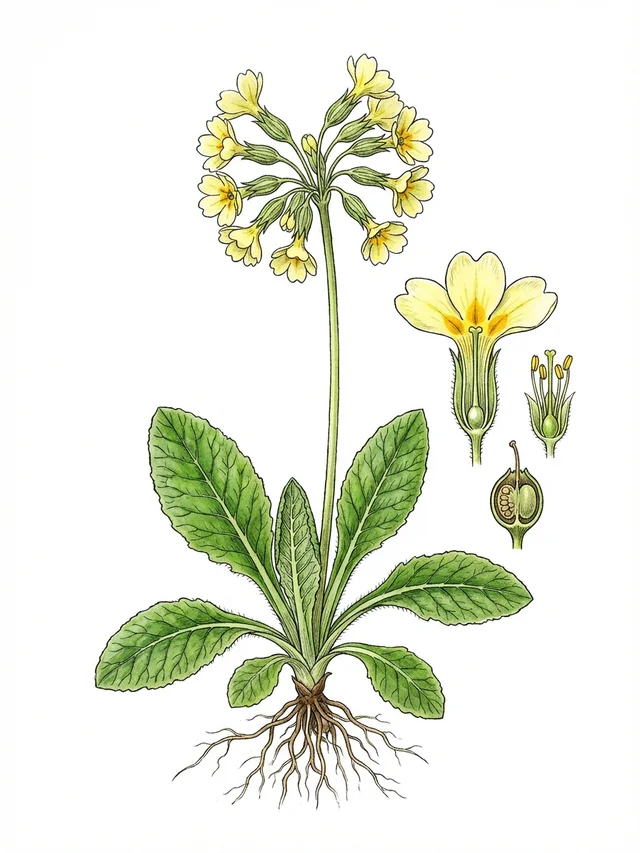
 Image to followAI-generated illustration
Cotoneaster divaricatus
Cotoneaster divaricatus
FamilyGenus: Zwergmispelnnative in Germany
🌿
14
Species
interact
🔗
16
Interactions
documented
About this species
Cotoneaster divaricatus is an introduced deciduous shrub that has become established in the wild in Great Britain. Reaching about 2 m, it flowers in May and June and grows best in half-shade on dry, calcareous soils of moderate fertility.
Ecological network
Click to highlight connections · Click again to open the species page
Loading network...
Pollination
Ecological significance
No specific ecological impact data is recorded for this species in Great Britain.
Annual cycle
This deciduous shrub comes into leaf in spring. Blossom is produced in May and June. In autumn the foliage changes colour before dropping, and the plant remains bare through winter.
Safety note
No safety information is available.
Standort & Merkmale
Light
Halbschatten
Moisture
Trocken
Soil
Mittelzehrer (Normaler Boden)
Flowering period
Mai – Jun
Soil reaction
Basisch / Kalkhold
Bioregion
Continental
Growth form
Strauch
Woodiness
Verholzt
Leaf type
Breitblättrig
Leaf phenology
Laubabwerfend
Plant height
2 m
Morphological traits: TRY ID3 (CC BY 3.0) & TRY ID81 (CC BY)
Pflege & Anbau
Plant in a site offering half-shade. Tolerates dry, calcareous soils and moderate fertility. A deciduous shrub reaching about 2 m in height, it flowers in May and June.
Scientific profile
Cotoneaster divaricatus is a deciduous, broad-leaved shrub in the rose family (Rosaceae). It typically reaches a height of about 2 m. The leaves are shed each autumn. Flowering occurs in May and June. It grows best in half-shade and on dry, calcareous soils of moderate fertility; the temperature preference is moderately warm. It originates from temperate Asia and China. The plant was introduced to Europe as an ornamental and has become established in the wild in Great Britain, where it is regarded as a neophyte. No national red list assessment is available.
Pollinators & visitors
14 Arten interagieren mit dieser Pflanze
Bombus hypnorumApis melliferaSpialia sertoriusSpialia rosaeSpialia orbiferMuschampia cribrellumMuschampia tessellumBoloria polarisBoloria friggaBoloria freijaBoloria charicleaPolygonia c-albumNymphalis polychlorosMelitaea diamina
Sources & data origin
•Interaktionsdaten via GloBI (CC-BY 4.0)
•Middleton-Welling_2020
•pollinator_interactions
•FloraWeb / BfN
•EIVE 1.0 — Dengler et al. (2023), DOI: 10.3897/VCS.98324 (CC BY 4.0)
•GBIF Backbone Taxonomy — GBIF Secretariat (2024), DOI: 10.15468/39omei (CC BY 4.0)
•TRY Categorical Traits (ID3) — Kattge et al. (2012), DOI: 10.17871/TRY.3 (CC BY 3.0)
•TRY Global Spectrum (ID81) — Díaz et al. (2016/2021), DOI: 10.17871/TRY.81 (CC BY)
•Checklist Alien Plants Belgium — Verloove F (2023), Botanic Garden Meise (CC BY 4.0)
•Govaerts R et al. (2025) — World Checklist of Vascular Plants (WCVP) v14. Royal Botanic Gardens, Kew. DOI: 10.34885/xs7h-ze42 (CC BY 4.0)
All data is licensed under CC BY 4.0, CC0, or compatible terms. Attribution according to license conditions. Full source overview →