Cytisus scoparius
Cytisus scoparius
FamilyGenus: Cytisusnative in Germany
🌿
66
Species
interact
🔗
133
Interactions
documented
🐛
31
Host relationships
Species
About this species
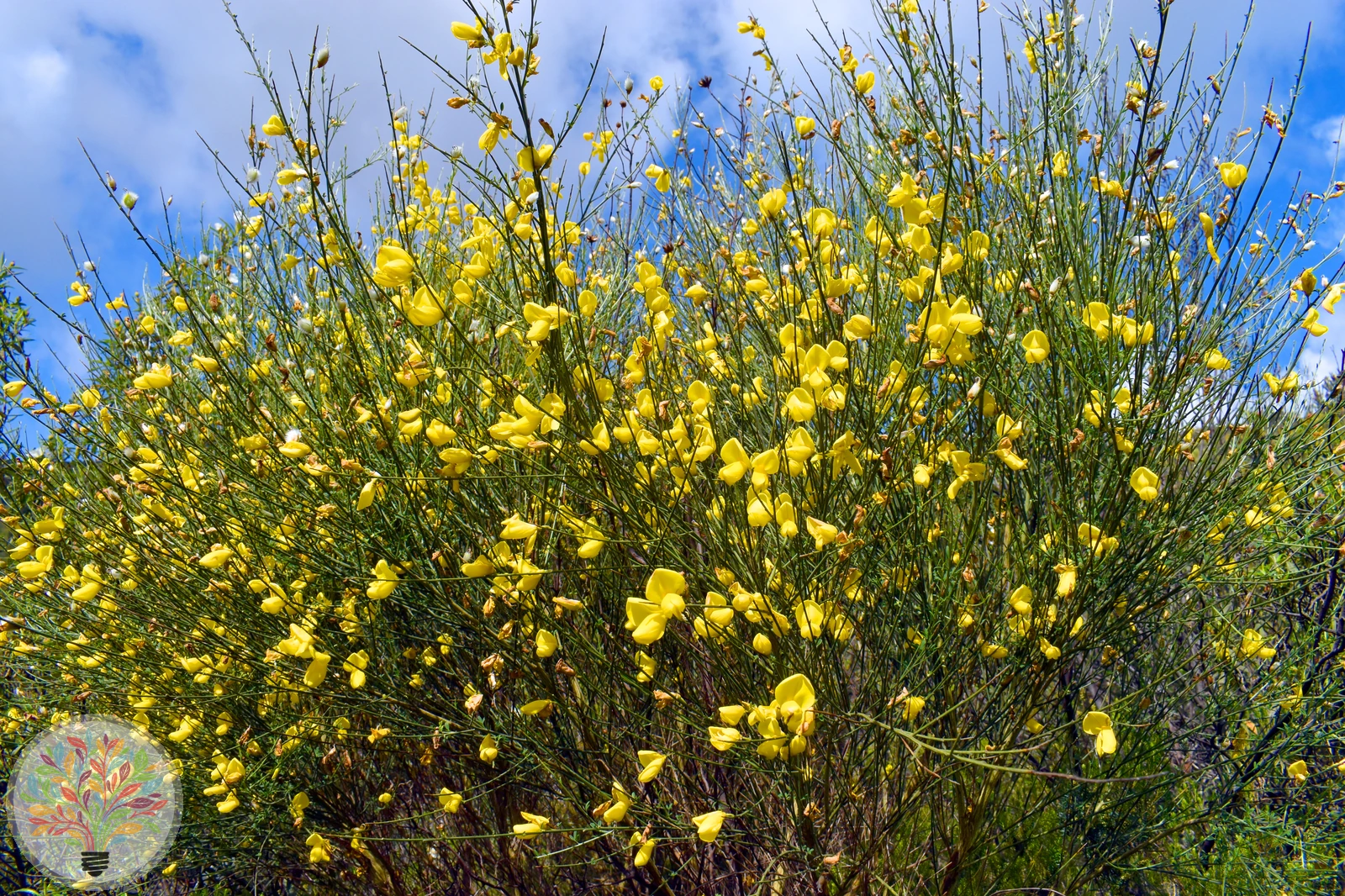
Cytisus scoparius is a native British shrub of the pea family (Fabaceae). It typically reaches about 1.35 m in height and produces flowers in May and June. It is deciduous, with broad leaves, and favours sunny, acidic, nutrient-poor soils with moderate moisture.
Ecological network
Click to highlight connections · Click again to open the species page
Loading network...
PollinationLarval hostFlower visit
Ecological significance
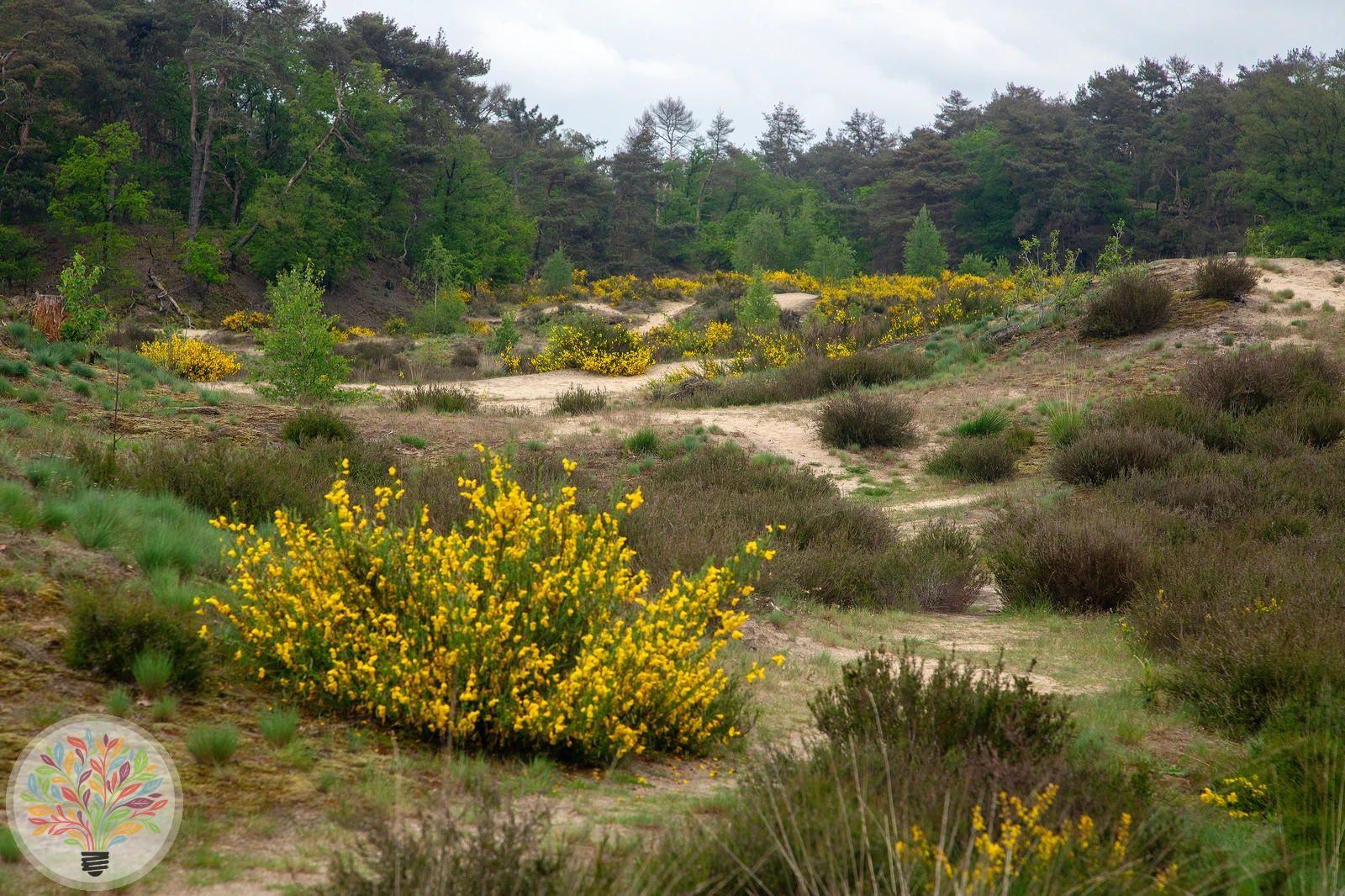
Within its native range, this species is a natural component of heathland and open woodland communities on acidic, nutrient-poor soils and does not exhibit invasive tendencies.
Annual cycle
A deciduous shrubleaves emerge in spring, flowers in May and June, and foliage is shed in autumn.
Standort & Merkmale
Light
Sonne
Moisture
Frisch (Mäßig feucht)
Soil
Schwachzehrer (Magerer Boden)
Flowering period
Mai – Jun
Soil reaction
Sauer (Säurezeiger)
Bioregion
Continental
Growth form
Strauch
Woodiness
Verholzt
Leaf type
Breitblättrig
Leaf phenology
Laubabwerfend
Plant height
1.35 m
Morphological traits: TRY ID3 (CC BY 3.0) & TRY ID81 (CC BY)
Pflege & Anbau
For cultivation, provide full sun and a well-drained, acidic, nutrient-poor soil. It tolerates moderately moist to dry conditions and requires no fertiliser. It is suited to gardens on poor, sandy or gravelly soils.
Scientific profile
This deciduous woody shrub is terrestrial and broad-leaved, with an average height of 1.35 m. Its leaf area is small (around 18 mm²) and diaspore mass is approximately 7.9 mg. It belongs to the family Fabaceae. The plant's Ellenberg indicator values indicate a preference for full sun (light value 8), moderately moist conditions (moisture value 4), acidic substrates (reaction value 3), and very nutrient-poor soils (nutrient value 3). It occurs in habitats with low disturbance severity. The leaf phenology is deciduous, and flowers are borne in May and June.
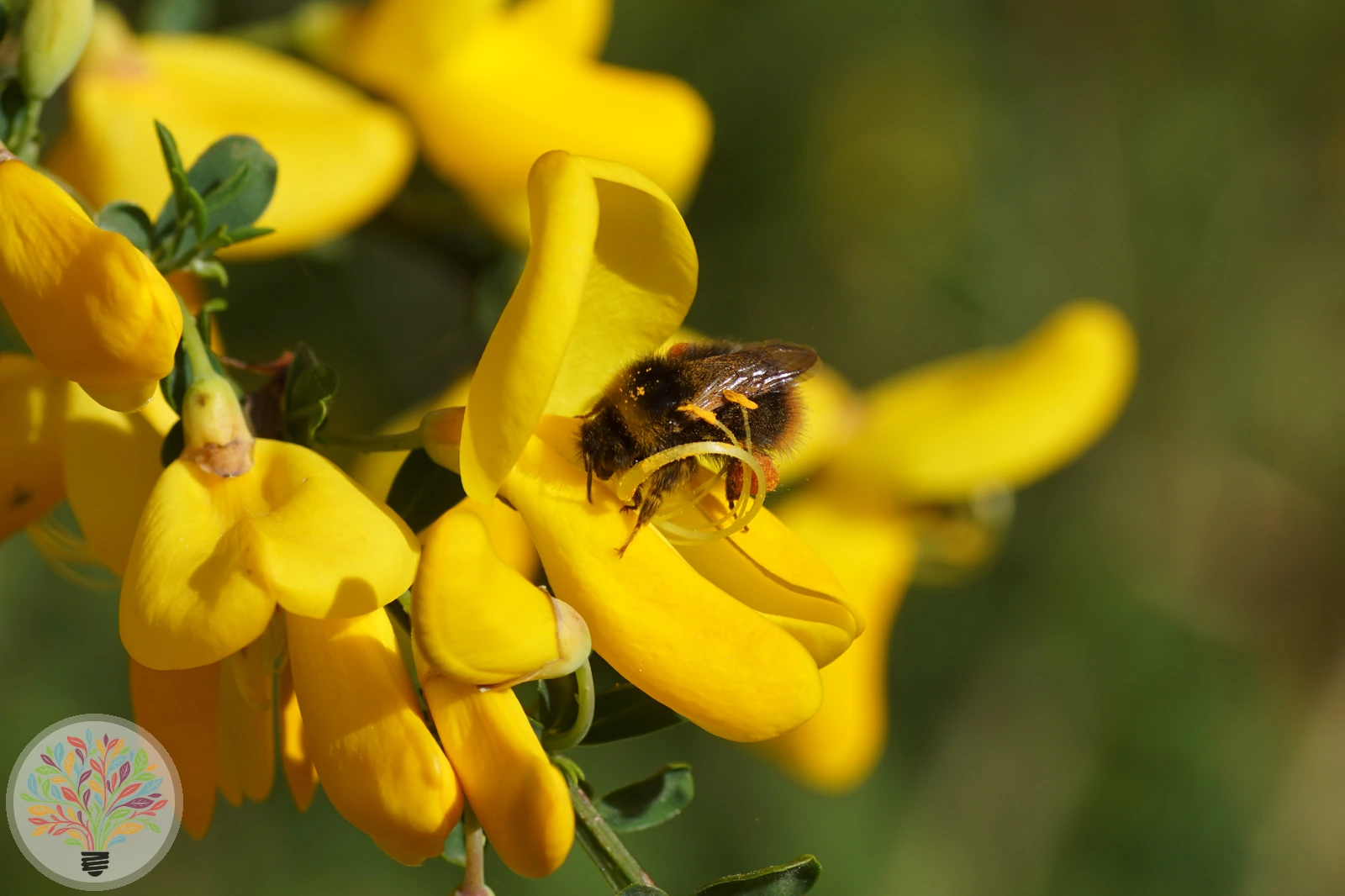
Pollinators & visitors
22 Arten interagieren mit dieser Pflanze
Bombus jonellusBombus hypnorumBombus humilisBombus muscorumBombus lapidariusBombus pratorumBombus sylvestrisSyrphus ribesiiPlatycheirus albimanusBombus cryptarumEpisyrphus balteatusApis melliferaBombus terrestrisBombus magnusBombus lucorumBombus pascuorumBombus hortorumEristalisXylocopa violaceaAndrena labialisAndrena wilkellaEristalis sp_large
Host relationships
31 species use this plant as a host
Callophrys rubiPlebejus argusLasiocampa trifoliiScotopteryx mucronataGymnoscelis rufifasciataChesias legatellaChesias rufataAngerona prunariaCampaea margaritariaPerconia strigillariaPseudoterpna pruinataLacanobia w-latinumLacanobia thalassinaCeramica pisiEmaturga atomariaLasiocampa quercusPhragmatobia fuliginosaAutographa gammaAlcis repandataOrthosia gothicaNoctua comes HübnerMelanchra persicariaeOdontopera bidentataDicallomera fascelinaLacanobia contiguaAporophyla lutulentaSelidosema brunneariaJodis lacteariaBiston betulariaPeribatodes rhomboidariaLycia zonaria
Other flower visitors
13 other species visit the flowers
Eusphalerum torquatumAzelia aterrimaCalliopum elisaeFormica fuscaHeterocordylus tibialisLauxania cylindricornisMyrmica rubraMeligethes aeneusMeligethes viridescensPhaonia incanaBrassicogethes aeneusMuscidaeMuscidae indet. "lille" (defekt)
Sources & data origin
•Cook et al. (2025) UK Butterfly & Moth Traits (DOI: 10.5285/dbc7cc17-cbbd-49dd-bab4-8e8855768d66)
•pollinator_interactions
•Baden-Böhm F, App M, Thiele J (2022) — The FloRes Database: A floral resources trait database for pollinator habitat-assessment generated by a multistep workflow. Johann Heinrich von Thünen-Institut, Dryad, DOI: 10.5061/dryad.djh9w0w29 (CC0)
•FloraWeb / BfN
•EIVE 1.0 — Dengler et al. (2023), DOI: 10.3897/VCS.98324 (CC BY 4.0)
•GBIF Backbone Taxonomy — GBIF Secretariat (2024), DOI: 10.15468/39omei (CC BY 4.0)
•TRY Categorical Traits (ID3) — Kattge et al. (2012), DOI: 10.17871/TRY.3 (CC BY 3.0)
•TRY Global Spectrum (ID81) — Díaz et al. (2016/2021), DOI: 10.17871/TRY.81 (CC BY)
•Govaerts R et al. (2025) — World Checklist of Vascular Plants (WCVP) v14. Royal Botanic Gardens, Kew. DOI: 10.34885/xs7h-ze42 (CC BY 4.0)
•Foto: © Adobe Stock / AdobeStock_1505677045
All data is licensed under CC BY 4.0, CC0, or compatible terms. Attribution according to license conditions. Full source overview →