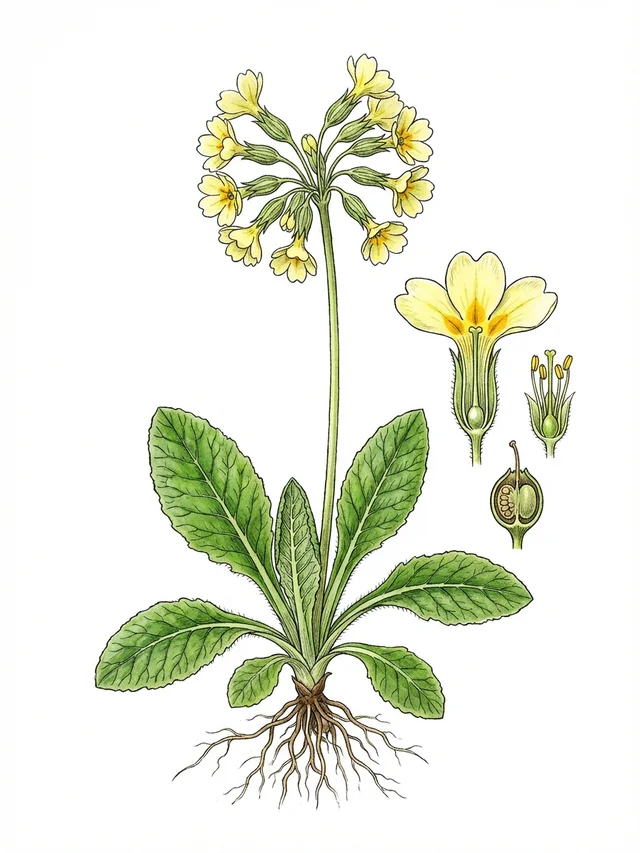
 Image to followAI-generated illustration
Draba incana
Draba incana
FamilyGenus: Felsenblümchennative in Germany
🌿
1
Species
interact
🔗
2
Interactions
documented
About this species
A native, low-growing herbaceous plant of dry, sunny, nutrient-poor places, flowering from April to November.
Ecological network
Click to highlight connections · Click again to open the species page
Loading network...
Pollination
Ecological significance
No ecological impact data is recorded.
Annual cycle
Flowering extends from April through to November.
Standort & Merkmale
Light
Sonne
Moisture
Trocken
Soil
Schwachzehrer (Magerer Boden)
Flowering period
Apr – Nov
Soil reaction
Basisch / Kalkhold
Bioregion
Continental
Growth form
Krautige Pflanze
Woodiness
Nicht verholzt
Leaf type
Breitblättrig
Plant height
0.14 m
Morphological traits: TRY ID3 (CC BY 3.0) & TRY ID81 (CC BY)
Pflege & Anbau
Prefers full sun and dry, nutrient-poor soils.
Scientific profile
Draba incana is a non-woody herbaceous plant reaching about 14 cm in height. Its broad leaves are adapted to terrestrial conditions. The species is native in Great Britain. It typically occurs in sunny, dry situations on nutrient-poor soils, although Ellenberg indicator values suggest it can also tolerate moderately fresh moisture levels. The tiny seeds (diaspore mass 0.12 mg) are produced over a long flowering season from April to November. It forms arbuscular mycorrhizal associations.
Sources & data origin
•Interaktionsdaten via GloBI (CC-BY 4.0)
•FloraWeb / BfN
•EIVE 1.0 — Dengler et al. (2023), DOI: 10.3897/VCS.98324 (CC BY 4.0)
•GBIF Backbone Taxonomy — GBIF Secretariat (2024), DOI: 10.15468/39omei (CC BY 4.0)
•TRY Categorical Traits (ID3) — Kattge et al. (2012), DOI: 10.17871/TRY.3 (CC BY 3.0)
•TRY Global Spectrum (ID81) — Díaz et al. (2016/2021), DOI: 10.17871/TRY.81 (CC BY)
•Govaerts R et al. (2025) — World Checklist of Vascular Plants (WCVP) v14. Royal Botanic Gardens, Kew. DOI: 10.34885/xs7h-ze42 (CC BY 4.0)
All data is licensed under CC BY 4.0, CC0, or compatible terms. Attribution according to license conditions. Full source overview →