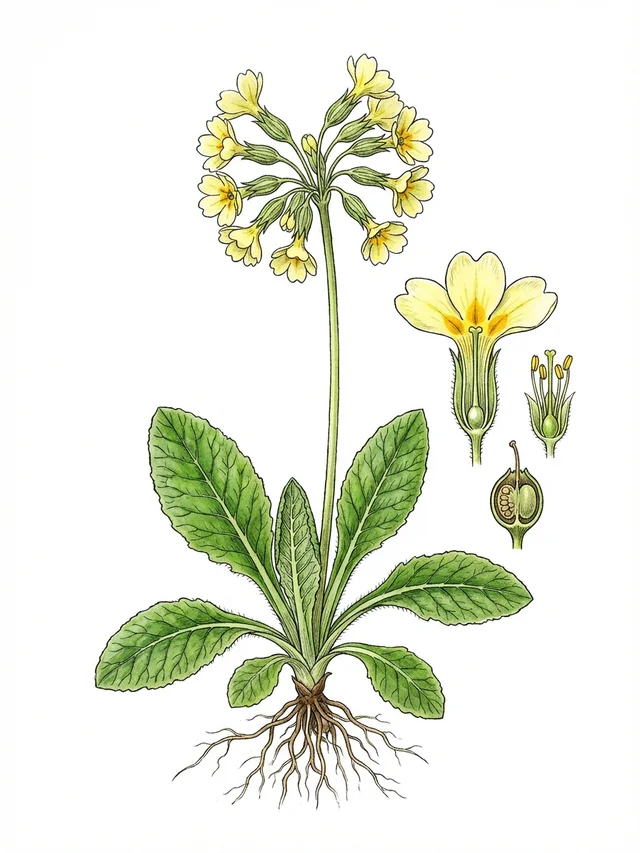
 Image to followAI-generated illustration
Lavandula angustifolia
Lavandula angustifolia
FamilyGenus: Lavendelnative in Germany
🌿
83
Species
interact
🔗
587
Interactions
documented
🐛
1
Host relationships
Species
About this species
Lavandula angustifolia is an introduced, established shrub in Great Britain. It is an evergreen broad-leaved woody plant with fragrant foliage and spikes of purple flowers that open from July to October. It favours sunny, moderately moist, neutral to slightly acid conditions and supplies abundant nectar and pollen to insects.
Ecological network
Click to highlight connections · Click again to open the species page
Loading network...
PollinationLarval hostFlower visit
Ecological significance
As an introduced established plant, Lavandula angustifolia provides a substantial nectar and pollen source (rated 5 out of 5 for both) for a variety of insects throughout its long summer‑autumn bloom. Its broader ecological effects in Britain have not been specifically assessed.
Annual cycle
An evergreen shrub that retains broad leaves through winter. New shoots emerge in spring, followed by the flowering spike display from July into October. Seed ripens after flowering, while the woody framework persists.
Standort & Merkmale
Light
Sonne
Moisture
Frisch (Mäßig feucht)
Soil
—
Flowering period
Jul – Okt
Bioregion
Continental
Nectar value
5
Pollen value
5
Growth form
Strauch
Woodiness
Verholzt
Leaf type
Breitblättrig
Leaf phenology
Immergrün
Plant height
0.458 m
Morphological traits: TRY ID3 (CC BY 3.0) & TRY ID81 (CC BY)
Pflege & Anbau
Plant in full sun. Provide moderately moist, well-drained soil with a neutral to weakly acid reaction. Avoid overly rich ground; a low to moderate nutrient supply is sufficient. As an evergreen shrub it requires minimal disturbance. Light trimming after flowering encourages dense, bushy growth. Once established, it is undemanding and tolerates dry periods.
Scientific profile
Lavandula angustifolia is a woody, evergreen shrub of the Lamiaceae family, typically reaching about 0.46 metres in height. The broad leaves are retained year-round. Its aromatic flower spikes appear from July through to October. The plant thrives in full sun and moderately moist, well-drained soils with a neutral to weakly acid reaction; it is a moderate feeder and forms arbuscular mycorrhizal associations. It shows a low tolerance for disturbance. In central Europe the species is associated with dry, nutrient‑poor grassland and extensive meadows, and in Britain it is recorded as an introduced, established member of the flora.
Pollinators & visitors
74 Arten interagieren mit dieser Pflanze
Bombus ruderatusPolistes dominulaBombus humilisBombus lapidariusBombus hortorumAnthidium manicatumBombus pascuorumBombus pratorumBombus terrestrisPieris rapaeApis melliferaMuschampia tessellumMuschampia mohammedCarcharodus lavatheraeCarcharodus orientalisCarcharodus flocciferaMelitaea didymaBombus hypnorumLasioglossum nigripesHalictus scabiosaeChrysotoxum cisalpinumCeratina cyaneaMegachile octosignataMegachile maritimaAnthidiellum strigatumCeratina chalybeaBombus muscorumAnthidium florentinumMegachile pilicrusRhodanthidium septemdentatumMegachile argentataSeladonia submediterraneaCoelioxys aferCeratina cucurbitinaMerodon geniculatusEristalis tenaxSyrphus vitripennisCeratina chalcitesLasioglossum albocinctumHeriades crenulataHalictus gr. simplexMegachile centuncularisAnthophora crassipesMegachile melanopygaMerodon albifronsEupeodes lunigerCoelioxys conoideusCeratina dallatorreanaXylocopa violaceaPieris brassicae
Other flower visitors
8 other species visit the flowers
Rhodanthidium infuscatumMuscidae sp. 4Amegilla savignyiSphaerophoria.scriptaAdalia bipunctataAnthomyia liturataCalliphora vicinaDelia florilega
Sources & data origin
•Cook et al. (2025) UK Butterfly & Moth Traits (DOI: 10.5285/dbc7cc17-cbbd-49dd-bab4-8e8855768d66)
•Interaktionsdaten via GloBI (CC-BY 4.0)
•Middleton-Welling_2020
•pollinator_interactions
•EIVE 1.0 — Dengler et al. (2023), DOI: 10.3897/VCS.98324 (CC BY 4.0)
•EuPPollNet — Kuppler et al. (2025), DOI: 10.1111/geb.70000 (CC BY 4.0)
•Database of Pollinator Interactions (DoPI) — Pocock et al. (2022), DOI: 10.1002/ecy.3801 (CC BY)
•GBIF Backbone Taxonomy — GBIF Secretariat (2024), DOI: 10.15468/39omei (CC BY 4.0)
•TRY Categorical Traits (ID3) — Kattge et al. (2012), DOI: 10.17871/TRY.3 (CC BY 3.0)
•TRY Global Spectrum (ID81) — Díaz et al. (2016/2021), DOI: 10.17871/TRY.81 (CC BY)
•Checklist Alien Plants Belgium — Verloove F (2023), Botanic Garden Meise (CC BY 4.0)
•Govaerts R et al. (2025) — World Checklist of Vascular Plants (WCVP) v14. Royal Botanic Gardens, Kew. DOI: 10.34885/xs7h-ze42 (CC BY 4.0)
All data is licensed under CC BY 4.0, CC0, or compatible terms. Attribution according to license conditions. Full source overview →