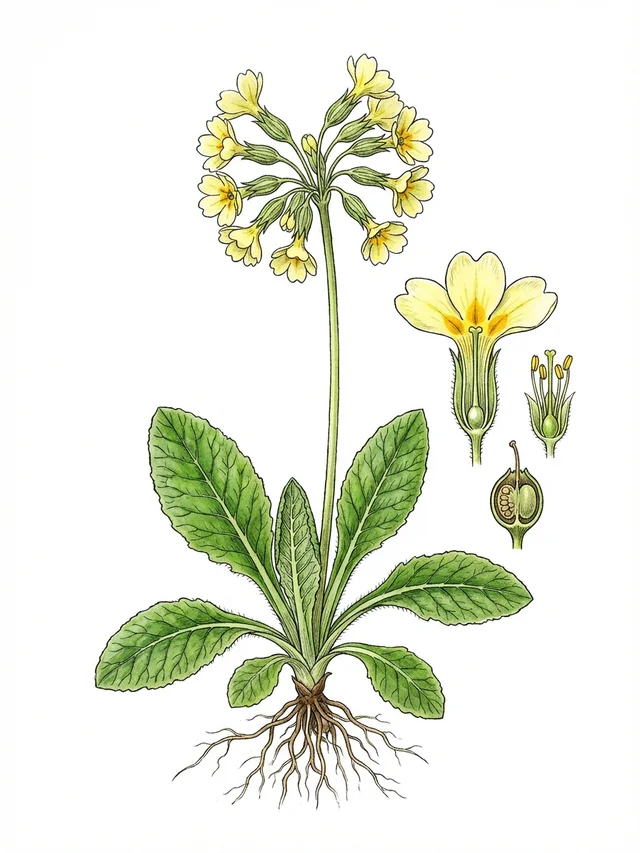
 Image to followAI-generated illustration
Genista anglica
Genista anglica
FamilyGenus: Ginsternative in Germany
🌿
37
Species
interact
🔗
71
Interactions
documented
🐛
7
Host relationships
Species
About this species
A native, low-growing spiny shrub with evergreen leaves and yellow flowers from May to August. It favours sunny, acid, nutrient-poor and moderately moist sites, and provides pollen and nectar for insects.
Ecological network
Click to highlight connections · Click again to open the species page
Loading network...
PollinationLarval hostFlower visit
Ecological significance
This native shrub supplies nectar and pollen for insects and associates with arbuscular mycorrhizal fungi, contributing to soil biology. It is adapted to acid, low‑nutrient conditions and low‑disturbance habitats.
Annual cycle
Evergreen, retaining leaves throughout the year. Flowering extends from May to August, with legumes maturing after bloom.
Standort & Merkmale
Light
Sonne
Moisture
Frisch (Mäßig feucht)
Soil
—
Flowering period
Mai – Aug
Bioregion
Continental
Nectar value
4
Pollen value
4
Growth form
Strauch
Woodiness
Verholzt
Leaf type
Breitblättrig
Leaf phenology
Immergrün
Plant height
0.356 m
Morphological traits: TRY ID3 (CC BY 3.0) & TRY ID81 (CC BY)
Scientific profile
Genista anglica is a woody, evergreen shrub typically reaching 0.2–0.8 m in height. The plant is branched and spiny; older branches become bare while young shoots are leafy. Spines are axillary, recurved‑patent, and sometimes shortly pinnate. Leaves are oblong, 4–10 mm long. The yellow flowers, 4–10 mm across, appear in short, sparse racemes of 5–15 from May to August; the standard petal is shorter than the keel. The fruit is a subcylindrical, slightly curved legume 14–20 mm long, containing 4–12 seeds. The foliage is evergreen and the root system forms arbuscular mycorrhizas. It occurs on sunny, acid, nutrient‑poor soils that remain moderately moist, tolerating only low levels of disturbance. The flowers offer nectar and pollen for insects.
Pollinators & visitors
22 Arten interagieren mit dieser Pflanze
Apis melliferaBombus sylvestrisBombus pascuorumBombus lucorumPolyommatus fulgensPolyommatus humedasaeHesperia commaBombus lapidarius typeEupeodes corollaeEpisyrphus balteatusSyrphus torvus?Sphaerophoria batavaBombus terrestrisMelanostoma mellinumPlatycheirus cyaneusAndrena clarkellaLasioglossum punctatissimumLasioglossum fratellumHalictus confususPlatycheirus albimanusEristalis arbustorumAndrena haemorrhoa
Host relationships
7 species use this plant as a host
Callophrys rubiScotopteryx mucronataScotopteryx luridataGnophos obfuscata (Denis & Schiffermüller), 1775Perconia strigillariaPseudoterpna pruinataChlorissa viridata
Other flower visitors
8 other species visit the flowers
Lasius nigerPhyllopertha horticolaFormica fuscaCoenosia sp.?Bibio lanigerusBellardia vulgarisCoenosia meansindet "mellem lille sort flue"
Sources & data origin
•Cook et al. (2025) UK Butterfly & Moth Traits (DOI: 10.5285/dbc7cc17-cbbd-49dd-bab4-8e8855768d66)
•Interaktionsdaten via GloBI (CC-BY 4.0)
•Middleton-Welling_2020
•pollinator_interactions
•FloraWeb / BfN
•EIVE 1.0 — Dengler et al. (2023), DOI: 10.3897/VCS.98324 (CC BY 4.0)
•EuPPollNet — Kuppler et al. (2025), DOI: 10.1111/geb.70000 (CC BY 4.0)
•Database of Pollinator Interactions (DoPI) — Pocock et al. (2022), DOI: 10.1002/ecy.3801 (CC BY)
•GBIF Backbone Taxonomy — GBIF Secretariat (2024), DOI: 10.15468/39omei (CC BY 4.0)
•TRY Categorical Traits (ID3) — Kattge et al. (2012), DOI: 10.17871/TRY.3 (CC BY 3.0)
•TRY Global Spectrum (ID81) — Díaz et al. (2016/2021), DOI: 10.17871/TRY.81 (CC BY)
•Govaerts R et al. (2025) — World Checklist of Vascular Plants (WCVP) v14. Royal Botanic Gardens, Kew. DOI: 10.34885/xs7h-ze42 (CC BY 4.0)
All data is licensed under CC BY 4.0, CC0, or compatible terms. Attribution according to license conditions. Full source overview →