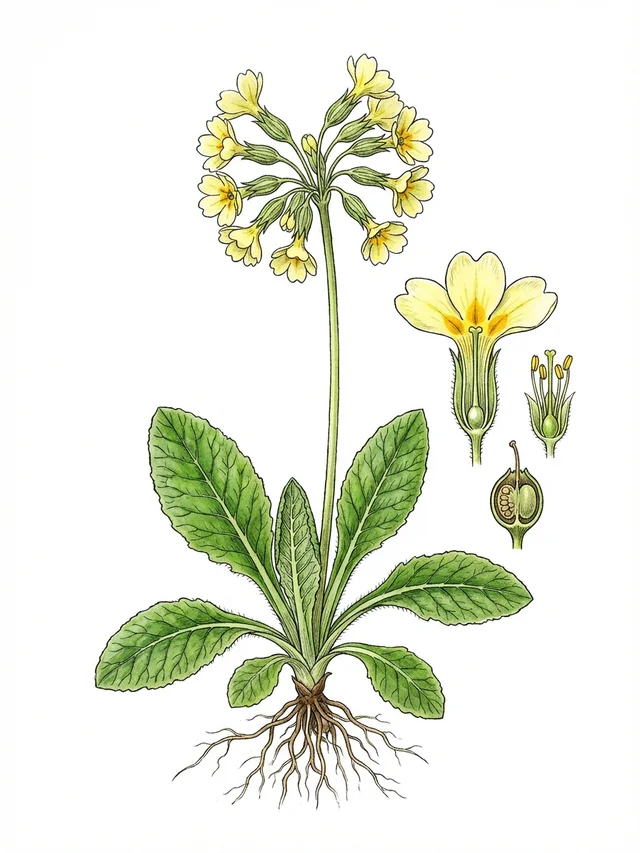
 Image to followAI-generated illustration
Epilobium montanum
Epilobium montanum
FamilyGenus: Epilobiumnative in Germany
🌿
34
Species
interact
🔗
53
Interactions
documented
🐛
2
Host relationships
Species
About this species
A native herbaceous plant of shady places, producing flowers from May to September and providing forage for pollinating insects.
Ecological network
Click to highlight connections · Click again to open the species page
Loading network...
PollinationLarval hostFlower visit
Ecological significance
The flowers provide a nectar and pollen source for a range of insects, contributing to local biodiversity.
Annual cycle
Flowering occurs from May to September. The tiny seeds are then wind-dispersed.
Standort & Merkmale
Light
Schatten
Moisture
Frisch (Mäßig feucht)
Soil
Mittelzehrer (Normaler Boden)
Flowering period
Mai – Sep
Soil reaction
Mäßig sauer bis neutral
Bioregion
Continental
Nectar value
3
Pollen value
3
Growth form
Krautige Pflanze
Woodiness
Nicht verholzt
Leaf type
Breitblättrig
Plant height
0.393 m
Morphological traits: TRY ID3 (CC BY 3.0) & TRY ID81 (CC BY)
Pollen
0.0459 mg/Blüte
Pflege & Anbau
This species thrives in shady locations with consistently moist, moderately fertile, neutral to slightly acid soil. It requires little intervention once established in suitable conditions.
Scientific profile
Epilobium montanum is a herbaceous, non-woody, broad-leaved plant native to Great Britain. It typically reaches about 0.4 metres in height and grows in shaded environments on fresh to moderately moist, neutral to slightly acid soils of moderate fertility. The species tolerates low disturbance. Flowers appear from May to September and offer both nectar and pollen. Its seeds are very light, averaging 0.12 mg, and are dispersed by the wind.
Pollinators & visitors
28 Arten interagieren mit dieser Pflanze
Bombus campestrisPieris rapaeLasioglossum fratellumPieris brassicaeNomada fabricianaLeptidea sinapisBombus pratorumBombus humilisLasioglossum morioPieris napiApis melliferaPhragmatobia fuliginosaBombus sylvestrisBombus pascuorumAdscita staticesBombus terrestrisBombus hortorumBombus teluHelophilusEpisyrphus balteatusBombus lucorum aggSphaerophoria interruptaHelophilus pendulusEristalis tenaxPlatycheirus clypeatusMythimna pudorinaSyritta pipiensPieris bryoniae
Host relationships
2 species use this plant as a host
Ecliptopera silaceata (Denis & Schiffermüller), 1775Deilephila porcellus
Other flower visitors
4 other species visit the flowers
Phaonia angelicaeDelia radicumBotanophila fugaxSiphona cristata
Sources & data origin
•Interaktionsdaten via GloBI (CC-BY 4.0)
•Cook et al. (2025) UK Butterfly & Moth Traits (DOI: 10.5285/dbc7cc17-cbbd-49dd-bab4-8e8855768d66)
•pollinator_interactions
•Baden-Böhm F, App M, Thiele J (2022) — The FloRes Database: A floral resources trait database for pollinator habitat-assessment generated by a multistep workflow. Johann Heinrich von Thünen-Institut, Dryad, DOI: 10.5061/dryad.djh9w0w29 (CC0)
•FloraWeb / BfN
•EIVE 1.0 — Dengler et al. (2023), DOI: 10.3897/VCS.98324 (CC BY 4.0)
•EuPPollNet — Kuppler et al. (2025), DOI: 10.1111/geb.70000 (CC BY 4.0)
•Database of Pollinator Interactions (DoPI) — Pocock et al. (2022), DOI: 10.1002/ecy.3801 (CC BY)
•GBIF Backbone Taxonomy — GBIF Secretariat (2024), DOI: 10.15468/39omei (CC BY 4.0)
•TRY Categorical Traits (ID3) — Kattge et al. (2012), DOI: 10.17871/TRY.3 (CC BY 3.0)
•TRY Global Spectrum (ID81) — Díaz et al. (2016/2021), DOI: 10.17871/TRY.81 (CC BY)
•Govaerts R et al. (2025) — World Checklist of Vascular Plants (WCVP) v14. Royal Botanic Gardens, Kew. DOI: 10.34885/xs7h-ze42 (CC BY 4.0)
All data is licensed under CC BY 4.0, CC0, or compatible terms. Attribution according to license conditions. Full source overview →