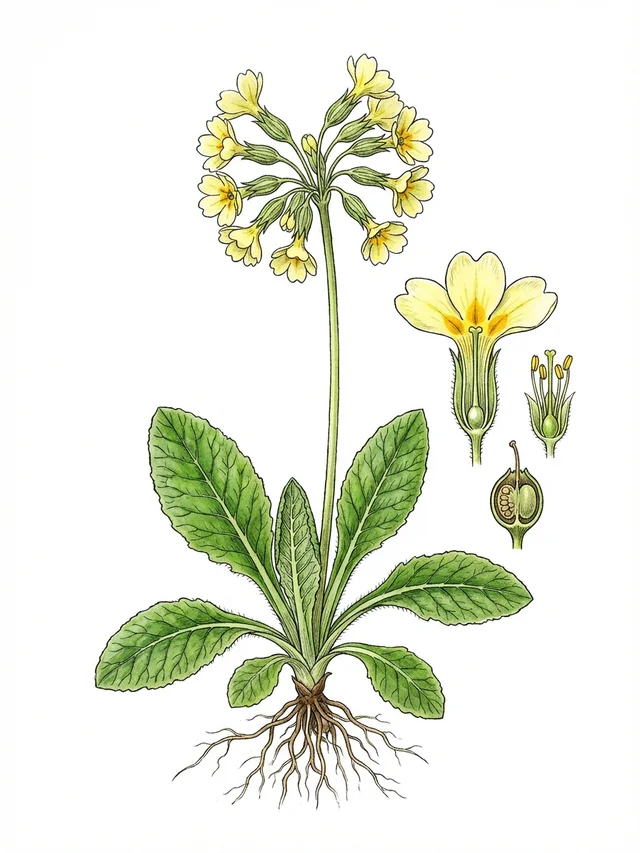
 Image to followAI-generated illustration
Equisetum fluviatile
Equisetum fluviatile
FamilyGenus: Equisetumnative in Germany
🌿
5
Species
interact
🔗
5
Interactions
documented
🐛
1
Host relationships
Species
About this species
A native, evergreen waterside fern with jointed green stems and cone-like spore-bearing structures in late spring.
Ecological network
Click to highlight connections · Click again to open the species page
Loading network...
PollinationLarval hostFlower visit
Ecological significance
As a native component of wetland communities, it contributes to the structure of wet meadows, swamps and shallow-water vegetation.
Annual cycle
Evergreen sterile stems persist throughout the year. Fertile, cone-bearing shoots develop in May and June.
Standort & Merkmale
Light
Sonne
Moisture
Feucht
Soil
Mittelzehrer (Normaler Boden)
Flowering period
Mai – Jun
Soil reaction
Mäßig sauer bis neutral
Bioregion
Continental
Growth form
Farn
Woodiness
Nicht verholzt
Leaf type
Photosynthetischer Spross
Leaf phenology
Immergrün
Plant height
0.941 m
Morphological traits: TRY ID3 (CC BY 3.0) & TRY ID81 (CC BY)
Pflege & Anbau
Grow in a sunny position with permanently moist, normal garden soil. The evergreen stems give year-round presence. Fertile, cone-bearing shoots appear in May and June.
Scientific profile
Equisetum fluviatile is a rhizomatous, non-woody fern that produces erect, jointed, photosynthetic shoots typically about 0.9 m tall. The much-reduced leaves are arranged in whorls at the nodes. It is an evergreen perennial favouring full sun and permanently damp to shallow-water sites on neutral to slightly acid, nutrient-average soils, and it tolerates very little salinity or disturbance. It is native in Great Britain, occurring in wet meadows, swamps, lake margins and occasionally in alpine turf. The sterile green shoots persist year-round; fertile stems bearing terminal spore-producing cones emerge in May and June.
Sources & data origin
•Interaktionsdaten via GloBI (CC-BY 4.0)
•Cook et al. (2025) UK Butterfly & Moth Traits (DOI: 10.5285/dbc7cc17-cbbd-49dd-bab4-8e8855768d66)
•FloraWeb / BfN
•EIVE 1.0 — Dengler et al. (2023), DOI: 10.3897/VCS.98324 (CC BY 4.0)
•GBIF Backbone Taxonomy — GBIF Secretariat (2024), DOI: 10.15468/39omei (CC BY 4.0)
•TRY Categorical Traits (ID3) — Kattge et al. (2012), DOI: 10.17871/TRY.3 (CC BY 3.0)
•TRY Global Spectrum (ID81) — Díaz et al. (2016/2021), DOI: 10.17871/TRY.81 (CC BY)
•Govaerts R et al. (2025) — World Checklist of Vascular Plants (WCVP) v14. Royal Botanic Gardens, Kew. DOI: 10.34885/xs7h-ze42 (CC BY 4.0)
All data is licensed under CC BY 4.0, CC0, or compatible terms. Attribution according to license conditions. Full source overview →