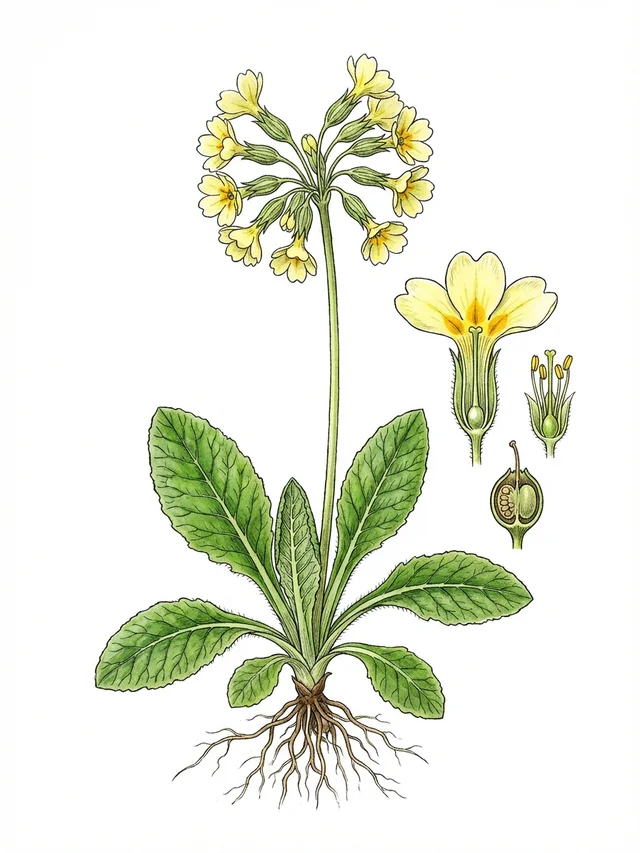
 Image to followAI-generated illustration
Erodium moschatum
Erodium moschatum
FamilyGenus: Reiherschnäbelnative in Germany
🌿
7
Species
interact
🔗
12
Interactions
documented
About this species
Erodium moschatum is an archaeophyte herbaceous plant in Great Britain, growing in sunny, dry locations on neutral to slightly acid soils. It reaches about 34 cm in height, bears broad leaves, and blooms from May to August.
Ecological network
Click to highlight connections · Click again to open the species page
Loading network...
PollinationFlower visit
Ecological significance
No notable ecological impacts have been documented for this archaeophyte in Great Britain.
Annual cycle
Flowering occurs from May to August. Seeds develop and are released in late summer and early autumn. Above-ground growth dies back over winter.
Safety note
No specific safety data are available for Erodium moschatum.
Standort & Merkmale
Light
Sonne
Moisture
Trocken
Soil
—
Flowering period
Mai – Aug
Bioregion
Continental
Growth form
Krautige Pflanze
Woodiness
Nicht verholzt
Leaf type
Breitblättrig
Plant height
0.343 m
Morphological traits: TRY ID3 (CC BY 3.0) & TRY ID81 (CC BY)
Pflege & Anbau
Grow Erodium moschatum in a sunny position with sharply drained soil. It tolerates drought and suits gravel gardens or dry banks. Sow seed in autumn or early spring on the surface of free-draining compost, keeping it just moist until germination. Once established, the plant needs minimal water and will self-seed in favourable spots. No winter protection is required.
Scientific profile
Erodium moschatum is a member of the Geraniaceae family. It is a non-woody, broad-leaved herbaceous plant that typically reaches a height of about 34 cm, with large leaves averaging around 8517 mm² in area. Its seeds weigh approximately 2.3 mg and it forms arbuscular mycorrhizal associations. The species is an archaeophyte in Great Britain, having been established since before AD 1500. The species is recorded in Southern Europe, Africa and temperate Asia. Within Britain, it occurs in sunny, dry, warm habitats on neutral to slightly acid soils, and is often found in areas with low disturbance levels. Ellenberg indicator values assigned in Germany highlight a preference for full light (value 8), dry soil (value 3), a neutral to slightly acid reaction (value 6), and warm temperatures (value 8); disturbance severity is low (0.85). Flowering takes place from May to August. The German Red List status for the species is *, indicating it is not currently threatened.
Pollinators & visitors
5 Arten interagieren mit dieser Pflanze
Other flower visitors
2 other species visit the flowers
AnthophilaBombylius rhodius
Sources & data origin
•Interaktionsdaten via GloBI (CC-BY 4.0)
•pollinator_interactions
•FloraWeb / BfN
•EIVE 1.0 — Dengler et al. (2023), DOI: 10.3897/VCS.98324 (CC BY 4.0)
•GBIF Backbone Taxonomy — GBIF Secretariat (2024), DOI: 10.15468/39omei (CC BY 4.0)
•TRY Categorical Traits (ID3) — Kattge et al. (2012), DOI: 10.17871/TRY.3 (CC BY 3.0)
•TRY Global Spectrum (ID81) — Díaz et al. (2016/2021), DOI: 10.17871/TRY.81 (CC BY)
•Checklist Alien Plants Belgium — Verloove F (2023), Botanic Garden Meise (CC BY 4.0)
•Govaerts R et al. (2025) — World Checklist of Vascular Plants (WCVP) v14. Royal Botanic Gardens, Kew. DOI: 10.34885/xs7h-ze42 (CC BY 4.0)
All data is licensed under CC BY 4.0, CC0, or compatible terms. Attribution according to license conditions. Full source overview →