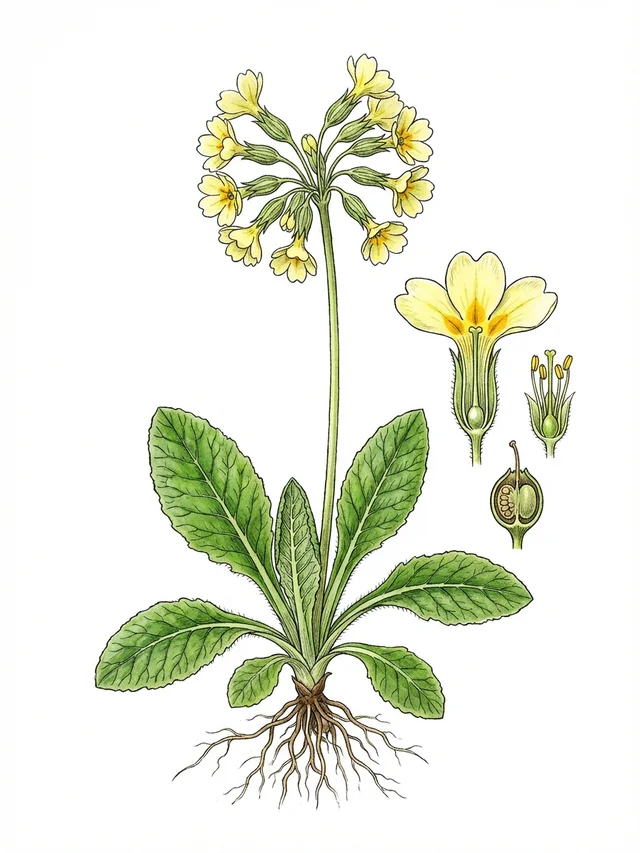
 Image to followAI-generated illustration
Phaseolus coccineus
Phaseolus coccineus
FamilyGenus: Phaseolusnative in Germany
🌿
12
Species
interact
🔗
23
Interactions
documented
About this species
A non-woody climbing legume reaching 3.5 m in height, with broad leaves and flowers from June to August. Introduced and established in Great Britain, it thrives in partial shade on fresh, moderately fertile, calcareous soils. Its flowers supply only small amounts of nectar and pollen.
Ecological network
Click to highlight connections · Click again to open the species page
Loading network...
Pollination
Ecological significance
Phaseolus coccineus is an introduced species that has become established in Great Britain. Its flowers offer low reward for pollinating insects, providing only small amounts of nectar and pollen. No specific data on further ecological impacts are available from the source evidence.
Annual cycle
The main flowering period is June to August.
Standort & Merkmale
Light
Halbschatten
Moisture
Frisch (Mäßig feucht)
Soil
—
Flowering period
Jun – Aug
Bioregion
Continental
Nectar value
1
Pollen value
1
Growth form
Kletterpflanze
Woodiness
Nicht verholzt
Leaf type
Breitblättrig
Plant height
3.5 m
Morphological traits: TRY ID3 (CC BY 3.0) & TRY ID81 (CC BY)
Nectar
5.8033 µl/Blüte
Pollen
0.8 mg/Blüte
Pflege & Anbau
Choose a spot in partial shade with fresh, moderately moist soil that is calcareous or neutral to alkaline. A medium-fertility soil is suitable. Provide a tall, sturdy support for the climbing stems. Water regularly to maintain even moisture.
Scientific profile
Phaseolus coccineus is a non‑woody, climbing plant of the legume family (Fabaceae), reaching up to 3.5 metres in height. Its leaves are broad and it is terrestrial. The flowering season lasts from June to August. Nectar and pollen values are low, indicating limited attractiveness to insects. It forms arbuscular mycorrhizas. The species is not native in Great Britain but is introduced and established there. Its natural range covers Northern, Central and South America. In ecological terms, it prefers semi‑shaded conditions, fresh and moderately moist soils, a calcareous or basic reaction, and a medium nutrient supply. The average diaspore mass is 1004 mg.
Pollinators & visitors
12 Arten interagieren mit dieser Pflanze
Apis melliferaXylocopa violaceaAutographa gammaXylocopa valgaBombus soroeensisBombus pascuorumVanessa carduiBombus terrestrisPhilanthus triangulumPolyommatus fulgensPolyommatus humedasaeHesperia comma
Sources & data origin
•Interaktionsdaten via GloBI (CC-BY 4.0)
•Middleton-Welling_2020
•pollinator_interactions
•Baden-Böhm F, App M, Thiele J (2022) — The FloRes Database: A floral resources trait database for pollinator habitat-assessment generated by a multistep workflow. Johann Heinrich von Thünen-Institut, Dryad, DOI: 10.5061/dryad.djh9w0w29 (CC0)
•EIVE 1.0 — Dengler et al. (2023), DOI: 10.3897/VCS.98324 (CC BY 4.0)
•EuPPollNet — Kuppler et al. (2025), DOI: 10.1111/geb.70000 (CC BY 4.0)
•Database of Pollinator Interactions (DoPI) — Pocock et al. (2022), DOI: 10.1002/ecy.3801 (CC BY)
•GBIF Backbone Taxonomy — GBIF Secretariat (2024), DOI: 10.15468/39omei (CC BY 4.0)
•TRY Categorical Traits (ID3) — Kattge et al. (2012), DOI: 10.17871/TRY.3 (CC BY 3.0)
•TRY Global Spectrum (ID81) — Díaz et al. (2016/2021), DOI: 10.17871/TRY.81 (CC BY)
•Checklist Alien Plants Belgium — Verloove F (2023), Botanic Garden Meise (CC BY 4.0)
•Govaerts R et al. (2025) — World Checklist of Vascular Plants (WCVP) v14. Royal Botanic Gardens, Kew. DOI: 10.34885/xs7h-ze42 (CC BY 4.0)
All data is licensed under CC BY 4.0, CC0, or compatible terms. Attribution according to license conditions. Full source overview →