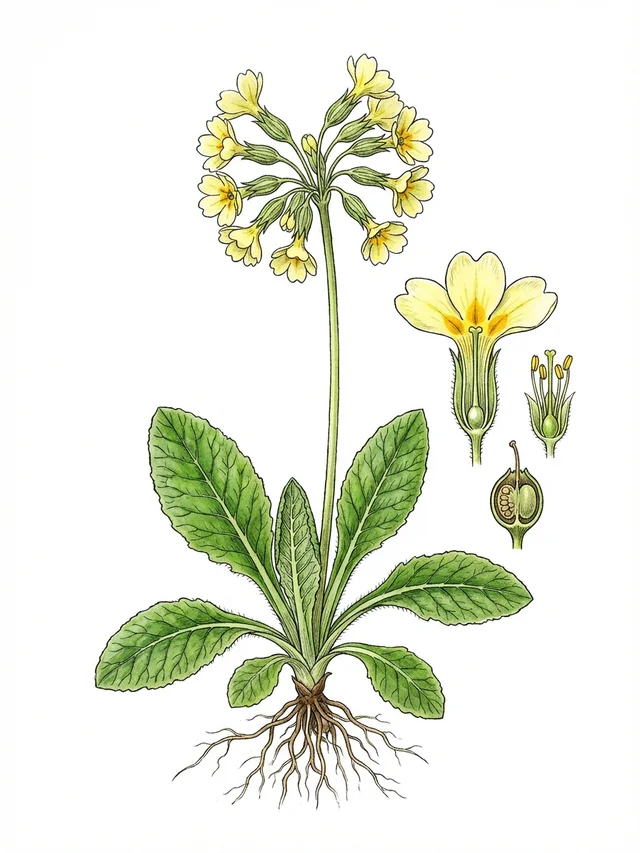
 Image to followAI-generated illustration
Tamarix gallica
Tamarix gallica
FamilyGenus: Tamariskennative in Germany
🌿
5
Species
interact
🔗
5
Interactions
documented
🐛
3
Host relationships
Species
About this species
An introduced, established deciduous shrub found in Great Britain, flowering in summer and early autumn. It prefers sunny sites with fresh to moderately moist soil and tolerates slight salinity.
Ecological network
Click to highlight connections · Click again to open the species page
Loading network...
PollinationLarval hostFlower visit
Ecological significance
This species is established as an introduction in Great Britain. No further ecological impact assessments are documented.
Annual cycle
A deciduous shrub that comes into leaf in spring, blooms from June to September, and sheds its leaves in autumn. It is leafless through winter.
Safety note
There are no documented safety concerns regarding this plant.
Standort & Merkmale
Light
Sonne
Moisture
Frisch (Mäßig feucht)
Soil
—
Flowering period
Jun – Sep
Growth form
Strauch
Woodiness
Verholzt
Leaf type
Breitblättrig
Leaf phenology
Laubabwerfend
Plant height
4.579 m
Morphological traits: TRY ID3 (CC BY 3.0) & TRY ID81 (CC BY)
Pflege & Anbau
Prefers a sunny position in fresh to moderately moist soil of neutral to slightly acidic reaction. Tolerates slight salinity. Best suited to warm, low-disturbance locations.
Scientific profile
Tamarix gallica is a deciduous, woody shrub that typically reaches around 4.6 metres in height. Its leaves are broad and it flowers from June to September. The plant forms arbuscular mycorrhizal (AM) associations. Ecological indicator values place it as strongly light-demanding (light value 8), preferring fresh to moderately moist soil (moisture 6) of neutral to slightly acidic reaction (reaction 6). It shows slight salt tolerance (salinity 2) and moderate nutrient requirements (nutrients 4). It is a warmth-loving species (temperature 7) associated with low-disturbance habitats (disturbance severity 0.58). The diaspores are extremely light, weighing about 0.0229 mg. In Great Britain, it is an established introduced species.
Pollinators & visitors
1 Arten interagieren mit dieser Pflanze
Hylaeus leptocephalus
Host relationships
3 species use this plant as a host
Sources & data origin
•Cook et al. (2025) UK Butterfly & Moth Traits (DOI: 10.5285/dbc7cc17-cbbd-49dd-bab4-8e8855768d66)
•Interaktionsdaten via GloBI (CC-BY 4.0)
•EIVE 1.0 — Dengler et al. (2023), DOI: 10.3897/VCS.98324 (CC BY 4.0)
•GBIF Backbone Taxonomy — GBIF Secretariat (2024), DOI: 10.15468/39omei (CC BY 4.0)
•TRY Categorical Traits (ID3) — Kattge et al. (2012), DOI: 10.17871/TRY.3 (CC BY 3.0)
•TRY Global Spectrum (ID81) — Díaz et al. (2016/2021), DOI: 10.17871/TRY.81 (CC BY)
•Checklist Alien Plants Belgium — Verloove F (2023), Botanic Garden Meise (CC BY 4.0)
•Govaerts R et al. (2025) — World Checklist of Vascular Plants (WCVP) v14. Royal Botanic Gardens, Kew. DOI: 10.34885/xs7h-ze42 (CC BY 4.0)
All data is licensed under CC BY 4.0, CC0, or compatible terms. Attribution according to license conditions. Full source overview →