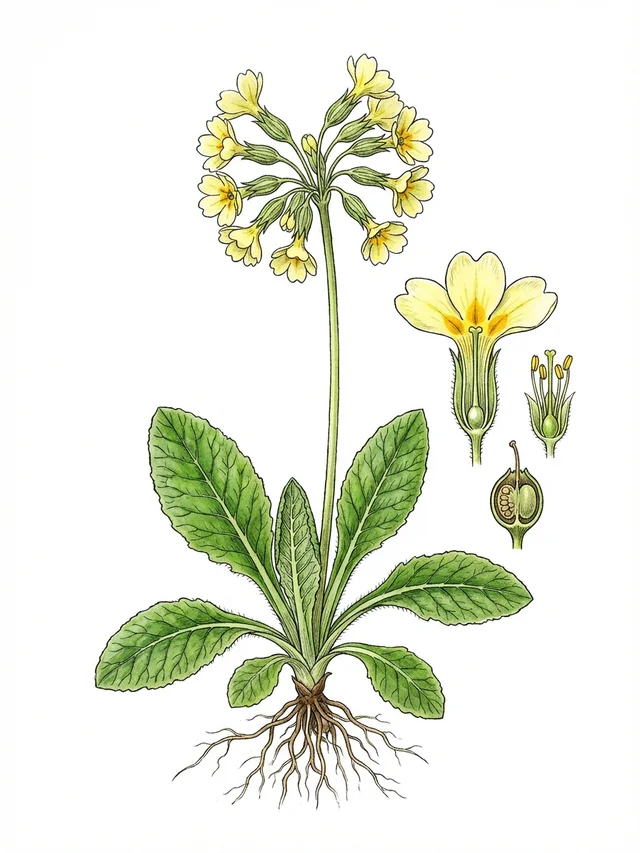
 Image to followAI-generated illustration
Fraxinus excelsior
Fraxinus excelsior
FamilyGenus: Fraxinusnative in Germany
🌿
30
Species
interact
🔗
31
Interactions
documented
🐛
29
Host relationships
Species
About this species
A large native deciduous tree reaching over 20 m in height, Fraxinus excelsior flowers in spring and prefers moist, base-rich, fertile ground. It is a characteristic component of British woodlands on calcium-rich soils.
Ecological network
Click to highlight connections · Click again to open the species page
Loading network...
PollinationLarval host
Ecological significance
As a native broadleaf tree, it contributes to the structure and function of woodland habitats on moist calcareous soils.
Annual cycle
Leaves unfold in spring, the tree flowers from April to May, fruits develop over summer and are dispersed, and the canopy is bare through winter.
Standort & Merkmale
Light
—
Moisture
Feucht
Soil
—
Flowering period
Apr – Mai
Bioregion
Continental
Growth form
Baum
Woodiness
Verholzt
Leaf type
Breitblättrig
Leaf phenology
Laubabwerfend
Plant height
23.116 m
Morphological traits: TRY ID3 (CC BY 3.0) & TRY ID81 (CC BY)
Pflege & Anbau
This native tree thrives on moist, calcareous, fertile soils. It is best planted in an open position where its broad crown can develop fully.
Scientific profile
Fraxinus excelsior is a deciduous broadleaf tree native in Great Britain. It typically reaches heights of around 23 metres and bears broad leaves with a mean area of approximately 1683 mm². Flowering takes place from April to May. The species thrives on moist, base-rich, nutrient-rich soils and shows low tolerance of disturbance. It forms arbuscular mycorrhizal associations, and its diaspores weigh about 57 mg.
Pollinators & visitors
1 Arten interagieren mit dieser Pflanze
Apis mellifera
Host relationships
29 species use this plant as a host
Cossus cossusChloroclysta siterataGymnoscelis rufifasciataTrichopteryx polycommataCepphis advenariaPlagodis pulverariaEnnomos fuscantariaSelenia lunulariaSelenia tetralunariaAgriopis aurantiariaCampaea margaritariaAmphipyra pyramideaAsteroscopus sphinxLithophane semibrunneaLithophane sociaAnorthoa mundaCraniophora ligustriAlcis repandataAgrochola circellarisEpirrita dilutataPoecilocampa populiAcherontia atroposSphinx ligustriApeira syringariaZeuzera pyrinaEupithecia exiguataEupithecia innotataAgrochola lituraAtethmia centrago
Sources & data origin
•Cook et al. (2025) UK Butterfly & Moth Traits (DOI: 10.5285/dbc7cc17-cbbd-49dd-bab4-8e8855768d66)
•pollinator_interactions
•FloraWeb / BfN
•EIVE 1.0 — Dengler et al. (2023), DOI: 10.3897/VCS.98324 (CC BY 4.0)
•GBIF Backbone Taxonomy — GBIF Secretariat (2024), DOI: 10.15468/39omei (CC BY 4.0)
•TRY Categorical Traits (ID3) — Kattge et al. (2012), DOI: 10.17871/TRY.3 (CC BY 3.0)
•TRY Global Spectrum (ID81) — Díaz et al. (2016/2021), DOI: 10.17871/TRY.81 (CC BY)
•Govaerts R et al. (2025) — World Checklist of Vascular Plants (WCVP) v14. Royal Botanic Gardens, Kew. DOI: 10.34885/xs7h-ze42 (CC BY 4.0)
All data is licensed under CC BY 4.0, CC0, or compatible terms. Attribution according to license conditions. Full source overview →