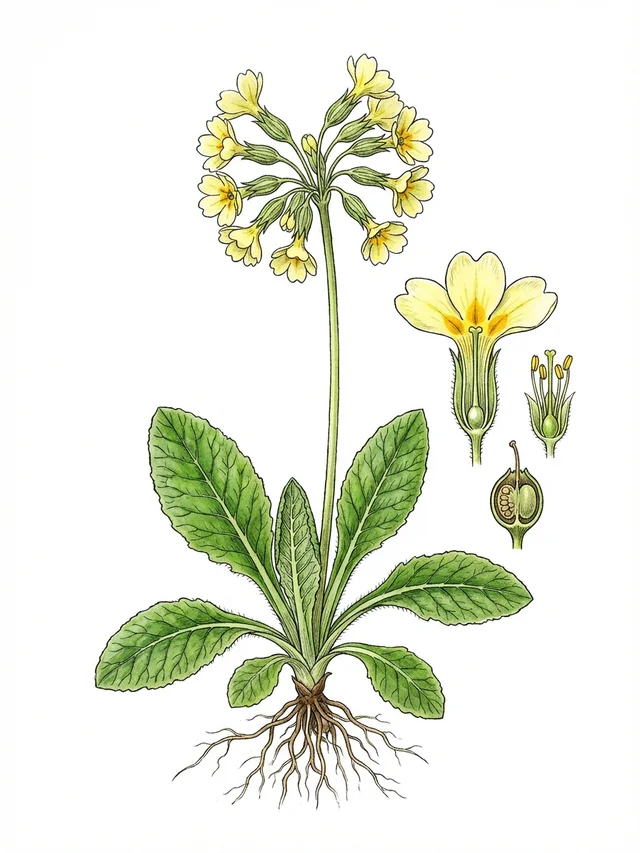
 Image to followAI-generated illustration
Galeopsis tetrahit
Galeopsis tetrahit
FamilyGenus: Galeopsisnative in Germany
🌿
33
Species
interact
🔗
202
Interactions
documented
🐛
2
Host relationships
Species
About this species
Galeopsis tetrahit is a native herbaceous plant in the mint family (Lamiaceae), found in sunny, tall-herb vegetation on moderately fertile soils. Growing to about 37 cm, it bears flowers from May to September and is valued by pollinators for its nectar and pollen.
Ecological network
Click to highlight connections · Click again to open the species page
Loading network...
PollinationLarval hostFlower visit
Ecological significance
As a native plant, Galeopsis tetrahit supports pollinators with nectar and pollen and contributes to the structure of sunny, tall‑herb communities. Its mycorrhizal associations benefit soil biology. It shows no evidence of invasive spread and coexists with other native species in stable, low‑disturbance habitats.
Annual cycle
Emerges in spring, flowers from May to September, sets seed in late summer, and the above‑ground parts die back in autumn.
Standort & Merkmale
Light
Sonne
Moisture
—
Soil
—
Flowering period
Mai – Sep
Bioregion
Continental
Nectar value
5
Pollen value
5
Growth form
Krautige Pflanze
Woodiness
Nicht verholzt
Leaf type
Breitblättrig
Plant height
0.366 m
Morphological traits: TRY ID3 (CC BY 3.0) & TRY ID81 (CC BY)
Pflege & Anbau
Grow in full sun on moderately fertile soil. Galeopsis tetrahit is suited to wildflower meadows, herbaceous borders, and other low-disturbance plantings. It establishes arbuscular mycorrhizal associations, so avoid high‑phosphorus fertilisers. Once established, it requires little maintenance and will self‑seed.
Scientific profile
Galeopsis tetrahit is a native, non-woody herbaceous plant belonging to the mint family (Lamiaceae). It grows to around 37 cm in height and has broad leaves. The species is typical of sunny, tall-herb stands and perennial herbaceous communities, where it thrives on moderately fertile soils with low levels of disturbance. Its light requirement is high (Ellenberg indicator value 7 for sun), and it prefers moderate nutrient levels (value 6). The plant flowers from May to September, producing blooms that are a good source of nectar and pollen for insects. It forms arbuscular mycorrhizal associations. Leaves are relatively broad, with an average area of 856.55 mm², and seeds have a diaspore mass of about 4.3 mg.
Pollinators & visitors
28 Arten interagieren mit dieser Pflanze
Bombus hortorumBombus wurfleniiLasioglossum morioLasioglossum calceatumBombus lucorum aggSphaerophoria scriptaBombus pascuorumBombus lapidariusBombus ruderatusBombus jonellusBombus pratorumCoenonympha pamphilusPlatycheirus albimanusPlatycheirus manicatusPlatycheirus peltatusBombus semenoviellusMelanostoma mellinumEpisyrphus balteatusDasysyrphus albostriatusSphegina clunipesBombus ruderariusBombus terrestrisPolyommatus icarusBombus sylvarumBombus muscorumBombus hypnorumBombus soroeensisBombus sylavrum
Other flower visitors
3 other species visit the flowers
PsithyrusCalliphora vicinaMeligethes viridescens
Sources & data origin
•Cook et al. (2025) UK Butterfly & Moth Traits (DOI: 10.5285/dbc7cc17-cbbd-49dd-bab4-8e8855768d66)
•pollinator_interactions
•FloraWeb / BfN
•EIVE 1.0 — Dengler et al. (2023), DOI: 10.3897/VCS.98324 (CC BY 4.0)
•EuPPollNet — Kuppler et al. (2025), DOI: 10.1111/geb.70000 (CC BY 4.0)
•Database of Pollinator Interactions (DoPI) — Pocock et al. (2022), DOI: 10.1002/ecy.3801 (CC BY)
•GBIF Backbone Taxonomy — GBIF Secretariat (2024), DOI: 10.15468/39omei (CC BY 4.0)
•TRY Categorical Traits (ID3) — Kattge et al. (2012), DOI: 10.17871/TRY.3 (CC BY 3.0)
•TRY Global Spectrum (ID81) — Díaz et al. (2016/2021), DOI: 10.17871/TRY.81 (CC BY)
•Govaerts R et al. (2025) — World Checklist of Vascular Plants (WCVP) v14. Royal Botanic Gardens, Kew. DOI: 10.34885/xs7h-ze42 (CC BY 4.0)
All data is licensed under CC BY 4.0, CC0, or compatible terms. Attribution according to license conditions. Full source overview →