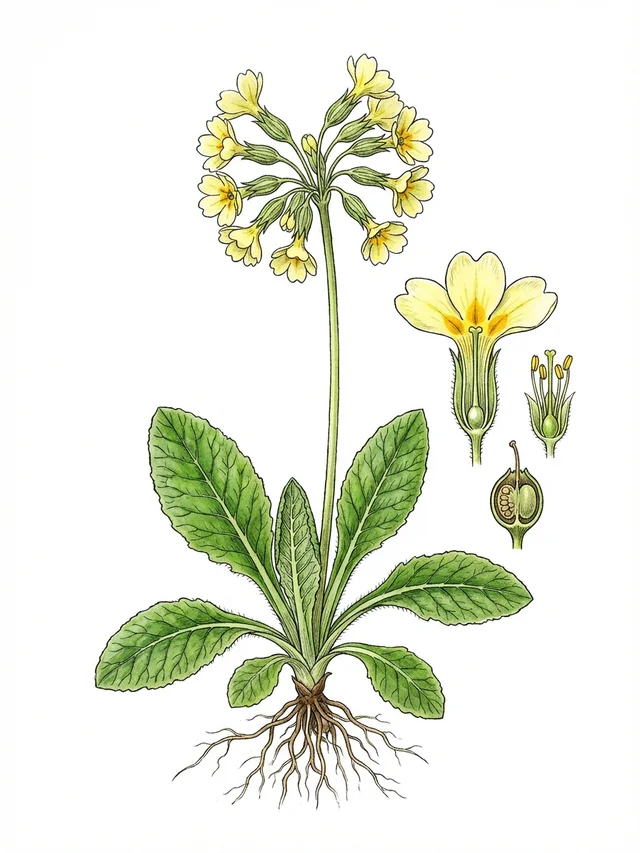
 Image to followAI-generated illustration
Galeopsis tetrahit
Galeopsis tetrahit
FamilyGenus: Galeopsisnative in Germany
🌿
41
Species
interact
🔗
225
Interactions
documented
🐛
3
Host relationships
Species
About this species
A native herbaceous plant of the mint family, Galeopsis tetrahit has broad leaves and grows to about 37 cm tall. It flowers from June to August, produces tiny seeds, and forms arbuscular mycorrhiza. It holds a Red List status of Least Concern.
Ecological network
Click to highlight connections · Click again to open the species page
Loading network...
PollinationLarval hostFlower visit
Ecological significance
As a native species, there is no evidence of adverse ecological impact or invasiveness.
Annual cycle
Flowering takes place from June to August.
Safety note
No specific hazards are recorded.
Standort & Merkmale
Light
—
Moisture
—
Soil
—
Flowering period
Jun – Aug
Bioregion
Continental
Growth form
Krautige Pflanze
Woodiness
Nicht verholzt
Leaf type
Breitblättrig
Plant height
0.366 m
Morphological traits: TRY ID3 (CC BY 3.0) & TRY ID81 (CC BY)
Scientific profile
Galeopsis tetrahit is a herbaceous, non-woody member of the mint family (Lamiaceae). It is native in Great Britain. The plant has a terrestrial growth form and produces broad leaves; the average leaf area is 856.55 mm². Mature individuals attain a height of approximately 37 cm. The species forms arbuscular mycorrhizal associations. Flowering occurs from June through August. The seeds are very light, with a mean diaspore mass of 4.27 mg. The Red List status is Least Concern.
Pollinators & visitors
33 Arten interagieren mit dieser Pflanze
Bombus ruderatusBombus lapidariusBombus lucorumPieris rapaeBombus hortorumBombus pascuorumPolyommatus icarusGonepteryx rhamniPieris napiBombus muscorumCoenonympha pamphilusBombus sylvestrisBombus pratorumBombus jonellusmacroglossum stellatarumLasioglossum morioDasysyrphus albostriatusSphegina clunipesBombus ruderariusBombus terrestrisBombus sylvarumLasioglossum calceatumBombus semenoviellusBombus hypnorumBombus soroeensisBombus wurfleniiSphaerophoria scriptaEpisyrphus balteatusMelanostoma mellinumPlatycheirus albimanusPlatycheirus manicatusPlatycheirus peltatusBombus sylavrum
Host relationships
3 species use this plant as a host
Other flower visitors
5 other species visit the flowers
Sources & data origin
•Interaktionsdaten via GloBI (CC-BY 4.0)
•pollinator_interactions
•FloraWeb / BfN
•GBIF Backbone Taxonomy — GBIF Secretariat (2024), DOI: 10.15468/39omei (CC BY 4.0)
•TRY Categorical Traits (ID3) — Kattge et al. (2012), DOI: 10.17871/TRY.3 (CC BY 3.0)
•TRY Global Spectrum (ID81) — Díaz et al. (2016/2021), DOI: 10.17871/TRY.81 (CC BY)
•Govaerts R et al. (2025) — World Checklist of Vascular Plants (WCVP) v14. Royal Botanic Gardens, Kew. DOI: 10.34885/xs7h-ze42 (CC BY 4.0)
All data is licensed under CC BY 4.0, CC0, or compatible terms. Attribution according to license conditions. Full source overview →