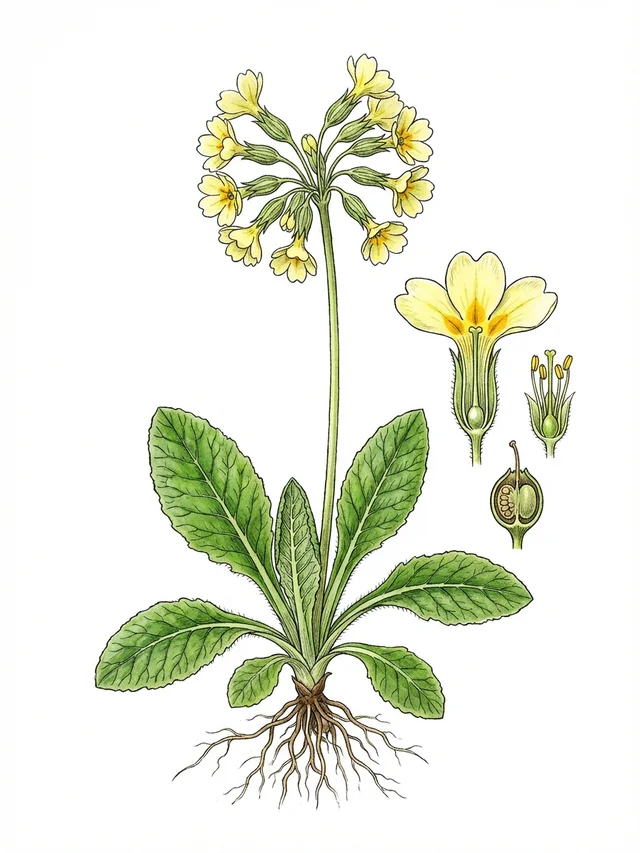
 Image to followAI-generated illustration
Matthiola incana
Matthiola incana
FamilyGenus: Levkojennative in Germany
🌿
10
Species
interact
🔗
13
Interactions
documented
🐛
1
Host relationships
Species
About this species
Matthiola incana is an introduced and established plant in Great Britain, belonging to the Brassicaceae family. It flowers from April to October and prefers sunny, moderately moist, calcareous to basic soils. The subshrub grows to about 36 cm tall, with broad, non-woody foliage and moderate salt tolerance.
Ecological network
Click to highlight connections · Click again to open the species page
Loading network...
PollinationLarval host
Ecological significance
Introduced and established in Great Britain, most likely via horticultural pathways. It is not recorded as invasive or problematic. No significant ecological impacts are indicated from the available evidence.
Annual cycle
Flowers from April to October. Foliage may persist in mild conditions but no dormancy information is provided.
Standort & Merkmale
Light
Sonne
Moisture
Frisch (Mäßig feucht)
Soil
—
Flowering period
Apr – Okt
Bioregion
Continental
Growth form
Halbstrauch
Woodiness
Nicht verholzt
Leaf type
Breitblättrig
Plant height
0.363 m
Morphological traits: TRY ID3 (CC BY 3.0) & TRY ID81 (CC BY)
Pflege & Anbau
**Light:** Full sun.
**Soil:** Moderately moist but well-drained; alkaline to neutral (calcareous) is ideal. Tolerates moderate salinity, making it suitable for coastal gardens.
**Water:** Keep soil fresh; avoid waterlogging.
**Hardiness:** Not specified in the data, but as a warmth-loving species, protect from severe frost if grown in colder regions.
Scientific profile
Matthiola incana is a subshrub (Halbstrauch) with non-woody, broad-bladed leaves and a terrestrial habit. Individual leaves have an area of around 590 mm², and the plant typically reaches a height of 0.36 m. It forms arbuscular mycorrhizal (AM) associations. The species is heliophilous, requiring full sun (Ellenberg light value 8.5), and grows best in fresh, moderately moist soils (moisture value 4). It shows a preference for calcareous or basic substrates (reaction value 7) and can withstand moderate salinity (salinity value 4). Temperature-wise, it is warmth-loving (value 10) and occurs in habitats with low disturbance intensity (severity 0.46). The flowering period extends from April to October.
Pollinators & visitors
9 Arten interagieren mit dieser Pflanze
Sources & data origin
•Interaktionsdaten via GloBI (CC-BY 4.0)
•EIVE 1.0 — Dengler et al. (2023), DOI: 10.3897/VCS.98324 (CC BY 4.0)
•GBIF Backbone Taxonomy — GBIF Secretariat (2024), DOI: 10.15468/39omei (CC BY 4.0)
•TRY Categorical Traits (ID3) — Kattge et al. (2012), DOI: 10.17871/TRY.3 (CC BY 3.0)
•TRY Global Spectrum (ID81) — Díaz et al. (2016/2021), DOI: 10.17871/TRY.81 (CC BY)
•Checklist Alien Plants Belgium — Verloove F (2023), Botanic Garden Meise (CC BY 4.0)
•Govaerts R et al. (2025) — World Checklist of Vascular Plants (WCVP) v14. Royal Botanic Gardens, Kew. DOI: 10.34885/xs7h-ze42 (CC BY 4.0)
All data is licensed under CC BY 4.0, CC0, or compatible terms. Attribution according to license conditions. Full source overview →