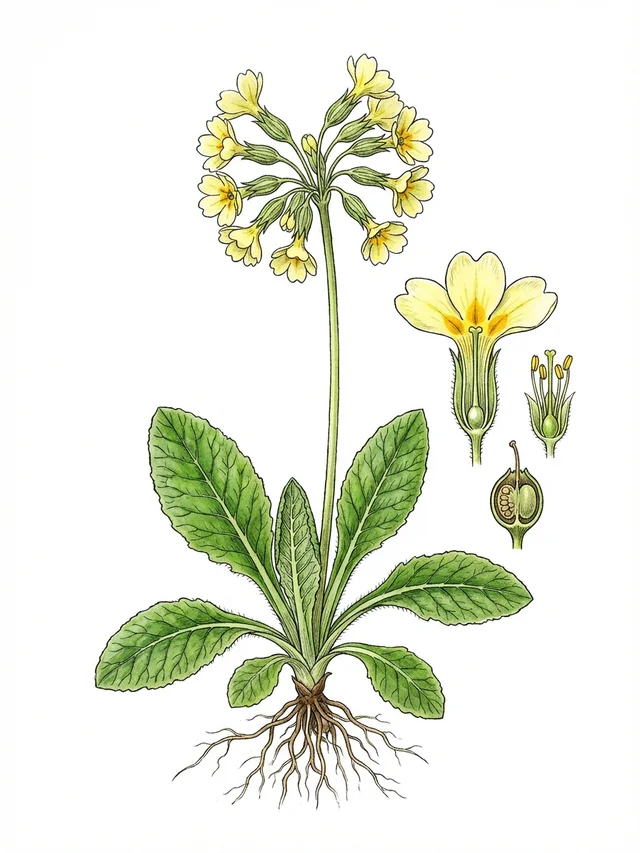
 Image to followAI-generated illustration
Glyceria maxima
Glyceria maxima
FamilyGenus: Glycerianative in Germany
🌿
6
Species
interact
🔗
7
Interactions
documented
🐛
3
Host relationships
Species
About this species
A native perennial grass of wet, nutrient-rich habitats, Glyceria maxima is found in damp meadows and swamps across Great Britain. It forms robust clumps of broad, bright green leaves and reaches up to 1.4 metres in height. Flowering occurs during July and August, and the plant favours full sun and calcareous, fertile soils. It associates with arbuscular mycorrhizal fungi and tolerates only low levels of disturbance.
Ecological network
Click to highlight connections · Click again to open the species page
Loading network...
Larval hostFlower visit
Ecological significance
In its native range, Glyceria maxima occupies wet meadows, swamps and occasionally nutrient-rich ruderal sites. Its tall, broad-leaved clumps contribute structural diversity to these habitats. The species' dependence on high nutrient levels makes it an indicator of fertile, undisturbed wetlands. It forms mycorrhizal associations that support phosphorus uptake in damp soils.
Annual cycle
Flowering periodJuly and August.
Standort & Merkmale
Light
Sonne
Moisture
Feucht
Soil
Starkzehrer (Nährstoffreicher/Fetter Boden)
Flowering period
Jul – Aug
Soil reaction
Basisch / Kalkhold
Bioregion
Continental
Growth form
Gras
Woodiness
Nicht verholzt
Leaf type
Breitblättrig
Plant height
1.394 m
Morphological traits: TRY ID3 (CC BY 3.0) & TRY ID81 (CC BY)
Pflege & Anbau
Place in full sun with constantly moist to wet soil, ideally a nutrient-rich, calcareous loam or clay. This grass suits the margins of ponds, water features or bog gardens. It requires minimal disturbance once established. Cut back old foliage in late winter before new growth resumes. Under suitable conditions it can reach 1.4 m in height.
Scientific profile
Glyceria maxima is a broad-leaved, non-woody grass with a terrestrial growth form. It attains a typical height of around 1.4 m and bears leaves with an average area of 6949 mm². The species is native in Great Britain and not currently considered threatened. It prefers full sun and consistently moist to wet conditions, typically in calcareous, nutrient-rich substrates. Its primary habitat is wet meadow and swamp, with a secondary occurrence on nutrient-rich ruderal sites. The plant has a low tolerance of disturbance and moderately warm temperature requirements. An arbuscular mycorrhiza aids nutrient acquisition. Flowering takes place from July to August. The diaspores are tiny, approximately 0.31 mg in mass.
Host relationships
3 species use this plant as a host
Sources & data origin
•Interaktionsdaten via GloBI (CC-BY 4.0)
•Cook et al. (2025) UK Butterfly & Moth Traits (DOI: 10.5285/dbc7cc17-cbbd-49dd-bab4-8e8855768d66)
•FloraWeb / BfN
•EIVE 1.0 — Dengler et al. (2023), DOI: 10.3897/VCS.98324 (CC BY 4.0)
•GBIF Backbone Taxonomy — GBIF Secretariat (2024), DOI: 10.15468/39omei (CC BY 4.0)
•TRY Categorical Traits (ID3) — Kattge et al. (2012), DOI: 10.17871/TRY.3 (CC BY 3.0)
•TRY Global Spectrum (ID81) — Díaz et al. (2016/2021), DOI: 10.17871/TRY.81 (CC BY)
•Govaerts R et al. (2025) — World Checklist of Vascular Plants (WCVP) v14. Royal Botanic Gardens, Kew. DOI: 10.34885/xs7h-ze42 (CC BY 4.0)
All data is licensed under CC BY 4.0, CC0, or compatible terms. Attribution according to license conditions. Full source overview →