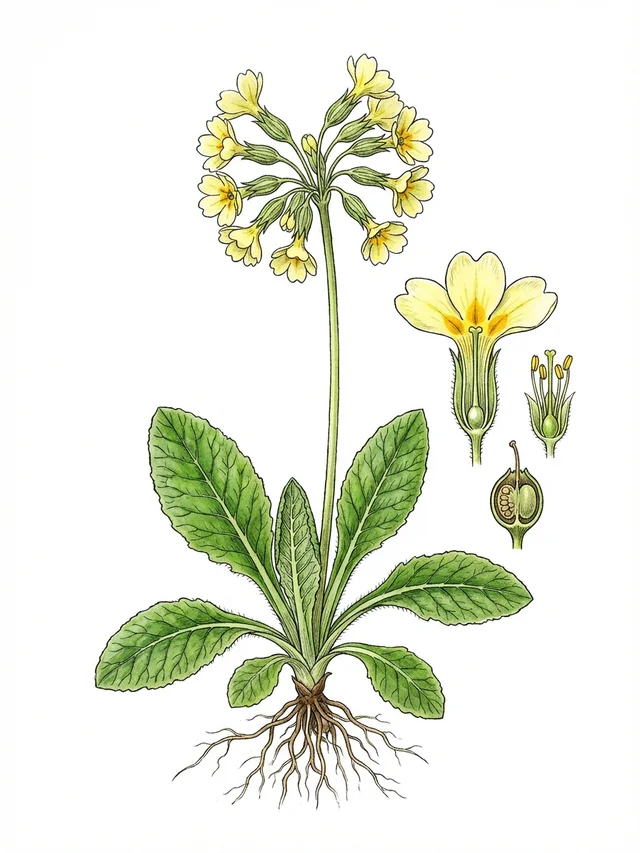
 Image to followAI-generated illustration
Hesperis matronalis
Hesperis matronalis
FamilyGenus: Nachtviolennative in Germany
🌿
9
Species
interact
🔗
12
Interactions
documented
🐛
2
Host relationships
Species
About this species
Hesperis matronalis is an introduced, established herbaceous plant that prefers semi-shaded, moist, fertile soils and is often found at woodland edges. It flowers from May to July and grows up to 0.58 m tall, bearing broad leaves on non-woody stems.
Ecological network
Click to highlight connections · Click again to open the species page
Loading network...
PollinationLarval host
Ecological significance
The ecological impact of Hesperis matronalis in Great Britain has not been assessed.
Annual cycle
This herbaceous plant produces leafy growth in spring, flowers from May to July, and then dies back in autumn.
Standort & Merkmale
Light
Halbschatten
Moisture
Frisch (Mäßig feucht)
Soil
Starkzehrer (Nährstoffreicher/Fetter Boden)
Flowering period
Mai – Jul
Soil reaction
Mäßig sauer bis neutral
Bioregion
Continental
Growth form
Krautige Pflanze
Woodiness
Nicht verholzt
Leaf type
Breitblättrig
Plant height
0.58 m
Morphological traits: TRY ID3 (CC BY 3.0) & TRY ID81 (CC BY)
Pflege & Anbau
**Light**: Semi-shade
**Soil**: Fertile, moisture-retentive and calcareous soil.
**Watering**: Keep the soil consistently moist but not waterlogged.
**Soil fertility**: This species is a heavy feeder; it benefits from nutrient-rich ground.
**Mycorrhiza**: This species forms arbuscular mycorrhizal associations.
**Flowering**: Blooms from May to July.
**Height**: Grows to around 0.58 m.
Scientific profile
Hesperis matronalis is a non-woody herbaceous plant of the family Brassicaceae. It is introduced and has become established in Great Britain, where it typically occupies semi-shaded, moist habitats such as forest edges and woodland margins. The plant favours nutrient-rich, calcareous soils and reaches a height of approximately 0.58 m. Its broad leaves are characteristic of the species, and it produces flowers from May to July. It is an arbuscular mycorrhizal species, forming associations with soil fungi. The species is considered a neophyte in Britain, having been introduced after 1500.
Pollinators & visitors
7 Arten interagieren mit dieser Pflanze
Sources & data origin
•Cook et al. (2025) UK Butterfly & Moth Traits (DOI: 10.5285/dbc7cc17-cbbd-49dd-bab4-8e8855768d66)
•pollinator_interactions
•FloraWeb / BfN
•EIVE 1.0 — Dengler et al. (2023), DOI: 10.3897/VCS.98324 (CC BY 4.0)
•GBIF Backbone Taxonomy — GBIF Secretariat (2024), DOI: 10.15468/39omei (CC BY 4.0)
•TRY Categorical Traits (ID3) — Kattge et al. (2012), DOI: 10.17871/TRY.3 (CC BY 3.0)
•TRY Global Spectrum (ID81) — Díaz et al. (2016/2021), DOI: 10.17871/TRY.81 (CC BY)
•Checklist Alien Plants Belgium — Verloove F (2023), Botanic Garden Meise (CC BY 4.0)
•Govaerts R et al. (2025) — World Checklist of Vascular Plants (WCVP) v14. Royal Botanic Gardens, Kew. DOI: 10.34885/xs7h-ze42 (CC BY 4.0)
All data is licensed under CC BY 4.0, CC0, or compatible terms. Attribution according to license conditions. Full source overview →