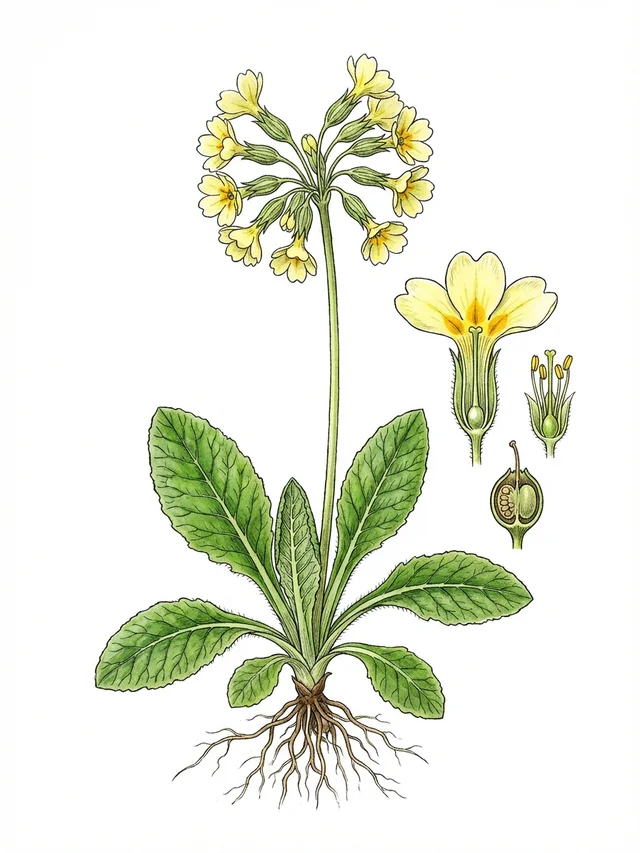
 Image to followAI-generated illustration
Aethusa cynapium
Aethusa cynapium
FamilyGenus: Aethusanative in Germany
🌿
39
Species
interact
🔗
99
Interactions
documented
About this species
A native herb of the carrot family, found in semi-shaded, nutrient-rich, calcareous soils. It flowers through the summer and provides nectar and pollen for insects.
Ecological network
Click to highlight connections · Click again to open the species page
Loading network...
PollinationFlower visit
Ecological significance
As a native species, it supplies nectar and pollen to insects from June to September and contributes to the diversity of nutrient-rich, semi-shaded habitats.
Annual cycle
Flowering takes place from June to September.
Standort & Merkmale
Light
Halbschatten
Moisture
Frisch (Mäßig feucht)
Soil
—
Flowering period
Jun – Sep
Bioregion
Continental
Nectar value
3
Pollen value
3
Growth form
Krautige Pflanze
Woodiness
Nicht verholzt
Leaf type
Breitblättrig
Plant height
0.511 m
Morphological traits: TRY ID3 (CC BY 3.0) & TRY ID81 (CC BY)
Pflege & Anbau
Prefers semi-shaded sites with fresh, moderately moist, nutrient-rich, calcareous soil.
Scientific profile
Aethusa cynapium is an herbaceous, non-woody, broad-leaved terrestrial plant, reaching around half a metre in height. It forms arbuscular mycorrhizal associations and grows in half-shade on fresh, moderately moist soils (moisture value 5) that are calcareous or basic (reaction value 8) and nutrient-rich (nutrients value 7). The temperature preference is moderately warm (value 5), and the species occurs where disturbance severity is low. Leaf area is approximately 2376 mm² and diaspore mass about 1.56 mg. Flowering lasts from June to September, with nectar and pollen values both rated at 3. Native in Great Britain, it belongs to the family Apiaceae.
Pollinators & visitors
32 Arten interagieren mit dieser Pflanze
Bombus pascuorumBombus lucorumBombus lapidariusBombus sylvestrisOedemera nobilisApis melliferaPapilio alexanorPapilio machaonPapilio hospitonChrysotoxum bicinctumEpisyrphus balteatusEupeodes corollaeEupeodes latifasciatusEupeodes lunigerMelanostoma mellinumPipizella viduataPlatycheirus albimanusPlatycheirus clypeatusPlatycheirus manicatusPlatycheirus peltatusScaeva pyrastriSphaerophoria scriptaSyrphus ribesiiScaeva dignotaLasioglossum calceatumLasioglossum pauxillumBombus terrestrisCheilosia paganaEristalis nemorumPlatycheirus scutatusSphaerophoria taeniataMeliscaeva auricollis
Other flower visitors
7 other species visit the flowers
Brassicogethes aeneusParacorymbia fulvaStenurella melanuraHylemyza partitaMeligethes aeneusMelinda viridicyaneaEriothrix rufomaculata
Sources & data origin
•Interaktionsdaten via GloBI (CC-BY 4.0)
•Middleton-Welling_2020
•Mendeley_UK_2022
•pollinator_interactions
•FloraWeb / BfN
•EIVE 1.0 — Dengler et al. (2023), DOI: 10.3897/VCS.98324 (CC BY 4.0)
•EuPPollNet — Kuppler et al. (2025), DOI: 10.1111/geb.70000 (CC BY 4.0)
•Database of Pollinator Interactions (DoPI) — Pocock et al. (2022), DOI: 10.1002/ecy.3801 (CC BY)
•GBIF Backbone Taxonomy — GBIF Secretariat (2024), DOI: 10.15468/39omei (CC BY 4.0)
•TRY Categorical Traits (ID3) — Kattge et al. (2012), DOI: 10.17871/TRY.3 (CC BY 3.0)
•TRY Global Spectrum (ID81) — Díaz et al. (2016/2021), DOI: 10.17871/TRY.81 (CC BY)
•Govaerts R et al. (2025) — World Checklist of Vascular Plants (WCVP) v14. Royal Botanic Gardens, Kew. DOI: 10.34885/xs7h-ze42 (CC BY 4.0)
All data is licensed under CC BY 4.0, CC0, or compatible terms. Attribution according to license conditions. Full source overview →