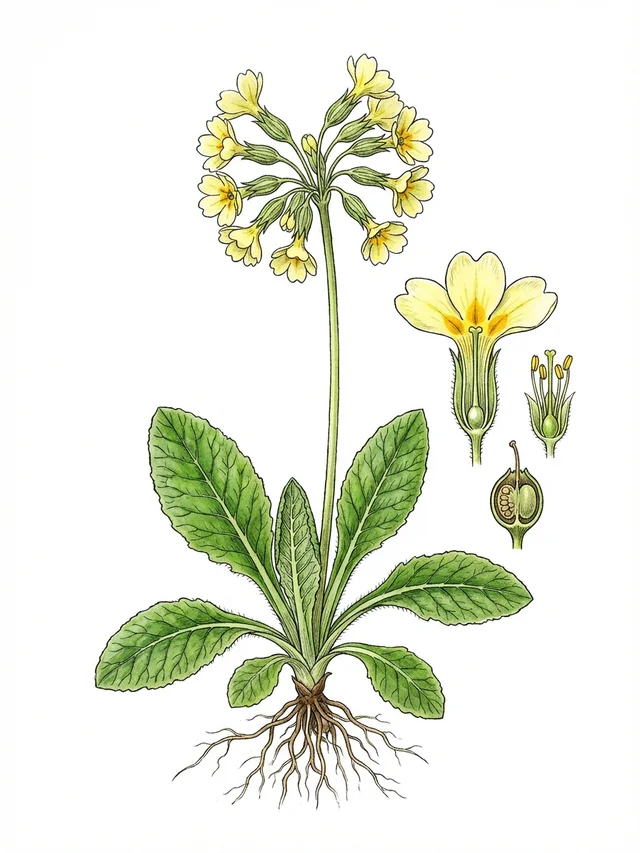
 Image to followAI-generated illustration
Hyoscyamus niger
Hyoscyamus niger
FamilyGenus: Hyoscyamusnative in Germany
🌿
9
Species
interact
🔗
11
Interactions
documented
🐛
5
Host relationships
Species
About this species
Hyoscyamus niger is an archaeophyte in Great Britain, long naturalised on nutrient-rich ruderal ground and disturbed sites. It is a herbaceous annual or biennial, typically 0.45 m tall, with broad leaves and funnel-shaped, purple-veined flowers from May to October.
Ecological network
Click to highlight connections · Click again to open the species page
Loading network...
PollinationLarval hostFlower visit
Ecological significance
As a long-established archaeophyte, Hyoscyamus niger is naturalised in Britain without recorded invasive impacts. It occupies a narrow niche on disturbed, nutrient-rich soils.
Annual cycle
Germination occurs in spring; the plant grows through summer, flowering from May to October. It sets copious seed before dying back in autumn.
Standort & Merkmale
Light
Sonne
Moisture
Frisch (Mäßig feucht)
Soil
Starkzehrer (Nährstoffreicher/Fetter Boden)
Flowering period
Mai – Okt
Soil reaction
Basisch / Kalkhold
Bioregion
Continental
Growth form
Krautige Pflanze
Woodiness
Nicht verholzt
Leaf type
Breitblättrig
Plant height
0.45 m
Morphological traits: TRY ID3 (CC BY 3.0) & TRY ID81 (CC BY)
Pflege & Anbau
**Light:** Full sun.
**Moisture:** Moderately moist, well-drained soil.
**Soil:** Nutrient-rich, calcareous (alkaline).
**Habitat:** Disturbed, open ground; ideal for wildflower meadows on rubble or waste places. Allow self-seeding for persistence.
Scientific profile
Henbane (Hyoscyamus niger) is a non-woody, broad-leaved herbaceous plant belonging to the nightshade family (Solanaceae). It typically reaches 0.45 m in height, with a leaf area around 5,630 mm² and tiny seeds (diaspore mass 0.7 mg). The flowers, which appear from May to October, are pollinator-attracting. The plant thrives in full sun on moderately moist, nutrient-rich, calcareous soils, and is strongly associated with disturbed habitats such as rubble, waste ground and arable margins. It exhibits a low tolerance of salinity and a moderate warmth requirement, with a disturbance indicator value of 0.81 (low disturbance frequency). Across its natural range it is found in Europe, Africa and temperate to tropical Asia. In Britain, it is an archaeophyte, established since at least the early modern period. In some European countries it is categorised as vulnerable (Red List 3), though its status in Britain is not detailed here.
Host relationships
5 species use this plant as a host
Other flower visitors
3 other species visit the flowers
Sources & data origin
•Interaktionsdaten via GloBI (CC-BY 4.0)
•Cook et al. (2025) UK Butterfly & Moth Traits (DOI: 10.5285/dbc7cc17-cbbd-49dd-bab4-8e8855768d66)
•pollinator_interactions
•FloraWeb / BfN
•EIVE 1.0 — Dengler et al. (2023), DOI: 10.3897/VCS.98324 (CC BY 4.0)
•GBIF Backbone Taxonomy — GBIF Secretariat (2024), DOI: 10.15468/39omei (CC BY 4.0)
•TRY Categorical Traits (ID3) — Kattge et al. (2012), DOI: 10.17871/TRY.3 (CC BY 3.0)
•TRY Global Spectrum (ID81) — Díaz et al. (2016/2021), DOI: 10.17871/TRY.81 (CC BY)
•Govaerts R et al. (2025) — World Checklist of Vascular Plants (WCVP) v14. Royal Botanic Gardens, Kew. DOI: 10.34885/xs7h-ze42 (CC BY 4.0)
All data is licensed under CC BY 4.0, CC0, or compatible terms. Attribution according to license conditions. Full source overview →