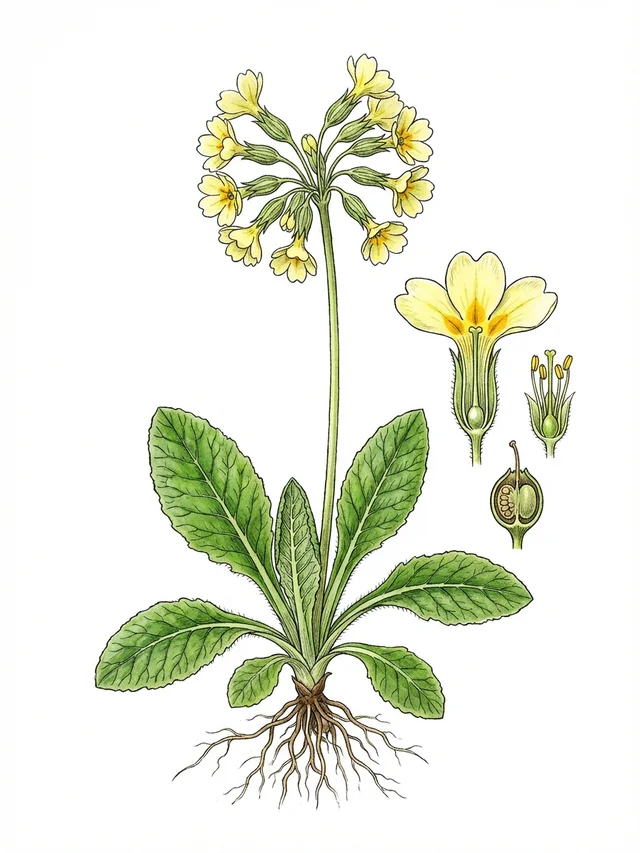
 Image to followAI-generated illustration
Eschscholzia californica
Eschscholzia californica
FamilyGenus: Eschscholzianative in Germany
🌿
21
Species
interact
🔗
51
Interactions
documented
🐛
1
Host relationships
Species
About this species
An introduced, herbaceous plant reaching about 38 cm tall, with broad leaves and flowers from June to October. It favours full sun and dry conditions and has become established in parts of Great Britain.
Ecological network
Click to highlight connections · Click again to open the species page
Loading network...
PollinationLarval hostFlower visit
Ecological significance
Eschscholzia californica is an introduced species that has become established in parts of Great Britain, chiefly through escape from cultivation. No significant adverse ecological impacts are documented.
Annual cycle
Flowering from June to October.
Standort & Merkmale
Light
Sonne
Moisture
Trocken
Soil
—
Flowering period
Jun – Okt
Bioregion
Continental
Nectar value
3
Pollen value
3
Growth form
Krautige Pflanze
Woodiness
Nicht verholzt
Leaf type
Breitblättrig
Plant height
0.379 m
Morphological traits: TRY ID3 (CC BY 3.0) & TRY ID81 (CC BY)
Pollen
6.3532 mg/Blüte
Pflege & Anbau
**Light:** Full sun.
**Soil:** Well-drained, dry to medium-dry soil, neutral to slightly acid.
**Watering:** Drought-tolerant once established; water sparingly.
**Feeding:** Moderate fertility; avoid over-fertilising.
**Maintenance:** Deadhead spent flowers to prolong blooming. May self-seed freely in suitable conditions.
Scientific profile
Eschscholzia californica is a herbaceous, non-woody plant with broad leaves. It typically grows to around 0.38 metres in height. The species thrives in full sun and dry, well-drained soils, tolerating neutral to slightly acid conditions. It is a medium nutrient feeder and is adapted to moderately warm temperatures. Flowering occurs from June through to October. The plant forms arbuscular mycorrhizal (AM) associations.
Pollinators & visitors
17 Arten interagieren mit dieser Pflanze
Apis melliferaBombus lapidariusBombus hypnorumBombus lucorumBombus sylvestrisPolistes dominulaHalictus rubicundusPieris rapaeLasioglossum zonulumHalictus confususParnassius mnemosyneAndrena nigroaeneaAndrena flavipesHalictus maculatusApis.melliferaBombus.lapidariusBombus terrestris
Host relationships
1 species use this plant as a host
Amphipyra tragopoginis
Other flower visitors
3 other species visit the flowers
Sources & data origin
•Interaktionsdaten via GloBI (CC-BY 4.0)
•Cook et al. (2025) UK Butterfly & Moth Traits (DOI: 10.5285/dbc7cc17-cbbd-49dd-bab4-8e8855768d66)
•Middleton-Welling_2020
•pollinator_interactions
•Baden-Böhm F, App M, Thiele J (2022) — The FloRes Database: A floral resources trait database for pollinator habitat-assessment generated by a multistep workflow. Johann Heinrich von Thünen-Institut, Dryad, DOI: 10.5061/dryad.djh9w0w29 (CC0)
•EIVE 1.0 — Dengler et al. (2023), DOI: 10.3897/VCS.98324 (CC BY 4.0)
•EuPPollNet — Kuppler et al. (2025), DOI: 10.1111/geb.70000 (CC BY 4.0)
•Database of Pollinator Interactions (DoPI) — Pocock et al. (2022), DOI: 10.1002/ecy.3801 (CC BY)
•GBIF Backbone Taxonomy — GBIF Secretariat (2024), DOI: 10.15468/39omei (CC BY 4.0)
•TRY Categorical Traits (ID3) — Kattge et al. (2012), DOI: 10.17871/TRY.3 (CC BY 3.0)
•TRY Global Spectrum (ID81) — Díaz et al. (2016/2021), DOI: 10.17871/TRY.81 (CC BY)
•Checklist Alien Plants Belgium — Verloove F (2023), Botanic Garden Meise (CC BY 4.0)
•Govaerts R et al. (2025) — World Checklist of Vascular Plants (WCVP) v14. Royal Botanic Gardens, Kew. DOI: 10.34885/xs7h-ze42 (CC BY 4.0)
All data is licensed under CC BY 4.0, CC0, or compatible terms. Attribution according to license conditions. Full source overview →