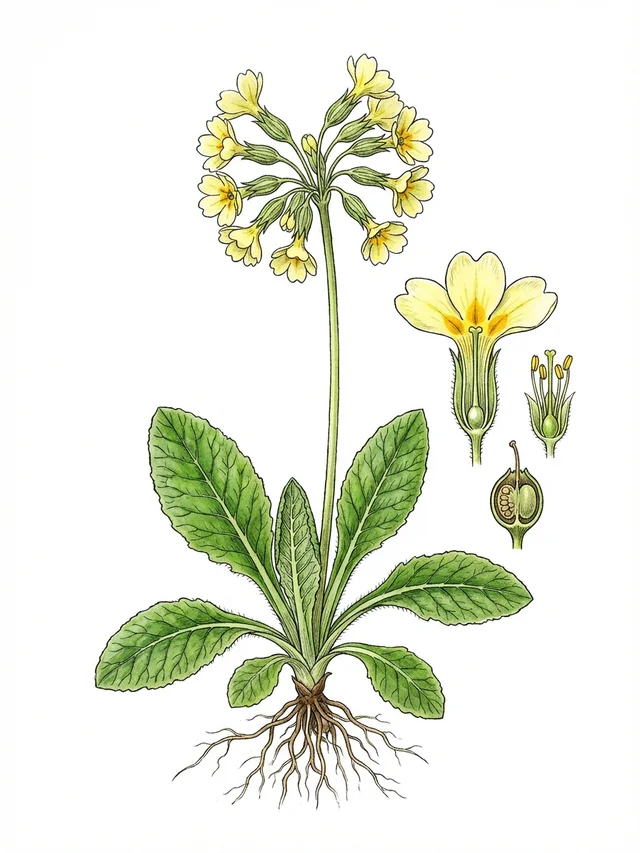
 Image to followAI-generated illustration
Cicer arietinum
Cicer arietinum
FamilyGenus: Kichererbsennative in Germany
🌿
9
Species
interact
🔗
14
Interactions
documented
🐛
4
Host relationships
Species
About this species
Cicer arietinum is an introduced, warmth-loving legume established in Britain. It reaches about 0.8 m in height, flowers in early summer, and grows best in sunny, moderately moist, alkaline soils.
Ecological network
Click to highlight connections · Click again to open the species page
Loading network...
PollinationLarval hostFlower visit
Ecological significance
There are no recorded adverse ecological effects in Britain.
Annual cycle
Flowering occurs in June and July.
Safety note
No safety information is available.
Standort & Merkmale
Light
Sonne
Moisture
Frisch (Mäßig feucht)
Soil
—
Flowering period
Jun – Jul
Bioregion
Continental
Growth form
Krautige Pflanze
Woodiness
Nicht verholzt
Leaf type
Breitblättrig
Plant height
0.766 m
Morphological traits: TRY ID3 (CC BY 3.0) & TRY ID81 (CC BY)
Pflege & Anbau
Grow Cicer arietinum in full sun and a moderately moist, well-drained soil. It needs a calcareous, alkaline medium and only moderate fertility. Sow where the plants are to mature once the soil has warmed; they reach about 80 cm tall and benefit from shelter in exposed situations. The plant is warmth-loving and will not tolerate cold, wet conditions.
Scientific profile
Cicer arietinum is an introduced species in Great Britain. Belonging to the pea family (Fabaceae), it is a non-woody, broad-leaved legume that typically grows to around 0.77 m. The flowers are borne in June and July. The species shows a strong preference for sunny positions and fresh to moderately moist soils. It is calcicole, thriving on calcareous, alkaline substrates, and has a moderate nutrient requirement. A warmth indicator, it does best in warm locations and forms arbuscular mycorrhizal associations with soil fungi.
Pollinators & visitors
4 Arten interagieren mit dieser Pflanze
Host relationships
4 species use this plant as a host
Other flower visitors
1 other species visit the flowers
Anser indicus x Branta leucopsis
Sources & data origin
•Interaktionsdaten via GloBI (CC-BY 4.0)
•Middleton-Welling_2020
•FloraWeb / BfN
•EIVE 1.0 — Dengler et al. (2023), DOI: 10.3897/VCS.98324 (CC BY 4.0)
•GBIF Backbone Taxonomy — GBIF Secretariat (2024), DOI: 10.15468/39omei (CC BY 4.0)
•TRY Categorical Traits (ID3) — Kattge et al. (2012), DOI: 10.17871/TRY.3 (CC BY 3.0)
•TRY Global Spectrum (ID81) — Díaz et al. (2016/2021), DOI: 10.17871/TRY.81 (CC BY)
•Checklist Alien Plants Belgium — Verloove F (2023), Botanic Garden Meise (CC BY 4.0)
•Govaerts R et al. (2025) — World Checklist of Vascular Plants (WCVP) v14. Royal Botanic Gardens, Kew. DOI: 10.34885/xs7h-ze42 (CC BY 4.0)
All data is licensed under CC BY 4.0, CC0, or compatible terms. Attribution according to license conditions. Full source overview →