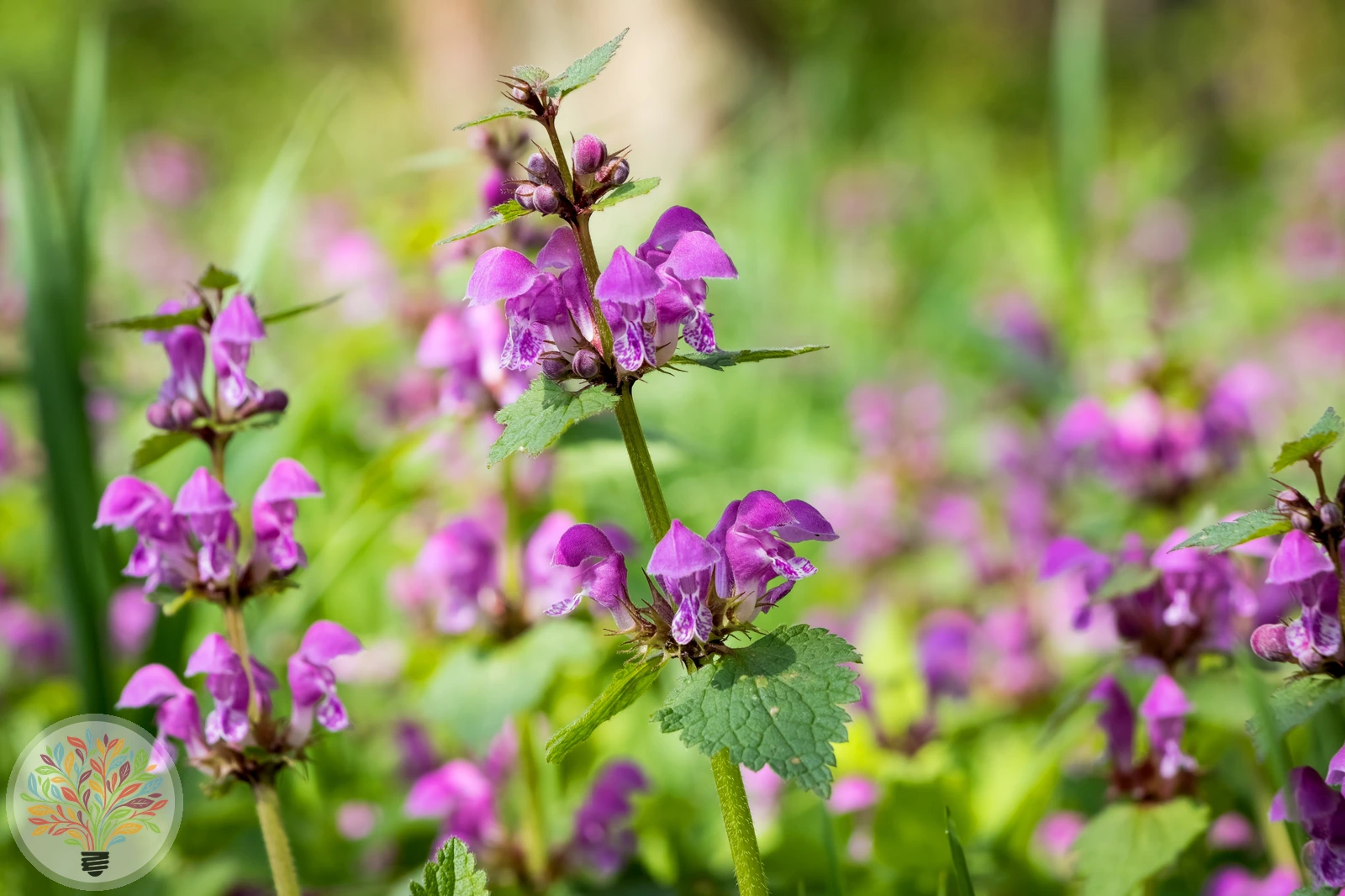
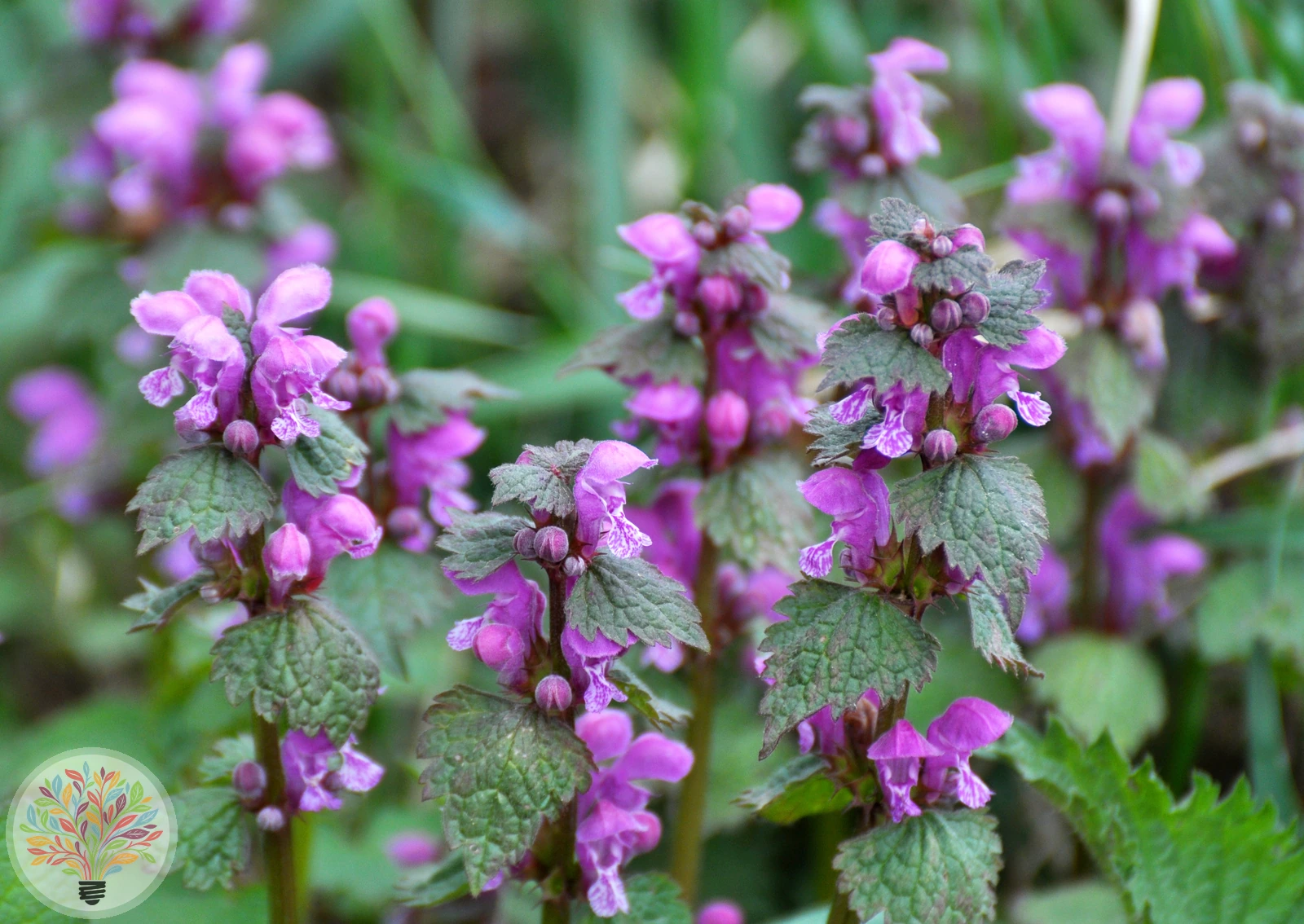
Lamium maculatum
Lamium maculatum
FamilyGenus: Lamiumnative in Germany
🌿
24
Species
interact
🔗
58
Interactions
documented
About this species
Lamium maculatum is an introduced, established herbaceous perennial that reaches about 35 cm in height. Broad-leaved and non-woody, it flowers from April to August. The plant favours semi-shaded sites with moderately moist, nutrient-rich, alkaline soils, and is frequently associated with woodland edge habitats.
Ecological network
Click to highlight connections · Click again to open the species page
Loading network...
Pollination
Ecological significance
Lamium maculatum is an introduced species that has become established in Great Britain. It is most commonly encountered in woodland edge habitats with low disturbance.
Annual cycle
Flowers from April to August. As a herbaceous perennial, top growth dies back in late autumn and resumes in spring.
Standort & Merkmale
Light
Halbschatten
Moisture
Frisch (Mäßig feucht)
Soil
Starkzehrer (Nährstoffreicher/Fetter Boden)
Flowering period
Apr – Aug
Soil reaction
Basisch / Kalkhold
Bioregion
Continental
Growth form
Krautige Pflanze
Woodiness
Nicht verholzt
Leaf type
Breitblättrig
Plant height
0.354 m
Morphological traits: TRY ID3 (CC BY 3.0) & TRY ID81 (CC BY)
Nectar
1.0237 µl/Blüte
Pflege & Anbau
Lamium maculatum grows best in semi-shade. Provide a moderately moist, well-drained, fertile soil that is alkaline in reaction. Flowering lasts from April through August. As a herbaceous perennial, it will die back in autumn and regrow the following spring.
Scientific profile
Lamium maculatum is an introduced species that has become established in Great Britain. It is a non-woody, broad-leaved herbaceous perennial typically reaching 0.35 m in height, with a leaf area of around 1,350 mm² and a diaspore mass of approximately 1.44 mg. Flowering occurs from April to August. The plant prefers semi-shaded conditions, fresh to moderately moist soils, and a nutrient-rich, alkaline substrate. Derived habitat approximations place it at woodland edges and forest margins, in settings with low disturbance.
Pollinators & visitors
24 Arten interagieren mit dieser Pflanze
Leptidea sinapisAglais urticaeGonepteryx rhamniBombus hortorumBombus pratorumBombus hypnorumApis melliferaBombus humilisBombus jonellusBombus pascuorumBombus argillaceusBombus lapidariusBombus bohemicusBombus sylvarumAnthophora plumipesPieris rapaeAnthidium manicatumAnthocharis cardaminesXylocopa violaceamacroglossum stellatarumBombus terrestrisOsmia bicornisNomada panzeriBombus wurflenii
Sources & data origin
•Interaktionsdaten via GloBI (CC-BY 4.0)
•pollinator_interactions
•Baden-Böhm F, App M, Thiele J (2022) — The FloRes Database: A floral resources trait database for pollinator habitat-assessment generated by a multistep workflow. Johann Heinrich von Thünen-Institut, Dryad, DOI: 10.5061/dryad.djh9w0w29 (CC0)
•FloraWeb / BfN
•EIVE 1.0 — Dengler et al. (2023), DOI: 10.3897/VCS.98324 (CC BY 4.0)
•GBIF Backbone Taxonomy — GBIF Secretariat (2024), DOI: 10.15468/39omei (CC BY 4.0)
•TRY Categorical Traits (ID3) — Kattge et al. (2012), DOI: 10.17871/TRY.3 (CC BY 3.0)
•TRY Global Spectrum (ID81) — Díaz et al. (2016/2021), DOI: 10.17871/TRY.81 (CC BY)
•Govaerts R et al. (2025) — World Checklist of Vascular Plants (WCVP) v14. Royal Botanic Gardens, Kew. DOI: 10.34885/xs7h-ze42 (CC BY 4.0)
•Foto: © Adobe Stock / AdobeStock_145534625
All data is licensed under CC BY 4.0, CC0, or compatible terms. Attribution according to license conditions. Full source overview →