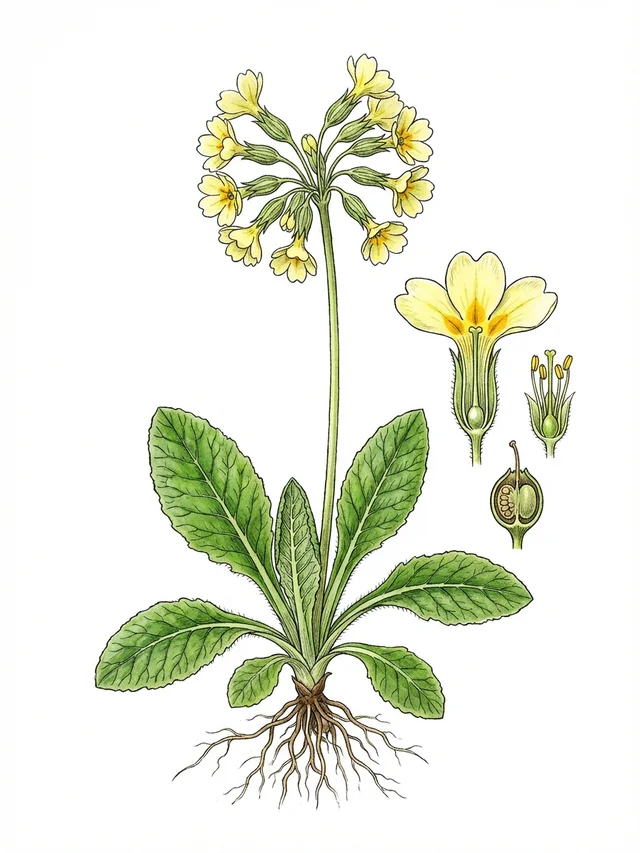
 Image to followAI-generated illustration
Larix decidua
Larix decidua
FamilyGenus: Larixnative in Germany
🌿
47
Species
interact
🔗
54
Interactions
documented
🐛
30
Host relationships
Species
About this species
Larix decidua is a deciduous coniferous tree reaching heights of around 35 metres. It is an introduced and established species in Great Britain, typically found in open, nutrient-poor habitats such as heath and alpine grassland. It bears soft needle-like leaves that turn golden before falling in autumn, and it flowers from April to August.
Ecological network
Click to highlight connections · Click again to open the species page
Loading network...
PollinationLarval hostFlower visit
Ecological significance
Larix decidua is an introduced species that has become established in parts of Great Britain. It can regenerate in open, nutrient-poor habitats, but no specific invasive impacts have been documented.
Annual cycle
In spring, bright green needles emerge, and flowering takes place between April and August. Male and female cones develop; the small female cones stand upright. Over summer, the needles mature to a deeper green. By autumn, the foliage turns a vivid gold before being shed for winter. Seeds are dispersed on the wind as the cones open.
Standort & Merkmale
Light
Sonne
Moisture
Frisch (Mäßig feucht)
Soil
Schwachzehrer (Magerer Boden)
Flowering period
Apr – Aug
Soil reaction
Mäßig sauer bis neutral
Bioregion
Continental
Growth form
Baum
Woodiness
Verholzt
Leaf type
Nadelblättrig
Leaf phenology
Laubabwerfend
Plant height
34.893 m
Morphological traits: TRY ID3 (CC BY 3.0) & TRY ID81 (CC BY)
Pflege & Anbau
Grow in full sun in moderately moist, well-drained, and nutrient-poor soil. Tolerant of cold conditions; avoid rich or heavily fertilised ground. No pruning is typically needed, but the tree may be shaped when young.
Scientific profile
Larix decidua is a large, woody tree in the pine family (Pinaceae). Unlike most conifers, it is deciduous, shedding its needle-like leaves each winter after a display of golden-yellow autumn colour. Mature specimens can attain a height of approximately 34.9 metres. Its small leaves (around 19.7 mm² leaf area) are borne on short shoots. The tree flowers from April to August. Ecological indicator values suggest it favours full sun, moderately moist but well-drained soils, and markedly low nutrient levels; it is adapted to cold alpine or northern conditions. The species has become established outside cultivation in Great Britain, where it often occupies heathland, dwarf-shrub heath, and alpine or poor grassland habitats. Its diaspores weigh about 6.5 mg, aiding wind dispersal.
Pollinators & visitors
10 Arten interagieren mit dieser Pflanze
Lymantria disparVespa velutina nigrithoraxParus majorEmberiza citrinellaSus scrofaChloris chlorisLymantria monachaBombus pascuorumBombus pratorumBombus pyrenaeus
Host relationships
30 species use this plant as a host
Operophtera brumataEupithecia abietariaEupithecia lariciataEupithecia indigataMacaria alternataMacaria liturataAgriopis aurantiariaHypomecis punctinalisBupalus piniariaEuproctis chrysorrhoeaMelanchra persicariaeCeramica pisiAgrotis segetumNycteola revayanaEupithecia tantillariaCosmia trapezinaEpirrita autumnataOrthosia gothicaOdontopera bidentataColotois pennariaConistra vacciniiHylaea fasciariaParadarisa consonariaDeileptenia ribeataBiston betulariaSelenia tetralunariaPanolis flammeaEctropis crepusculariaSphinx pinastriHelicoverpa armigera
Other flower visitors
7 other species visit the flowers
Cervus elaphusMonochamus sutorRhagium inquisitorAphidecta obliterataHarmonia quadripunctataLoxia curvirostraNyctalus leisleri
Sources & data origin
•Interaktionsdaten via GloBI (CC-BY 4.0)
•Cook et al. (2025) UK Butterfly & Moth Traits (DOI: 10.5285/dbc7cc17-cbbd-49dd-bab4-8e8855768d66)
•pollinator_interactions
•FloraWeb / BfN
•EIVE 1.0 — Dengler et al. (2023), DOI: 10.3897/VCS.98324 (CC BY 4.0)
•GBIF Backbone Taxonomy — GBIF Secretariat (2024), DOI: 10.15468/39omei (CC BY 4.0)
•TRY Categorical Traits (ID3) — Kattge et al. (2012), DOI: 10.17871/TRY.3 (CC BY 3.0)
•TRY Global Spectrum (ID81) — Díaz et al. (2016/2021), DOI: 10.17871/TRY.81 (CC BY)
•Checklist Alien Plants Belgium — Verloove F (2023), Botanic Garden Meise (CC BY 4.0)
•Govaerts R et al. (2025) — World Checklist of Vascular Plants (WCVP) v14. Royal Botanic Gardens, Kew. DOI: 10.34885/xs7h-ze42 (CC BY 4.0)
All data is licensed under CC BY 4.0, CC0, or compatible terms. Attribution according to license conditions. Full source overview →