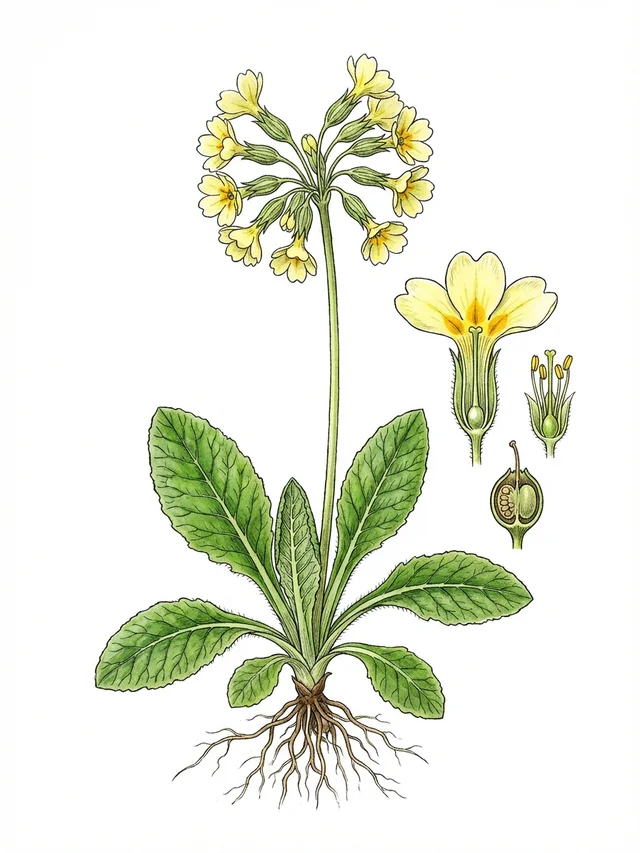
 Image to followAI-generated illustration
Lathyrus latifolius
Lathyrus latifolius
FamilyGenus: Lathyrusnative in Germany
🌿
40
Species
interact
🔗
123
Interactions
documented
About this species
A vigorous perennial climbing plant belonging to the pea family, introduced to Britain and now established in dry, sunny, calcareous grasslands. It bears showy pink flowers in early summer and forms long, winged stems that can clamber over surrounding vegetation. The plant is sometimes cultivated but is not native to the UK.
Ecological network
Click to highlight connections · Click again to open the species page
Loading network...
PollinationFlower visit
Ecological significance
Lathyrus latifolius is an introduced species that has become established in Britain, predominantly in dry, calcareous grasslands. It is not currently listed as invasive, and no evidence of negative ecological impacts is available.
Annual cycle
A herbaceous perennial climber. Fresh shoots emerge from a persistent rootstock in spring. Flowers appear in June and July, followed by elongated seed pods. The stems die back in autumn, and the plant overwinters below ground.
Standort & Merkmale
Light
Sonne
Moisture
Trocken
Soil
Mittelzehrer (Normaler Boden)
Flowering period
Jun – Jul
Soil reaction
Basisch / Kalkhold
Bioregion
Continental
Growth form
Kletterpflanze
Woodiness
Nicht verholzt
Leaf type
Breitblättrig
Plant height
1.282 m
Morphological traits: TRY ID3 (CC BY 3.0) & TRY ID81 (CC BY)
Pollen
0.07 mg/Blüte
Pflege & Anbau
Grow in full sun on a well-drained, preferably calcareous soil. Provide support for climbing stems. It tolerates dry conditions and low soil fertility.
Scientific profile
Lathyrus latifolius is an introduced climbing perennial, now firmly established in the wild. The stems are broadly winged and can reach around 1.3 metres in length, with branched tendrils that assist the plant in scrambling over other vegetation. Leaves are broad and glabrous. From June to July it produces loose racemes of three to fifteen pink flowers, each 20–30 mm across, followed by pods up to 11 cm long containing ten to fifteen seeds. It favours openly sunny positions on dry, calcareous, nutrient-poor soils, and is typically encountered in extensive grasslands and meadows with low disturbance. Although widely grown in gardens, in Britain it is considered a neophyte – an introduction that has persisted and spread into semi-natural habitats.
Pollinators & visitors
37 Arten interagieren mit dieser Pflanze
Bombus lapidariusBombus lucorumPolyommatus icarusPieris rapaePieris brassicaeMegachile lignisecaMegachile maritimaMegachile willughbiellaThymelicus sylvestrisCelastrina argiolusBombus humilisBombus muscorumMegachile circumcinctaMegachile ericetorumBombus pratorumApis melliferaBombus jonellusBombus sylvestrisBombus ruderatusVanessa carduiBombus pascuorumThymelicus lineolaXylocopa valgaXylocopa violaceaPolyommatus thersitesGonepteryx rhamniOsmia tridentataEucera nigrescensHalictus scabiosaeEucera longicornisPolyommatus argusSyrphus ribesiiOsmia leucomelanaLasioglossum morioBombus terrestrisBombus hortorumEucera chrysopyga
Other flower visitors
3 other species visit the flowers
Coccinella septempunctataClytiomya continuaAnthomyia liturata
Sources & data origin
•Interaktionsdaten via GloBI (CC-BY 4.0)
•pollinator_interactions
•Baden-Böhm F, App M, Thiele J (2022) — The FloRes Database: A floral resources trait database for pollinator habitat-assessment generated by a multistep workflow. Johann Heinrich von Thünen-Institut, Dryad, DOI: 10.5061/dryad.djh9w0w29 (CC0)
•FloraWeb / BfN
•EIVE 1.0 — Dengler et al. (2023), DOI: 10.3897/VCS.98324 (CC BY 4.0)
•GBIF Backbone Taxonomy — GBIF Secretariat (2024), DOI: 10.15468/39omei (CC BY 4.0)
•TRY Categorical Traits (ID3) — Kattge et al. (2012), DOI: 10.17871/TRY.3 (CC BY 3.0)
•TRY Global Spectrum (ID81) — Díaz et al. (2016/2021), DOI: 10.17871/TRY.81 (CC BY)
•Checklist Alien Plants Belgium — Verloove F (2023), Botanic Garden Meise (CC BY 4.0)
•Govaerts R et al. (2025) — World Checklist of Vascular Plants (WCVP) v14. Royal Botanic Gardens, Kew. DOI: 10.34885/xs7h-ze42 (CC BY 4.0)
All data is licensed under CC BY 4.0, CC0, or compatible terms. Attribution according to license conditions. Full source overview →