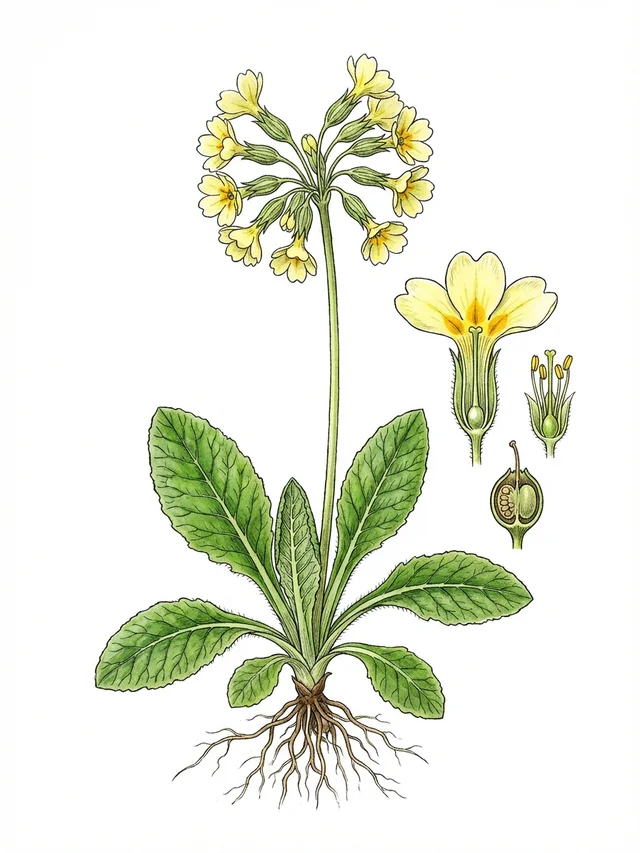
 Image to followAI-generated illustration
Lepidium draba
Lepidium draba
FamilyGenus: Lepidiumnative in Germany
🌿
42
Species
interact
🔗
73
Interactions
documented
🐛
2
Host relationships
Species
About this species
A herbaceous member of the cabbage family, introduced and now established in Great Britain. It produces clusters of small flowers from May to June and thrives in sunny, dry, calcareous soils.
Ecological network
Click to highlight connections · Click again to open the species page
Loading network...
PollinationLarval hostFlower visit
Ecological significance
An introduced plant that has become established across parts of Great Britain. It tends to occupy nutrient-poor, calcareous sites with low disturbance, but is not currently known to cause significant ecological harm.
Annual cycle
Flowers appear from May to June, followed by seed set in summer. The foliage dies back by autumn.
Safety note
No specific safety risks are documented for this species.
Standort & Merkmale
Light
Sonne
Moisture
Trocken
Soil
Mittelzehrer (Normaler Boden)
Flowering period
Mai – Jun
Soil reaction
Basisch / Kalkhold
Bioregion
Continental
Growth form
Krautige Pflanze
Woodiness
Nicht verholzt
Leaf type
Breitblättrig
Plant height
0.504 m
Morphological traits: TRY ID3 (CC BY 3.0) & TRY ID81 (CC BY)
Pflege & Anbau
Grow *Lepidium draba* in full sun on a freely draining, preferably lime-rich soil. Water sparingly once the plant is established, as it is adapted to dry conditions. It needs little feeding and does not tolerate saline soils or heavy disturbance. Deadhead after flowering if self-seeding is unwanted.
Scientific profile
Lepidium draba is a non-woody, broad-leaved herbaceous plant growing to around half a metre in height. Fully established as an introduced species in Great Britain, it is most often encountered on open, sun-baked ground. The plant prefers a dry to moderately moist, well-drained soil that is calcareous (alkaline) and modestly fertile. It shows little tolerance of salt and is associated with sites experiencing low levels of disturbance. Flowering takes place in late spring and early summer, from May into June.
Pollinators & visitors
34 Arten interagieren mit dieser Pflanze
Pieris rapaeNomada flavoguttataAndrena flavipesApis melliferaAndrena haemorrhoaAndrena labiataAndrena pilipesLasioglossum marginatumBombus lucorumBombus sylvestrisTyta luctuosaEuclidia glyphicaFabriciana niobePolyommatus icarusAndrena dorsataSphecodes geoffrellusAndrena combinataSeladonia leucaheneaLasioglossum laevigatumHalictus maculatusSeladonia tumulorumLasioglossum aeratumLasioglossum morioLasioglossum politumAndrena wilkellaLasioglossum minutulumLasioglossum laticepsAndrena minutulaAndrena nitidiuscula_c.f.Sphaerophoria scriptaEupeodes lunigerNomada flavaBombus terrestrisChrysotoxum vernale
Other flower visitors
6 other species visit the flowers
Anthrenus pimpinellaeCoccinella septempunctataTropinota hirtaAnthrenus verbasciOxythyrea funestaRhagonycha fulva
Sources & data origin
•Cook et al. (2025) UK Butterfly & Moth Traits (DOI: 10.5285/dbc7cc17-cbbd-49dd-bab4-8e8855768d66)
•Interaktionsdaten via GloBI (CC-BY 4.0)
•pollinator_interactions
•FloraWeb / BfN
•EIVE 1.0 — Dengler et al. (2023), DOI: 10.3897/VCS.98324 (CC BY 4.0)
•GBIF Backbone Taxonomy — GBIF Secretariat (2024), DOI: 10.15468/39omei (CC BY 4.0)
•TRY Categorical Traits (ID3) — Kattge et al. (2012), DOI: 10.17871/TRY.3 (CC BY 3.0)
•TRY Global Spectrum (ID81) — Díaz et al. (2016/2021), DOI: 10.17871/TRY.81 (CC BY)
•Checklist Alien Plants Belgium — Verloove F (2023), Botanic Garden Meise (CC BY 4.0)
•Govaerts R et al. (2025) — World Checklist of Vascular Plants (WCVP) v14. Royal Botanic Gardens, Kew. DOI: 10.34885/xs7h-ze42 (CC BY 4.0)
All data is licensed under CC BY 4.0, CC0, or compatible terms. Attribution according to license conditions. Full source overview →