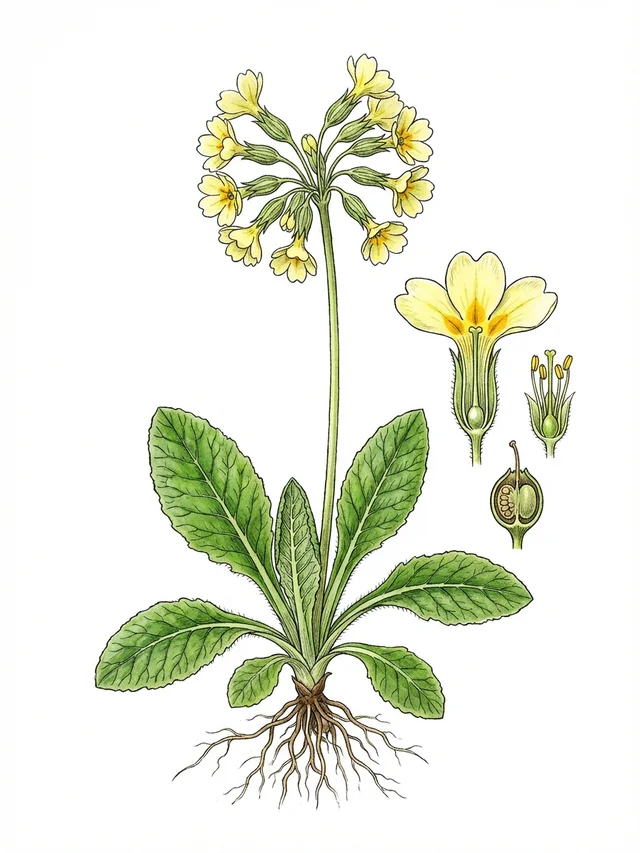
 Image to followAI-generated illustration
Leymus arenarius
Leymus arenarius
FamilyGenus: Leymusnative in Germany
🌿
2
Species
interact
🔗
2
Interactions
documented
About this species
Leymus arenarius is a native perennial grass with broad leaves, growing in sunny, moderately moist, slightly basic and slightly saline conditions, and reaching about 0.9 m tall with flowering from June to August.
Ecological network
Click to highlight connections · Click again to open the species page
Loading network...
Pollination
Ecological significance
Leymus arenarius is a native grass in Great Britain and is a component of local vegetation.
Annual cycle
Flowering occurs from June to August.
Standort & Merkmale
Light
Sonne
Moisture
Frisch (Mäßig feucht)
Soil
Mittelzehrer (Normaler Boden)
Flowering period
Jun – Aug
Soil reaction
Basisch / Kalkhold
Bioregion
Continental
Growth form
Gras
Woodiness
Nicht verholzt
Leaf type
Breitblättrig
Plant height
0.871 m
Morphological traits: TRY ID3 (CC BY 3.0) & TRY ID81 (CC BY)
Pflege & Anbau
Grow Leymus arenarius in full sun in a moderately moist, well-drained soil with a neutral to alkaline pH. It tolerates slightly saline conditions and is therefore suitable for coastal positions. The grass is low-maintenance; cut back old foliage in late winter before new growth appears.
Scientific profile
Leymus arenarius is native in Great Britain. It is a broad-leaved, terrestrial, non-woody grass that reaches a height of approximately 0.87 m. The leaf area averages 7814 mm² (78.1 cm²) and the diaspore mass is 5.53 mg. The species prefers full sun (Ellenberg light value 9) and moderately fresh, calcareous to basic soils (reaction value 7) with moderate nutrient levels (value 6). It tolerates slight salinity (value 2) and moderately warm temperatures (value 5). The plant is tolerant of low disturbance severity (0.47). It forms arbuscular mycorrhizal (AM) associations. Flowering occurs from June to August. The species has a Red List status of '*' (not threatened).
Sources & data origin
•Interaktionsdaten via GloBI (CC-BY 4.0)
•FloraWeb / BfN
•EIVE 1.0 — Dengler et al. (2023), DOI: 10.3897/VCS.98324 (CC BY 4.0)
•GBIF Backbone Taxonomy — GBIF Secretariat (2024), DOI: 10.15468/39omei (CC BY 4.0)
•TRY Categorical Traits (ID3) — Kattge et al. (2012), DOI: 10.17871/TRY.3 (CC BY 3.0)
•TRY Global Spectrum (ID81) — Díaz et al. (2016/2021), DOI: 10.17871/TRY.81 (CC BY)
•Govaerts R et al. (2025) — World Checklist of Vascular Plants (WCVP) v14. Royal Botanic Gardens, Kew. DOI: 10.34885/xs7h-ze42 (CC BY 4.0)
All data is licensed under CC BY 4.0, CC0, or compatible terms. Attribution according to license conditions. Full source overview →