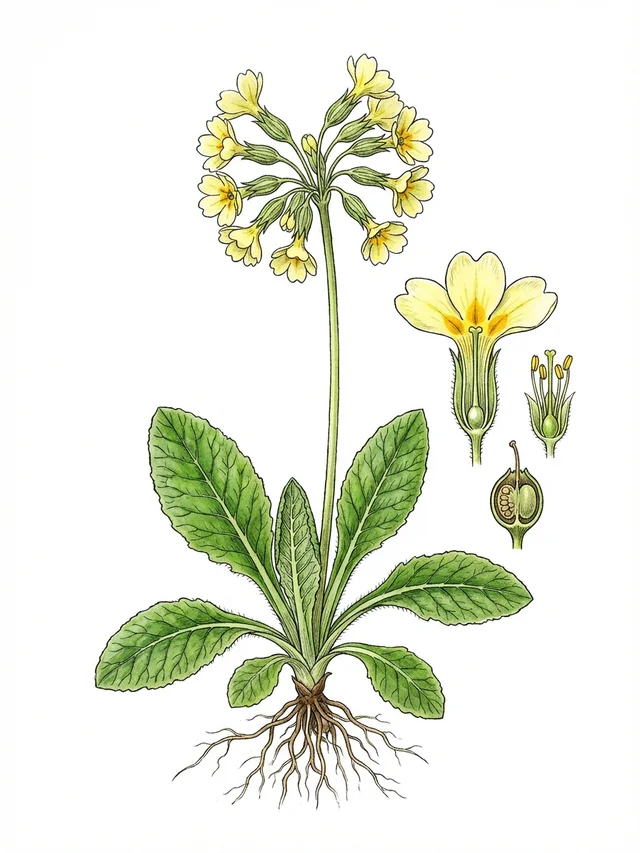
 Image to followAI-generated illustration
Lolium multiflorum
Lolium multiflorum
FamilyGenus: Loliumnative in Germany
🌿
3
Species
interact
🔗
3
Interactions
documented
About this species
A broad-leaved, non-woody grass that reaches about 0.4 m in height. It flowers from June to August and favours sunny, nutrient-rich, moderately moist soils. Originating from parts of southern Europe, North Africa and western Asia, it has become established in Great Britain as an introduced species.
Ecological network
Click to highlight connections · Click again to open the species page
Loading network...
PollinationFlower visit
Ecological significance
As an introduced grass, it is capable of colonising nutrient-rich disturbed ground, but there is no record of invasive behaviour or significant ecological impact in Great Britain.
Annual cycle
Flowering occurs from June to August. Small seeds (diaspores of about 2.6 mg) are then produced.
Safety note
No known toxicity; considered safe for children.
Standort & Merkmale
Light
Sonne
Moisture
Frisch (Mäßig feucht)
Soil
Starkzehrer (Nährstoffreicher/Fetter Boden)
Flowering period
Jun – Aug
Soil reaction
Basisch / Kalkhold
Bioregion
Continental
Growth form
Gras
Woodiness
Nicht verholzt
Leaf type
Breitblättrig
Plant height
0.409 m
Morphological traits: TRY ID3 (CC BY 3.0) & TRY ID81 (CC BY)
Pflege & Anbau
Grows best in full sun and fresh, moderately moist, nutrient-rich soil. No special maintenance is required beyond these conditions.
Scientific profile
Lolium multiflorum is a non-woody grass with broad leaves, each leaf averaging around 606 mm² in area. It typically reaches a height of approximately 0.4 m. Flowering occurs from June to August. The species shows a strong preference for sunny conditions and fresh, moderately moist, nutrient-rich, calcareous soils, and is often associated with nutrient-rich ruderal habitats, waste ground and tall forb communities, as indicated by derived ecological indicator values. Its global distribution includes southwestern and southeastern Europe, northern Africa, and western and central Asia. In Great Britain, it is a neophyte, considered introduced and established.
Pollinators & visitors
1 Arten interagieren mit dieser Pflanze
Ochlodes venata
Sources & data origin
•Interaktionsdaten via GloBI (CC-BY 4.0)
•FloraWeb / BfN
•EIVE 1.0 — Dengler et al. (2023), DOI: 10.3897/VCS.98324 (CC BY 4.0)
•GBIF Backbone Taxonomy — GBIF Secretariat (2024), DOI: 10.15468/39omei (CC BY 4.0)
•TRY Categorical Traits (ID3) — Kattge et al. (2012), DOI: 10.17871/TRY.3 (CC BY 3.0)
•TRY Global Spectrum (ID81) — Díaz et al. (2016/2021), DOI: 10.17871/TRY.81 (CC BY)
•Checklist Alien Plants Belgium — Verloove F (2023), Botanic Garden Meise (CC BY 4.0)
•Govaerts R et al. (2025) — World Checklist of Vascular Plants (WCVP) v14. Royal Botanic Gardens, Kew. DOI: 10.34885/xs7h-ze42 (CC BY 4.0)
All data is licensed under CC BY 4.0, CC0, or compatible terms. Attribution according to license conditions. Full source overview →