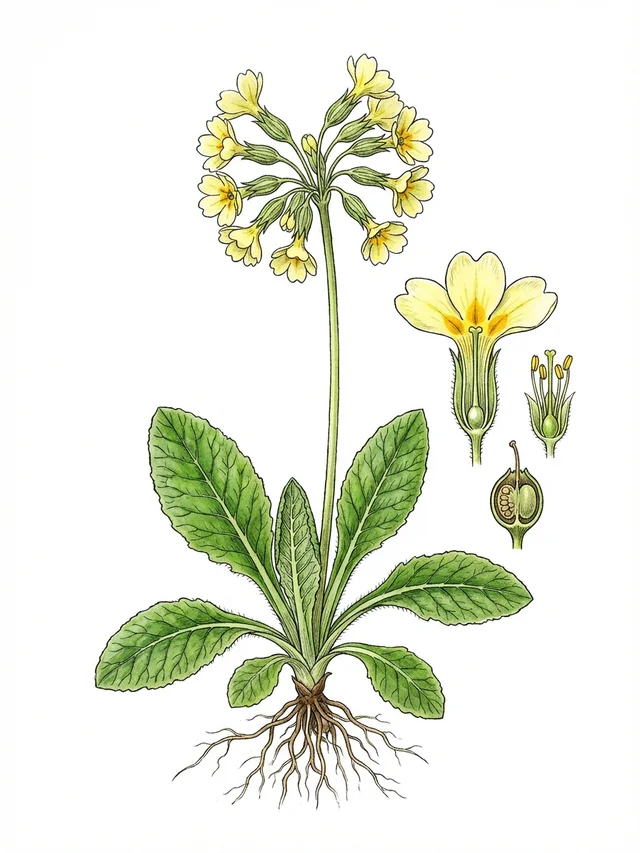
 Image to followAI-generated illustration
Luzula pilosa
Luzula pilosa
FamilyGenus: Luzulanative in Germany
🌿
3
Species
interact
🔗
4
Interactions
documented
🐛
3
Host relationships
Species
About this species
Luzula pilosa is a native, evergreen perennial that spreads gently in shady, moist places. Its broad, grass-like leaves form loose tufts, and from April to September it sends up slender stems topped with loose clusters of tiny flowers. A plant of woodland floors and hedgebanks, it thrives where light is low and the ground never fully dries out.
Ecological network
Click to highlight connections · Click again to open the species page
Loading network...
Larval host
Ecological significance
As a native component of shady woodlands and damp hedgebanks, Luzula pilosa contributes to the ground layer and may help stabilise soil. It offers low-level cover in places where many other plants struggle.
Annual cycle
An evergreen perennial that keeps its leaves throughout the year. Fresh growth appears in early spring, and flowering stems rise from April, continuing into September. Small seeds ripen and disperse in late summer and autumn. Even during mild winters the plant provides persistent green ground cover.
Safety note
There are no known toxic or harmful properties associated with Luzula pilosa.
Standort & Merkmale
Light
Schatten
Moisture
Frisch (Mäßig feucht)
Soil
Mittelzehrer (Normaler Boden)
Flowering period
Apr – Sep
Soil reaction
Mäßig sauer bis neutral
Bioregion
Continental
Growth form
Gras
Woodiness
Nicht verholzt
Leaf type
Breitblättrig
Leaf phenology
Immergrün
Plant height
0.266 m
Morphological traits: TRY ID3 (CC BY 3.0) & TRY ID81 (CC BY)
Pflege & Anbau
Place in full or partial shade, in humus-rich, moist but well-drained soil. A neutral to slightly acidic substrate is ideal. Once established it needs little attention; remove old foliage in spring to keep the clump tidy. This plant will not thrive in dry or sunny positions.
Scientific profile
A perennial member of the rush family (Juncaceae), Luzula pilosa forms tufts of broad, soft, evergreen leaves and reaches about 27 cm in height. It is a shade-adapted species (Ellenberg L value 3) that prefers fresh, moderately moist soils of medium nutrient status (N value 4) and a neutral to weakly acidic reaction (R value 5). Only low levels of disturbance are tolerated (disturbance severity 0.69). The plant is native in Great Britain and is not currently regarded as threatened. From April to September it produces slender, arching inflorescences bearing small flowers. The minute seeds have a diaspore mass of approximately 1 mg.
Sources & data origin
•Cook et al. (2025) UK Butterfly & Moth Traits (DOI: 10.5285/dbc7cc17-cbbd-49dd-bab4-8e8855768d66)
•Interaktionsdaten via GloBI (CC-BY 4.0)
•FloraWeb / BfN
•EIVE 1.0 — Dengler et al. (2023), DOI: 10.3897/VCS.98324 (CC BY 4.0)
•GBIF Backbone Taxonomy — GBIF Secretariat (2024), DOI: 10.15468/39omei (CC BY 4.0)
•TRY Categorical Traits (ID3) — Kattge et al. (2012), DOI: 10.17871/TRY.3 (CC BY 3.0)
•TRY Global Spectrum (ID81) — Díaz et al. (2016/2021), DOI: 10.17871/TRY.81 (CC BY)
•Govaerts R et al. (2025) — World Checklist of Vascular Plants (WCVP) v14. Royal Botanic Gardens, Kew. DOI: 10.34885/xs7h-ze42 (CC BY 4.0)
All data is licensed under CC BY 4.0, CC0, or compatible terms. Attribution according to license conditions. Full source overview →