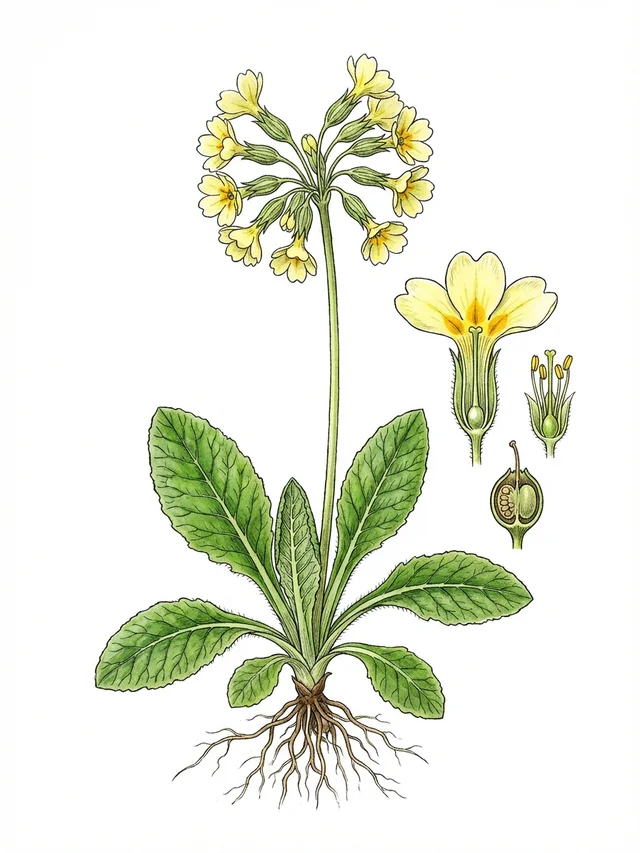
 Image to followAI-generated illustration
Lycopus europaeus
Lycopus europaeus
FamilyGenus: Lycopusnative in Germany
🌿
40
Species
interact
🔗
87
Interactions
documented
🐛
2
Host relationships
Species
About this species
A native herbaceous perennial of damp, nutrient-rich places, bearing slender spikes of tiny, lipped flowers from July to September. The non-woody stems carry broad, toothed leaves and the whole plant typically reaches about 60 cm in height.
Ecological network
Click to highlight connections · Click again to open the species page
Loading network...
PollinationLarval hostFlower visit
Ecological significance
As a native component of swampy and waterside vegetation, Lycopus europaeus contributes structure to damp habitats. Its flowers are likely to be visited by small bees and flies, while the foliage may offer cover for invertebrates.
Annual cycle
A herbaceous perennial that dies back to ground level in autumn. New shoots appear in spring. Flowering occurs from July through September. Seeds ripen in late summer and autumn.
Standort & Merkmale
Light
Halbschatten
Moisture
Feucht
Soil
Starkzehrer (Nährstoffreicher/Fetter Boden)
Flowering period
Jul – Sep
Soil reaction
Mäßig sauer bis neutral
Bioregion
Continental
Growth form
Krautige Pflanze
Woodiness
Nicht verholzt
Leaf type
Breitblättrig
Plant height
0.625 m
Morphological traits: TRY ID3 (CC BY 3.0) & TRY ID81 (CC BY)
Pflege & Anbau
Plant in partial shade in a moisture-retentive, fertile soil. It thrives at the edges of ponds and streams, or in a bog garden, and requires consistently damp conditions. Mulch in autumn to help retain soil moisture and provide modest nutrients. Cut back old stems in late winter before new growth starts.
Scientific profile
Lycopus europaeus is a non-woody, broad-leaved perennial belonging to the mint family (Lamiaceae). It produces erect, square stems that rise from a creeping rootstock, often reaching around 0.6 m tall. The opposite leaves are coarsely toothed and deep green. From mid-summer into early autumn, dense whorls of minute, lipped flowers appear in the leaf axils. In Britain it is a native species of fens, ditches, pond margins and other wet, fertile ground, where it favours partial shade. The plant dies back to the ground each winter and reshoots in spring. Its tiny nutlets are dispersed by water and possibly by animals.
Pollinators & visitors
34 Arten interagieren mit dieser Pflanze
Melitaea athaliaBombus pascuorumMacropis europaeaBombus hypnorumPyronia tithonusXestia xanthographaHypena proboscidalisVespula germanicaMesapamea secalisCaradrina morpheusAglais urticaeVespula vulgarisBombus lapidariusBombus lucorumApis melliferaPieris rapaeOchropleura plectaThalpophila maturaBombus terrestrisCoenonympha pamphilusCheilosia illustrataEpistrophe grossulariaeEristalis abusivusEristalis arbustorumEristalis horticolaEristalis nemorumHelophilus hybridusHelophilus pendulusHelophilus trivittatusMeliscaeva auricollisSphaerophoria scriptaXylota segnisHydraecia micaceaLitoligia literosa
Other flower visitors
4 other species visit the flowers
Sources & data origin
•Interaktionsdaten via GloBI (CC-BY 4.0)
•Cook et al. (2025) UK Butterfly & Moth Traits (DOI: 10.5285/dbc7cc17-cbbd-49dd-bab4-8e8855768d66)
•pollinator_interactions
•FloraWeb / BfN
•EIVE 1.0 — Dengler et al. (2023), DOI: 10.3897/VCS.98324 (CC BY 4.0)
•GBIF Backbone Taxonomy — GBIF Secretariat (2024), DOI: 10.15468/39omei (CC BY 4.0)
•TRY Categorical Traits (ID3) — Kattge et al. (2012), DOI: 10.17871/TRY.3 (CC BY 3.0)
•TRY Global Spectrum (ID81) — Díaz et al. (2016/2021), DOI: 10.17871/TRY.81 (CC BY)
•Govaerts R et al. (2025) — World Checklist of Vascular Plants (WCVP) v14. Royal Botanic Gardens, Kew. DOI: 10.34885/xs7h-ze42 (CC BY 4.0)
All data is licensed under CC BY 4.0, CC0, or compatible terms. Attribution according to license conditions. Full source overview →