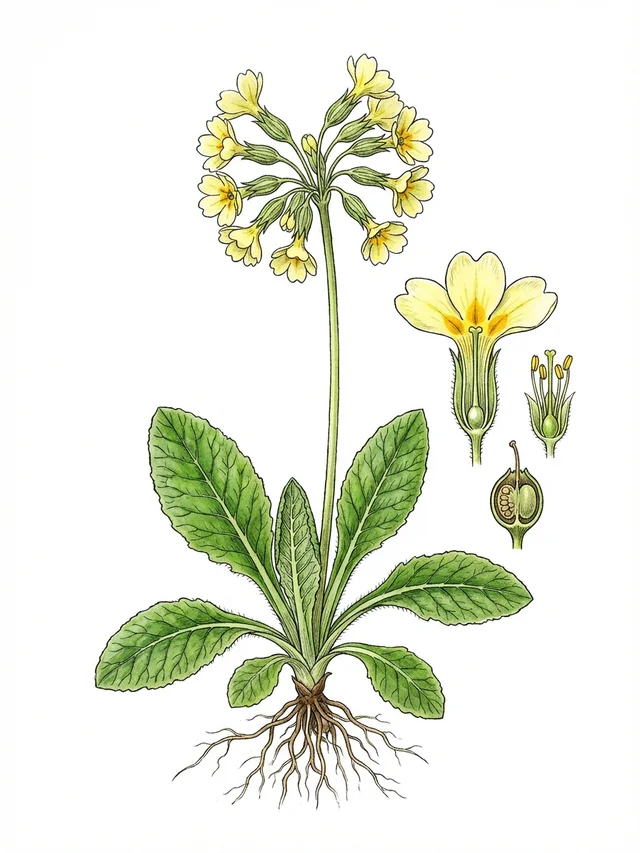
 Image to followAI-generated illustration
Zea mays
Zea mays
FamilyGenus: Zeanative in Germany
🌿
107
Species
interact
🔗
140
Interactions
documented
🐛
19
Host relationships
Species
About this species
Zea mays is a tall annual grass with broad leaves, producing flowers from midsummer into autumn. It thrives in full sun and nutrient-rich, moist soil, and is widely cultivated.
Ecological network
Click to highlight connections · Click again to open the species page
Loading network...
PollinationLarval hostFlower visit
Ecological significance
In Great Britain, Zea mays is an introduced species that has become established locally. There is no evidence of it posing an invasive threat in the region.
Annual cycle
An annual grass that completes its lifecycle in one growing season. Sow seeds in spring after the danger of frost has passed. Plants develop rapidly through early summer, flowering from July to October. Cobs mature by mid to late autumn, and the foliage dies back after the first hard frosts.
Safety note
No specific safety risks are recorded for this species; it is widely grown for food and feed without known toxicity.
Standort & Merkmale
Light
Sonne
Moisture
Frisch (Mäßig feucht)
Soil
—
Flowering period
Jul – Okt
Bioregion
Continental
Growth form
Gras
Woodiness
Nicht verholzt
Leaf type
Breitblättrig
Plant height
2.08 m
Morphological traits: TRY ID3 (CC BY 3.0) & TRY ID81 (CC BY)
0
Pollen
35.3 mg/Blüte
Pflege & Anbau
**Light:** Full sun.
**Soil:** Fertile, moist but well-drained, ideally calcareous or neutral.
**Watering:** Keep soil consistently moist, particularly during dry spells and while plants are establishing.
**Feeding:** Incorporate well-rotted manure or a balanced fertiliser before sowing.
**Spacing:** Sow or plant in blocks rather than rows to aid wind pollination; allow 30–45 cm between plants.
**Sowing:** Direct sow after the last frost when the soil has warmed.
Scientific profile
Zea mays is an annual, non-woody grass reaching a height of approximately 2.08 metres. It bears broad leaves and forms arbuscular mycorrhizal associations. The plant requires full sun and thrives in moist but well-drained conditions, with a preference for nutrient-rich, calcareous to neutral soils and moderately warm temperatures. Flowering extends from July to October. It originates from the Americas; in Great Britain it is an introduced species that has become established.
Pollinators & visitors
55 Arten interagieren mit dieser Pflanze
Bombus pratorumAgrotis ipsilonOstrinia nubilalisMythimna unipunctaBombus sylvestrisBombus pascuorumMeleagris gallopavoHomo sapiensMamestra brassicaeApis melliferaLuscinia svecicaVulpes vulpesVespula germanicaPieris rapaeHalictus rubicundusHeteropterus morpheusCarterocephalus silvicolaCarterocephalus palaemonPelopidas thraxBorbo borbonicaGegenes nostrodamusOchlodes sylvanusHesperia commaThymelicus hyraxThymelicus sylvestrisThymelicus lineolaCoenonympha phryneCoenonympha oedippusCoenonympha dorusCoenonympha pamphilusCoenonympha amaryllisCoenonympha glycerionCoenonympha corinnaCoenonympha leanderCoenonympha heroCoenonympha arcaniaKirinia roxelanaKirinia climeneLopinga achinePararge xiphioidesPararge aegeriaLasiommata maeraLasiommata deidamiaLasiommata paramegaeraMelanargia russiaeMelanargia larissaMelanargia lachesisMelanargia galatheaMelanargia inesMelanargia pherusa
Host relationships
19 species use this plant as a host
Gymnoscelis rufifasciataHelicoverpa armigeraAgrotis segetumAutographa gammaPlodia interpunctellaOncocera semirubellaPyralis farinalisNomophila noctuellaXestia c-nigrumMythimna l-albumAgrotis exclamationisAcronicta rumicisLymantria disparLycophotia porphyreaLuperina testaceaAgrotis clavisPlutella xylostellaHofmannophila pseudospretellaMesapamea secalis
Other flower visitors
33 other species visit the flowers
Myocastor coypusOulema melanopusMareca americanaPlectrophenax nivalisApodemus sylvaticusBranta canadensisAnser caerulescensEremophila alpestrisColumba liviaAlopochen aegyptiacaAythya collarisCairina moschataSpatula discorsSturnus vulgarisAnthus rubescensCalcarius lapponicusGrus canadensisNasua nasuaUrsus arctosNyctereutes procyonoidesPhasianus colchicusCygnus columbianusAnser albifronsPasser domesticusCorvus cornixSciurus nigerSciurus carolinensisPhalangium opilioThreskiornis aethiopicusNumida meleagrisDendrocygna viduataLeptinotarsa decemlineataAnthrenus verbasci
Sources & data origin
•Interaktionsdaten via GloBI (CC-BY 4.0)
•Cook et al. (2025) UK Butterfly & Moth Traits (DOI: 10.5285/dbc7cc17-cbbd-49dd-bab4-8e8855768d66)
•Middleton-Welling_2020
•pollinator_interactions
•Baden-Böhm F, App M, Thiele J (2022) — The FloRes Database: A floral resources trait database for pollinator habitat-assessment generated by a multistep workflow. Johann Heinrich von Thünen-Institut, Dryad, DOI: 10.5061/dryad.djh9w0w29 (CC0)
•EIVE 1.0 — Dengler et al. (2023), DOI: 10.3897/VCS.98324 (CC BY 4.0)
•GBIF Backbone Taxonomy — GBIF Secretariat (2024), DOI: 10.15468/39omei (CC BY 4.0)
•TRY Categorical Traits (ID3) — Kattge et al. (2012), DOI: 10.17871/TRY.3 (CC BY 3.0)
•TRY Global Spectrum (ID81) — Díaz et al. (2016/2021), DOI: 10.17871/TRY.81 (CC BY)
•Checklist Alien Plants Belgium — Verloove F (2023), Botanic Garden Meise (CC BY 4.0)
•Govaerts R et al. (2025) — World Checklist of Vascular Plants (WCVP) v14. Royal Botanic Gardens, Kew. DOI: 10.34885/xs7h-ze42 (CC BY 4.0)
All data is licensed under CC BY 4.0, CC0, or compatible terms. Attribution according to license conditions. Full source overview →