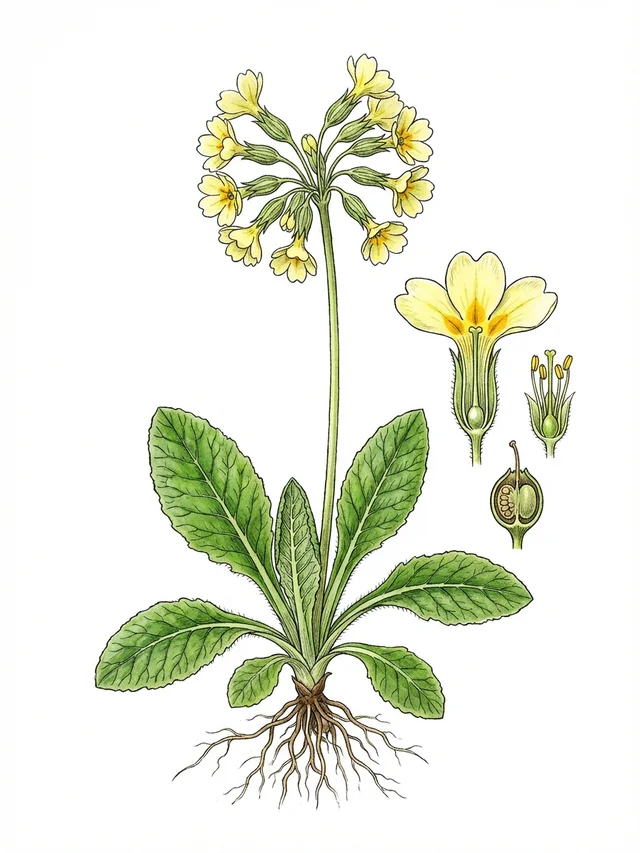
 Image to followAI-generated illustration
Silybum marianum
Silybum marianum
FamilyGenus: Mariendistelnnative in Germany
🌿
25
Species
interact
🔗
40
Interactions
documented
About this species
Silybum marianum is an archaeophyte thistle in Great Britain, bearing large, spiny, white-veined leaves and purple flower heads. It reaches about 0.8 m in height and blooms in June and July. The plant favours sunny, moderately moist, lime-rich and nutrient-rich soils in low-disturbance habitats.
Ecological network
Click to highlight connections · Click again to open the species page
Loading network...
PollinationFlower visit
Ecological significance
Silybum marianum is associated with nutrient-rich, low-disturbance calcareous habitats. Its arbuscular mycorrhizal associations play a role in soil nutrient cycling.
Annual cycle
The flowering period lasts from June to July.
Standort & Merkmale
Light
Sonne
Moisture
Frisch (Mäßig feucht)
Soil
—
Flowering period
Jun – Jul
Bioregion
Continental
Growth form
Krautige Pflanze
Woodiness
Nicht verholzt
Leaf type
Breitblättrig
Plant height
0.804 m
Morphological traits: TRY ID3 (CC BY 3.0) & TRY ID81 (CC BY)
Pflege & Anbau
Grow in full sun on a moderately moist, freely draining, lime-rich soil. The plant is a heavy feeder; incorporate well-rotted organic matter before planting. Avoid high-disturbance areas, as it performs best where the soil is left undisturbed. Flowering occurs in June and July, after which seed may be collected or left to self-sow.
Scientific profile
Silybum marianum is an herbaceous, broad-leaved, non-woody plant reaching around 0.8 m in height. Its leaves are conspicuously marbled with white veins and edged with spines. The purple, thistle-like flower heads are produced from June to July. The species has a strong preference for full sun and moderately moist, distinctly calcareous, nutrient-rich substrates. It is classed as a warmth-loving plant of low-disturbance situations and exhibits slight salt tolerance. Its roots form arbuscular mycorrhizal associations. In Great Britain, Silybum marianum holds archaeophyte status, having been introduced in antiquity from southwestern and southeastern Europe and northern Africa, and now persisting as a well-established element of the flora.
Pollinators & visitors
19 Arten interagieren mit dieser Pflanze
Hesperia commaHaemorhous mexicanusBombus sylvestrisVanessa carduiApis melliferaPieris rapaeMelitaea phoebe (Denis & Schiffermüller), 1775Halictus scabiosaemacroglossum stellatarumHalictus quadricinctusAutographa gammaPolistes gallicusCassida rubiginosaPararge aegeriaVanessa virginiensisEuphydryas desfontainiiMelitaea aetherieMelitaea variaBombus terrestris
Other flower visitors
6 other species visit the flowers
Chloris chlorisCoccinella septempunctataOxythyrea funestaSynema globosumCarduelis carduelisPisaura mirabilis
Sources & data origin
•Interaktionsdaten via GloBI (CC-BY 4.0)
•Middleton-Welling_2020
•pollinator_interactions
•EIVE 1.0 — Dengler et al. (2023), DOI: 10.3897/VCS.98324 (CC BY 4.0)
•GBIF Backbone Taxonomy — GBIF Secretariat (2024), DOI: 10.15468/39omei (CC BY 4.0)
•TRY Categorical Traits (ID3) — Kattge et al. (2012), DOI: 10.17871/TRY.3 (CC BY 3.0)
•TRY Global Spectrum (ID81) — Díaz et al. (2016/2021), DOI: 10.17871/TRY.81 (CC BY)
•Checklist Alien Plants Belgium — Verloove F (2023), Botanic Garden Meise (CC BY 4.0)
•Govaerts R et al. (2025) — World Checklist of Vascular Plants (WCVP) v14. Royal Botanic Gardens, Kew. DOI: 10.34885/xs7h-ze42 (CC BY 4.0)
All data is licensed under CC BY 4.0, CC0, or compatible terms. Attribution according to license conditions. Full source overview →