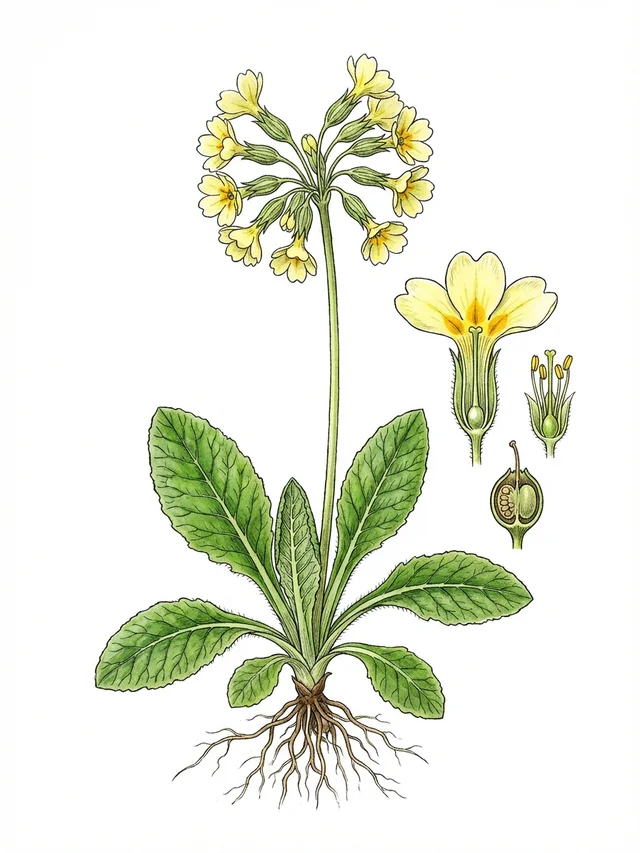
 Image to followAI-generated illustration
Matricaria discoidea
Matricaria discoidea
FamilyGenus: Matricarianative in Germany
🌿
16
Species
interact
🔗
16
Interactions
documented
About this species
Matricaria discoidea is an introduced annual herbaceous plant now established in Great Britain. It thrives in full sun on nutrient-rich, moderately moist soil, typically on ruderal sites and waste ground, and produces small flower heads from June to August.
Ecological network
Click to highlight connections · Click again to open the species page
Loading network...
PollinationFlower visit
Ecological significance
It typically grows on nutrient-rich ruderal habitats with low disturbance, where it may form dense patches. No specific negative ecological impacts are documented; it is a common weed of fertile, open sites.
Annual cycle
Germination in spring is followed by rapid growth, with flowers appearing from June to August. Seeds ripen in late summer and are dispersed by wind.
Safety note
The plant is considered safe for children; no harmful effects are known.
Standort & Merkmale
Light
Sonne
Moisture
Frisch (Mäßig feucht)
Soil
Starkzehrer (Nährstoffreicher/Fetter Boden)
Flowering period
Jun – Aug
Soil reaction
Basisch / Kalkhold
Bioregion
Continental
Growth form
Krautige Pflanze
Woodiness
Nicht verholzt
Leaf type
Breitblättrig
Plant height
0.162 m
Morphological traits: TRY ID3 (CC BY 3.0) & TRY ID81 (CC BY)
Pollen
0.1536 mg/Blüte
Pflege & Anbau
Prefers a sunny position and fertile, moderately moist soil. Self-seeds freely and can appear on disturbed ground. Flowers from June to August.
Scientific profile
This low-growing annual belongs to the Asteraceae family. It reaches about 16 cm in height, with broad leaves and a non-woody stem. The species is well-adapted to full sun and nutrient-rich, moderately moist conditions, often colonising disturbed ground, rubble and pathsides. Flowering occurs from June to August, producing small, compact heads. The seeds are exceptionally light (diaspore mass 0.08 mg), aiding wind dispersal. In Great Britain, it is an introduced species that has become established.
Pollinators & visitors
5 Arten interagieren mit dieser Pflanze
Other flower visitors
11 other species visit the flowers
Linaria cannabinaPasser domesticusFringilla coelebsUrsus arctosCarduelis carduelisAphidius matricariaeAsaphes suspensusDendrocerus aphidumDendrocerus carpenteriScathophaga stercorariaHylemya vagans
Sources & data origin
•Interaktionsdaten via GloBI (CC-BY 4.0)
•pollinator_interactions
•Baden-Böhm F, App M, Thiele J (2022) — The FloRes Database: A floral resources trait database for pollinator habitat-assessment generated by a multistep workflow. Johann Heinrich von Thünen-Institut, Dryad, DOI: 10.5061/dryad.djh9w0w29 (CC0)
•FloraWeb / BfN
•EIVE 1.0 — Dengler et al. (2023), DOI: 10.3897/VCS.98324 (CC BY 4.0)
•GBIF Backbone Taxonomy — GBIF Secretariat (2024), DOI: 10.15468/39omei (CC BY 4.0)
•TRY Categorical Traits (ID3) — Kattge et al. (2012), DOI: 10.17871/TRY.3 (CC BY 3.0)
•TRY Global Spectrum (ID81) — Díaz et al. (2016/2021), DOI: 10.17871/TRY.81 (CC BY)
•Checklist Alien Plants Belgium — Verloove F (2023), Botanic Garden Meise (CC BY 4.0)
•Govaerts R et al. (2025) — World Checklist of Vascular Plants (WCVP) v14. Royal Botanic Gardens, Kew. DOI: 10.34885/xs7h-ze42 (CC BY 4.0)
All data is licensed under CC BY 4.0, CC0, or compatible terms. Attribution according to license conditions. Full source overview →