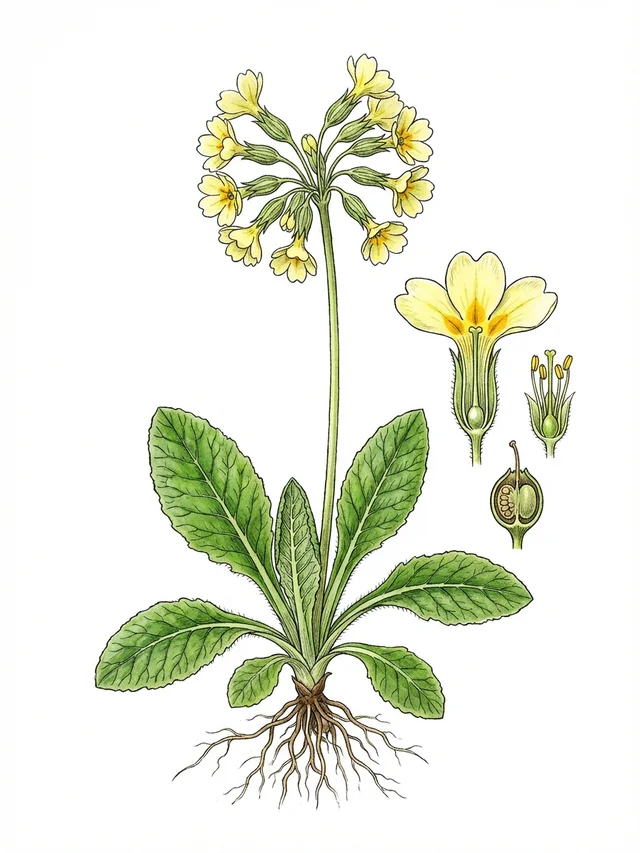
 Image to followAI-generated illustration
Melica uniflora
Melica uniflora
FamilyGenus: Melicanative in Germany
🌿
3
Species
interact
🔗
4
Interactions
documented
🐛
1
Host relationships
Species
About this species
A native broad-leaved grass of shaded woodlands, forming open panicles of greenish spikelets in late spring and early summer.
Ecological network
Click to highlight connections · Click again to open the species page
Loading network...
PollinationLarval host
Ecological significance
As a native grass of shaded woodlands, Melica uniflora contributes to the structure and diversity of ground-layer vegetation and offers micro-habitats for invertebrates and other wildlife associated with woodland floors.
Annual cycle
Leaf growth begins in early spring, forming a loose clump. Slender flowering stems push up in late spring, and the open panicles of spikelets are present through May and June. After seed set, the plant remains green through summer and senesces back to ground level in autumn.
Standort & Merkmale
Light
Schatten
Moisture
Frisch (Mäßig feucht)
Soil
Mittelzehrer (Normaler Boden)
Flowering period
Mai – Jun
Soil reaction
Mäßig sauer bis neutral
Bioregion
Continental
Growth form
Gras
Woodiness
Nicht verholzt
Leaf type
Breitblättrig
Plant height
0.362 m
Morphological traits: TRY ID3 (CC BY 3.0) & TRY ID81 (CC BY)
Pflege & Anbau
Plant in partial to full shade in a moisture-retentive but freely draining soil of moderate fertility. A neutral to slightly acid loam is ideal. Once established, additional feeding is unnecessary and may encourage lush growth at the expense of the natural habit. Keep the soil evenly moist during prolonged dry spells. Old foliage can be tidied in late winter before new shoots appear.
Scientific profile
Melica uniflora is a native broad-leaved grass widespread in shaded woodlands and hedgerows in Great Britain. It typically attains a height of around 36 cm and bears a loose, few-flowered panicle of delicate greenish spikelets from May to June. The leaf blades are comparatively broad for a grass, with a mean area of approximately 454 mm². It is a low-disturbance terrestrial species that associates with arbuscular mycorrhizal fungi and occurs on fresh, moderately moist soils of medium fertility. The soil reaction preference spans neutral to slightly acid conditions, and the plant is adapted to shade with a moderately warm temperature regime. Diaspores are light, weighing on average about 2.8 mg, and the species is not currently subject to any red-list threat category.
Host relationships
1 species use this plant as a host
Apamea scolopacina
Sources & data origin
•Cook et al. (2025) UK Butterfly & Moth Traits (DOI: 10.5285/dbc7cc17-cbbd-49dd-bab4-8e8855768d66)
•Interaktionsdaten via GloBI (CC-BY 4.0)
•FloraWeb / BfN
•EIVE 1.0 — Dengler et al. (2023), DOI: 10.3897/VCS.98324 (CC BY 4.0)
•GBIF Backbone Taxonomy — GBIF Secretariat (2024), DOI: 10.15468/39omei (CC BY 4.0)
•TRY Categorical Traits (ID3) — Kattge et al. (2012), DOI: 10.17871/TRY.3 (CC BY 3.0)
•TRY Global Spectrum (ID81) — Díaz et al. (2016/2021), DOI: 10.17871/TRY.81 (CC BY)
•Govaerts R et al. (2025) — World Checklist of Vascular Plants (WCVP) v14. Royal Botanic Gardens, Kew. DOI: 10.34885/xs7h-ze42 (CC BY 4.0)
All data is licensed under CC BY 4.0, CC0, or compatible terms. Attribution according to license conditions. Full source overview →