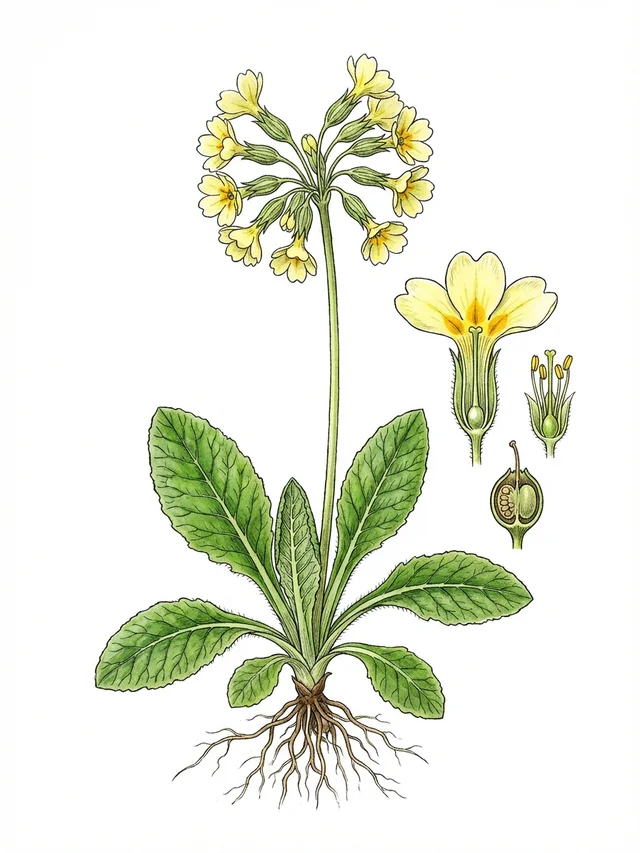
 Image to followAI-generated illustration
Melilotus altissimus
Melilotus altissimus
FamilyGenus: Melilotusnative in Germany
🌿
21
Species
interact
🔗
57
Interactions
documented
About this species
Melilotus altissimus is a biennial herbaceous plant bearing erect, branched stems that can approach a metre in height. It produces broad, toothed leaflets and numerous small, yellow blossoms arranged in long racemes between June and November. Preferring sunny, fresh, moderately moist sites with neutral to calcareous soils, the plant is an archaeophyte in Great Britain – an ancient introduction that became established before the sixteenth century. After flowering, the pendant pods darken and contain one or two seeds.
Ecological network
Click to highlight connections · Click again to open the species page
Loading network...
Pollination
Ecological significance
No specific ecological impact data are available. As a long-established archaeophyte, it is likely to be well integrated into local plant communities.
Annual cycle
A biennial plantseeds germinate in spring, forming a basal rosette of leaves in the first year. In the second year it sends up an erect flowering stem, blooming from June to November, after which the pods mature and release seeds.
Standort & Merkmale
Light
Sonne
Moisture
Frisch (Mäßig feucht)
Soil
Mittelzehrer (Normaler Boden)
Flowering period
Jun – Nov
Soil reaction
Basisch / Kalkhold
Bioregion
Continental
Growth form
Krautige Pflanze
Woodiness
Nicht verholzt
Leaf type
Breitblättrig
Plant height
0.974 m
Morphological traits: TRY ID3 (CC BY 3.0) & TRY ID81 (CC BY)
Pflege & Anbau
This biennial thrives in full sun with fresh, moderately moist, neutral to alkaline soil of average fertility. Sow directly in spring in a prepared seedbed; it will flower the following year. It tolerates slightly saline conditions and is suited to open, sunny beds or wilder areas.
Scientific profile
An erect, glabrescent biennial, branching towards the top, reaching 0.5–1.5 m in height (typically around 0.97 m). Its leaves are broad, the lower ones ovate with obtuse, dentate leaflets, while the cauline leaves are narrowly oblong. Stipules are subulate. Flowering from June to November, it bears long racemes of 25–60 small, yellow, pea-like flowers, each 5–7 mm long. The fruit is an obovoid, acute pod, pendulous, becoming dark and pubescent when ripe, containing one or two seeds, and the style is long and persistent. In Great Britain this species is an archaeophyte, with a long history of establishment, and prefers sunny, fresh to moist, neutral to alkaline soils of medium nutrient status, tolerating slight salinity and low-disturbance sites.
Pollinators & visitors
21 Arten interagieren mit dieser Pflanze
Bombus humilisLycaena phlaeasMelitta leporinaMelecta albifronsBombus ruderatusBombus lapidariusApis melliferaBombus lucorumBombus ruderariusBombus jonellusBombus muscorumBombus pratorumBombus pascuorumBombus sylvarumBombus terrestrisBombus hortorumBombus soroeensisBombus sylvestrisLasioglossum albipesColletes similisHalictus scabiosae
Sources & data origin
•Interaktionsdaten via GloBI (CC-BY 4.0)
•pollinator_interactions
•FloraWeb / BfN
•EIVE 1.0 — Dengler et al. (2023), DOI: 10.3897/VCS.98324 (CC BY 4.0)
•GBIF Backbone Taxonomy — GBIF Secretariat (2024), DOI: 10.15468/39omei (CC BY 4.0)
•TRY Categorical Traits (ID3) — Kattge et al. (2012), DOI: 10.17871/TRY.3 (CC BY 3.0)
•TRY Global Spectrum (ID81) — Díaz et al. (2016/2021), DOI: 10.17871/TRY.81 (CC BY)
•Govaerts R et al. (2025) — World Checklist of Vascular Plants (WCVP) v14. Royal Botanic Gardens, Kew. DOI: 10.34885/xs7h-ze42 (CC BY 4.0)
All data is licensed under CC BY 4.0, CC0, or compatible terms. Attribution according to license conditions. Full source overview →